
Best Digital Pianos for Intermediate Players in 2026
The right upgrade fixes the exact limitation your beginner board hit — action, half-pedal, polyphony — without paying for advanced-tier features you won't use yet.

By Shahadat Shahi Published Updated

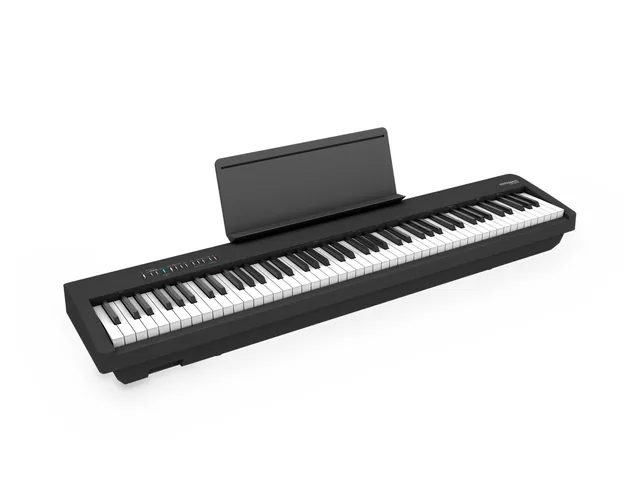
The short answer
Compare all 7-
No. 1 · Our top pick
Best Overall
- Key action
- PHA-4 Standard with escapement
- Polyphony
- 256 notes
- Weight
- 32 lbs (14.6 kg)
PHA-4 action with escapement, 256-note polyphony, native Bluetooth audio — the action-quality leader at the intermediate sweet spot.
-
No. 2
Best Upgrade from Beginner
- Key action
- Graded Hammer Compact (GHC)
- Polyphony
- 192 notes
- Weight
- 25.4 lbs (11.5 kg)
The fresher Yamaha step up — compact GHC action, CFX tone, 192-note polyphony, and Smart Pianist support.
-
No. 3
Best Console
- Key action
- GHS (Graded Hammer Standard)
- Polyphony
- 192 notes
- Weight
- 38 kg
GHS action plus a real 3-pedal Arius cabinet with half-pedal and Bluetooth — the console value for home practice.
-
No. 4
Most Versatile Intermediate
- Key action
- Smart Scaled Hammer Action II
- Polyphony
- 192 notes
- Weight
- 26 lbs (11.8 kg)
The PX-S3100 is the right pick for stage-leaning intermediate players, songwriters, and worship-band keyboardists who need sound variety in a portable chassis.
-
No. 5
Best Touch Response
- Key action
- Responsive Hammer Compact II (RHCII)
- Polyphony
- 192 notes
- Weight
- 32 lbs (14.5 kg)
For intermediate players who prioritize touch response above all else, the ES520 is the right pick.
-
No. 6
Best Premium Portable
- Key action
- PHA-4 Standard with escapement
- Polyphony
- 256 notes
- Weight
- 42 lbs (19 kg)
The FP-60X is the right pick when you want a premium portable experience without turning this into an advanced-player purchase.
-
No. 7
Best Premium Console
- Key action
- GrandTouch-E, escapement
- Polyphony
- 192 notes
- Weight
- 42 kg (92 lb 10 oz)
The YDP-166 is the right cabinet for players who'll keep the piano for years and want escapement keys at home.
The FP-30X protects action quality, the P-225 protects the current Yamaha compact line, and the YDP-146 protects the three-pedal home route.
Quick Comparison: All 7 Intermediate Picks
Swipe the table sideways to see every column.
Tip
The action-quality inflection point at this tier is escapement — the small "click" near the bottom of a key on real grand pianos. Roland's PHA-4 (FP-30X and FP-60X), Kawai's RHCII (ES520), and Yamaha's GrandTouch-E (YDP-166) give intermediate players more expressive headroom than entry-level actions. Yamaha's GHC on the P-225 and GHS on the YDP-146 are still valid upgrade paths, but the best intermediate digital piano is the one that matches action quality, pedals, speakers, and portability to your actual practice habits.
Click "Check Price" links throughout for live Amazon pricing.
Which limitation is your beginner piano hitting?
Choose the route closest to your situation. The upgrade should fix the exact constraint — action, pedals, or format.
Start with Roland FP-30X
- Needs
- Escapement and velocity headroom
- Risk
- Paying for features you won't use
Start with Yamaha YDP-146
- Needs
- Three-pedal Arius cabinet
- Risk
- Console price for GHS action
Start with Roland FP-60X
- Needs
- Premium portable power and control
- Risk
- Heaviest portable in the set
Start with Kawai ES520
- Needs
- RHCII above the price tier
- Risk
- Fewer performance controls
No. 1
Roland FP-30X
Best Overall for Intermediate
No. 3
Yamaha YDP-146
Best Console for Home Practice
No. 6
Roland FP-60X
Best Premium Portable
No. 5
Kawai ES520
Best Touch Response
You've been playing for a year or two. Your beginner piano — that starter board — has started getting in the way. You hear notes drop during pedaled passages. Your teacher asks for half-damper and you can't deliver it. The action's velocity range feels compressed at the extremes. The best digital piano for intermediate players in 2026 is the one that fixes those specific limitations without paying for advanced-tier features you won't use yet. We've ranked seven intermediate digital piano picks in the price tier where action quality, polyphony headroom, and pedal response actually inflect — with awards for the upgrade path that fits each player profile. If you're just starting out, read our Best Digital Pianos for Beginners guide instead; this one assumes you already play and need real reasons why a specific upgrade matters. This guide is based on the makers' published specs; we haven't played these pianos ourselves.
Read the rest of the introduction
The short version: the Roland FP-30X is the best digital piano for intermediate players overall because PHA-4 action with escapement is the action-quality inflection point at this tier — arguably the best piano for intermediate buyers in 2026. The Yamaha P-225 is the best current Yamaha portable for intermediate use when upgrading from beginner digital piano gear — a fresher step with GHC action, CFX tone, and 192-note polyphony. The Yamaha YDP-146 is the best console for home practice, with a built-in 3-pedal unit that delivers half-damper response no portable can match without an accessory.
Best Overall for Intermediate
Roland FP-30X — The Action-Quality Inflection Point
Current price varies · Roland


- Angle
- Control strip and PHA-4 Standard keybed in use
Features
- Key action
- PHA-4 Standard with escapement
- Sound engine
- SuperNATURAL Piano
- Polyphony
- 256 notes
- Speakers
- 22W (2 × 11W)
- Connectivity
- Native Bluetooth Audio + MIDI, USB MIDI/audio, headphones
- Weight
- 32 lbs (14.6 kg)
Best for: action-quality-first upgraders, gigging musicians, anyone whose teacher asks for dynamic nuance. Not for: stationary home setups (the YDP-146 includes the 3-pedal unit).
Read the full review: Roland FP-30X
Our verdict
The FP-30X is the best digital piano for intermediate players who feel their beginner action holding them back. PHA-4 escapement genuinely changes how the instrument responds under your fingers. Pair it with the optional KPD-70 3-pedal unit and you have a portable that handles intermediate repertoire through grade 6-7. This is the price-performance peak of the tier.
Pros
- +PHA-4 escapement — the single most consequential action upgrade vs beginner-tier GHS or Smart Scaled
- +256-note polyphony eliminates dropouts during the heaviest pedal-sustained passages
- +Native Bluetooth audio + MIDI — rare at this price, no adapter needed for wireless workflows
- +22W speakers genuinely fill a small room without external amplification
- +Optional KPD-70 3-pedal unit adds proper half-damper sensing
Cons
- –Sustain pedal in box is the entry-tier DP-2 — budget for a half-damper unit if you want pedal nuance
- –56 voices is modest next to Casio PX-S3100's 700 (matters if sound variety is a priority)
- –32 lbs is meaningfully heavier than the 24.5-lb Casio PX-S1100 if portability is critical
- Best for
- Best Overall for Intermediate
- Main downside
- Sustain pedal in box is the entry-tier DP-2 — budget for a half-damper unit if you want pedal nuance
- Price position
- Current price varies · Roland
How it plays and sounds
If you can feel your beginner piano's action holding back your dynamics, the FP-30X is the answer. PHA-4 Standard with escapement is the most refined hammer action under $1,000 — the "click" near the bottom of the key gives your fingers proprioceptive feedback during fast trills that beginner actions can't reproduce. Add 256-note polyphony (the highest in this guide), native Bluetooth audio + MIDI, and 22W speakers, and the FP-30X covers every spec limitation that drives upgrades at this stage. See the official FP-30X product page for the full breakdown.
View full specs
| Key action | PHA-4 Standard with escapement |
|---|---|
| Keys | 88 fully-weighted |
| Sound engine | SuperNATURAL Piano |
| Polyphony | 256 notes |
| Voices | 56 |
| Speakers | 22W (2 × 11W) |
| Connectivity | Native Bluetooth Audio + MIDI, USB MIDI/audio, headphones |
| Pedal | DP-2 included; KPD-70 3-pedal optional with half-damper |
| Weight | 32 lbs (14.6 kg) |
Take a closer look.
Best Overall for Intermediate
Control strip and PHA-4 Standard keybed in use

Best Upgrade from Beginner

GHC keybed under the hands

Best Console for Home Practice

At home
Best Upgrade from Beginner
Yamaha P-225 — The Current Yamaha Upgrade
Current price varies · Yamaha
- Angle
- GHC keybed under the hands
Features
- Key action
- Graded Hammer Compact (GHC)
- Sound engine
- Yamaha CFX
- Polyphony
- 192 notes
- Speakers
- 14W (2 × 7W)
- Connectivity
- USB MIDI, Smart Pianist (USB), headphones x2, sustain in
- Weight
- 25.4 lbs (11.5 kg)
Best for: Yamaha loyalists, current P-Series buyers, upgraders who want a compact portable. Not for: players prioritizing action expressiveness above brand continuity.
Read the full review: Yamaha P-225
Our verdict
The P-225 is the better current Yamaha recommendation for this page. It keeps Yamaha's familiar portable feel while giving intermediate buyers a fresher sound/action package than the older P-125. The trade-off is still real: GHC without escapement will not grow with you like Roland's PHA-4 or Kawai's RHCII. But for Yamaha-first buyers who want a modern portable, this is now the cleaner answer.
Full review: see our in-depth Yamaha P-225 review for its CFX sound, outputs and closest rivals.
Pros
- +Current Yamaha P-Series upgrade path instead of a legacy P-125-first recommendation
- +192-note polyphony solves the most common reason beginners upgrade
- +Compact GHC action and CFX tone in a slim portable body
- +Smart Pianist app remains useful even after you have a teacher
Cons
- –GHC lacks escapement — the FP-30X is more expressive
- –Not as cabinet-like as YDP-146 or YDP-166 for home practice
- –P-125 may still be worth watching only as a legacy price-drop option
- –Bundled sustain pedal is still a weak point for intermediate pedaling
- Best for
- Best Upgrade from Beginner
- Main downside
- GHC lacks escapement — the FP-30X is more expressive
- Price position
- Current price varies · Yamaha
How it plays and sounds
If you upgraded from a Yamaha P-45, P-125, or similar entry board, the P-225 is the current Yamaha step that makes the most sense for intermediate players. It keeps the compact portable format, moves to Yamaha's newer GHC action, adds CFX tone, keeps 192-note polyphony, and works with Smart Pianist for easier practice control. It is not the most expressive action in this guide, but it is the fresher Yamaha path for a digital piano for intermediate players who want continuity without buying a console.
View full specs
| Key action | Graded Hammer Compact (GHC) |
|---|---|
| Keys | 88 fully-weighted |
| Sound engine | Yamaha CFX |
| Polyphony | 192 notes |
| Voices | 24 |
| Speakers | 14W (2 × 7W) |
| Connectivity | USB MIDI, Smart Pianist (USB), headphones x2, sustain in |
| App | Smart Pianist (free) |
| Weight | 25.4 lbs (11.5 kg) |
Best Console for Home Practice
Yamaha YDP-146 — The Right Cabinet at the Right Price
Current price varies · Yamaha
- Angle
- At home
Features
- Key action
- GHS (Graded Hammer Standard), matte black keytops
- Sound engine
- Yamaha CFX, VRM Lite
- Polyphony
- 192 notes
- Speakers
- 8 W × 2
- Connectivity
- Bluetooth audio and MIDI, two headphone jacks
- Weight
- 38 kg
Best for: stationary home setups, learners who want three pedals with half-pedal, and families who want Bluetooth for lesson apps. Not for: players who'll move the piano or want escapement keys (the YDP-166).
Read the full review: Yamaha YDP-146
Our verdict
For home practice in one room, the YDP-146 is the console value in this guide: Yamaha's CFX sound with VRM Lite, three pedals with half-pedal on the damper, a sliding key cover, two headphone jacks and Bluetooth audio and MIDI in the Arius cabinet. Its GHS keys have no escapement; the YDP-166 adds Yamaha's GrandTouch-E keys with escapement and bigger speakers in the same cabinet.
Pros
- +Three pedals with half-pedal on the damper, built into the cabinet
- +CFX sound with VRM Lite and 192-note polyphony
- +Bluetooth audio and MIDI for lesson apps
- +Two headphone jacks and a sliding key cover
Cons
- –GHS, Yamaha's entry action, without escapement
- –8 W × 2 speakers, smaller than the YDP-166's 20 W × 2
- –No line outputs
- –38 kg: it stays where you put it
- Best for
- Best Console for Home Practice
- Main downside
- GHS, Yamaha's entry action, without escapement
- Price position
- Current price varies · Yamaha
How it plays and sounds
If you'll never move the piano, the YDP-146 is better value than most portables in this guide. Yamaha lists its GHS (Graded Hammer Standard) action with matte black keytops, CFX sampling with VRM Lite, 192-note polyphony, 10 voices, three pedals with half-pedal on the damper, a sliding key cover, two headphone jacks and Bluetooth audio and MIDI, with 8 W × 2 speakers, at 38 kg. The YDP-166 is the Arius step-up if you want escapement. Yamaha launched the YDP-146 in June 2026, and Yamaha USA's Arius line-up now lists it and no longer the YDP-145; Yamaha doesn't call it a successor. See Yamaha's YDP-146 specs for the full list.
View full specs
| Key action | GHS (Graded Hammer Standard), matte black keytops |
|---|---|
| Sound engine | Yamaha CFX, VRM Lite |
| Polyphony | 192 notes |
| Voices | 10 |
| Speakers | 8 W × 2 |
| Pedals | Three, half-pedal on the damper |
| Connectivity | Bluetooth audio and MIDI, two headphone jacks |
| Size | 1,357 × 422 × 815 mm |
| Weight | 38 kg |
Most Versatile Intermediate
Casio PX-S3100 — 700 Tones in a Slim Chassis
Current price varies · Casio


- Front
- PX-S3100 at an angle — touch controls and keybed in a studio setup
Features
- Key action
- Smart Scaled Hammer Action II
- Sound engine
- Multi-dimensional Morphing AiR
- Polyphony
- 192 notes
- Speakers
- 16W (2 × 8W)
- Connectivity
- Native Bluetooth MIDI + Audio, USB MIDI, 1/4" line outs
- Weight
- 26 lbs (11.8 kg)
Best for: singer-songwriters, electronic-music hobbyists, worship-band keyboardists. Not for: classical-track learners or any piano-only practice context.
Read the full review: Casio PX-S3100
Our verdict
The PX-S3100 is the right pick for stage-leaning intermediate players, songwriters, and worship-band keyboardists who need sound variety in a portable chassis. As a pure piano practice instrument, the FP-30X and P-225 are better focused-piano spends. For practice spanning genres and instruments, no other intermediate digital piano on this list is more versatile.
Pros
- +700 tones — the most versatile sound library in any intermediate digital piano under $1,000
- +Dedicated pitch bend wheel plus split/layer modes for genuine multi-instrument practice
- +Native Bluetooth audio + MIDI (no adapter needed for wireless workflows)
- +1/4" balanced line outs make this the most stage-ready intermediate board
- +Slim 9.0-inch chassis — the most portable 88-key option in this guide
Cons
- –Smart Scaled action lacks escapement — classical-track players often find it too light
- –No half-damper support without optional 3-pedal accessory
- –Less brand recognition with US piano teachers than Yamaha or Roland
- –192-note polyphony adequate but not the 256 you get on Roland equivalents
- Best for
- Most Versatile Intermediate
- Main downside
- Smart Scaled action lacks escapement — classical-track players often find it too light
- Price position
- Current price varies · Casio
How it plays and sounds
For intermediate players whose practice spans piano, EP, organ, and synth, the PX-S3100 is the only board in this guide that takes voice variety seriously. 700 tones, a dedicated pitch bend wheel, split/layer modes, and 1/4" line outs make this the closest thing to a workstation in the intermediate tier. Smart Scaled Hammer Action II is lighter than Roland or Yamaha equivalents — classical players sometimes find this a step back; pop/jazz/songwriter players find the lighter feel rewarding for fast EP lines.
View full specs
| Key action | Smart Scaled Hammer Action II |
|---|---|
| Keys | 88 fully-weighted |
| Sound engine | Multi-dimensional Morphing AiR |
| Polyphony | 192 notes |
| Voices | 700 |
| Speakers | 16W (2 × 8W) |
| Pitch bend | Yes (dedicated wheel) |
| Connectivity | Native Bluetooth MIDI + Audio, USB MIDI, 1/4" line outs |
| Weight | 26 lbs (11.8 kg) |
Best Touch Response
Kawai ES520 — Action Quality Above the Price Tier
Current price varies · Kawai


- Front
- ES520 control panel and RHCII keybed under the hands
Features
- Key action
- Responsive Hammer Compact II (RHCII)
- Sound engine
- Harmonic Imaging XL with 88-key piano sampling
- Polyphony
- 192 notes
- Speakers
- 30W (2 × 15W)
- Connectivity
- Bluetooth MIDI, USB MIDI, 1/4" line outs, headphones
- Weight
- 32 lbs (14.5 kg)
Best for: classical-track players who care about touch above all else, advancing students through grade 7+. Not for: Yamaha-only teachers, gigging musicians needing Bluetooth audio.
Read the full review: Kawai ES520
Our verdict
For intermediate players who prioritize touch response above all else, the ES520 is the right pick. Kawai's defining advantage is action engineering DNA from their acoustic-piano heritage. In price, the ES520 sits between the FP-30X and the FP-60X — the premium buys a meaningfully better action than the FP-30X; the savings versus the FP-60X are real if you don't need Roland's stronger speakers, onboard controls, and expanded connectivity.
Pros
- +RHCII action with triple-sensor hammer detection (Kawai)
- +30W speakers — loudest portable speaker system in this guide
- +Harmonic Imaging XL with full 88-key sampling (not stretched samples)
- +1/4" balanced line outs for stage use
- +F-302 3-pedal accessory adds full half-damper sensing
Cons
- –Bluetooth is MIDI-only (no audio) — can't stream backing tracks wirelessly
- –Less common in US lesson studios than Yamaha or Roland
- –Smaller authorized dealer network for in-person evaluation before purchase
- –34 voices — modest next to PX-S3100's 700 if sound variety matters
- Best for
- Best Touch Response
- Main downside
- Bluetooth is MIDI-only (no audio) — can't stream backing tracks wirelessly
- Price position
- Current price varies · Kawai
How it plays and sounds
Kawai's reputation among serious pianists comes down to one specification: action quality. The ES520's Responsive Hammer Compact II action is a measurable step above Yamaha's GHS or Roland's PHA-4 — longer pivot length, faster repetition, more nuanced graded weighting. Pair that with Harmonic Imaging XL sampling, 30W speakers (largest in any portable here), and 1/4" line outs, and the ES520 is the touch-response leader at this price.
View full specs
| Key action | Responsive Hammer Compact II (RHCII) |
|---|---|
| Keys | 88 fully-weighted |
| Sound engine | Harmonic Imaging XL with 88-key piano sampling |
| Polyphony | 192 notes |
| Voices | 34 |
| Speakers | 30W (2 × 15W) |
| Connectivity | Bluetooth MIDI, USB MIDI, 1/4" line outs, headphones |
| Pedal | F-10H damper included; F-302 3-pedal optional with half-damper |
| Weight | 32 lbs (14.5 kg) |
Best Premium Portable
Roland FP-60X — Premium Portable Power and Control
Current price varies · Roland


- Angle
- FP-60X panel with music-rest tablet
Features
- Key action
- PHA-4 Standard with escapement
- Sound engine
- SuperNATURAL Piano Modeling
- Polyphony
- 256 notes
- Speakers
- 26W (2 × 13W) with bass reflex
- Connectivity
- Native Bluetooth Audio + MIDI, USB MIDI/audio, balanced line outs, mic input
- Weight
- 42 lbs (19 kg)
Best for: ambitious intermediate players, gigging pianists, players who want speakers and controls to last 5+ years. Not for: strict budgets, stationary-only home use, or buyers specifically seeking a different action family.
Read the full review: Roland FP-60X
Our verdict
The FP-60X is the right pick when you want a premium portable experience without turning this into an advanced-player purchase. Most intermediate players buy an $800 portable, then later want better speakers, more onboard control, and stronger connectivity. The FP-60X compresses that into one purchase while keeping the familiar PHA-4 action family. If your priority is the best action per dollar, the FP-30X or ES520 may make more sense; if you want the richest portable feature set here, the FP-60X earns its spot.
Pros
- +PHA-4 Standard action with escapement in a stronger portable package
- +SuperNATURAL Piano Modeling gives more dynamic nuance than sample-only engines
- +3-pedal unit (with half-damper) included in box
- +Mic input with vocal effects for solo singer-pianist practice
Cons
- –Its price is well above what most upgraders need
- –42 lbs — meaningfully heavier than other portables here
- –The YDP-146 may be smarter for stationary use
- –SuperNATURAL Modeling is polarizing — some classical players prefer pure sampling
- Best for
- Best Premium Portable
- Main downside
- Its price is well above what most upgraders need
- Price position
- Current price varies · Roland
How it plays and sounds
For intermediate players who want a stronger portable than the FP-30X, the FP-60X is the upgrade target. It keeps Roland's PHA-4 Standard action but adds a more powerful onboard experience: SuperNATURAL Piano sound, deeper tone control, 358 voices, 26W speakers with bass reflex, a mic input, and the most stage-ready connectivity in this portable tier. Choose it for speakers, controls, and long-term flexibility — not because it changes to a different action family.
View full specs
| Key action | PHA-4 Standard with escapement |
|---|---|
| Keys | 88 fully-weighted with synthetic ebony/ivory tops |
| Sound engine | SuperNATURAL Piano Modeling |
| Polyphony | 256 notes |
| Voices | 358 |
| Speakers | 26W (2 × 13W) with bass reflex |
| Connectivity | Native Bluetooth Audio + MIDI, USB MIDI/audio, balanced line outs, mic input |
| Pedal | 3-pedal unit (DP-10) included with half-damper |
| Weight | 42 lbs (19 kg) |
Best Premium Console
Yamaha YDP-166 — The Practice Cabinet Through Grade 7
Current price varies · Yamaha


- Angle
- At home, in a dark finish
Features
- Key action
- GrandTouch-E, synthetic ebony and ivory keytops, escapement
- Sound engine
- Yamaha CFX, VRM Lite
- Polyphony
- 192 notes
- Speakers
- 20 W × 2
- Connectivity
- Bluetooth audio and MIDI, USB audio, two headphone jacks
- Weight
- 42 kg (92 lb 10 oz)
Best for: serious practice in living-room contexts, players working through the higher grades, long-term home instruments. Not for: tighter budgets, players who'll move, or a wooden-key requirement.
Read the full review: Yamaha YDP-166
Our verdict
The YDP-166 is the right cabinet for players who'll keep the piano for years and want escapement keys at home. Yamaha's GrandTouch-E keyboard adds escapement and synthetic ebony and ivory keytops to the YDP-146's CFX sound with VRM Lite, with 20 W × 2 speakers, three pedals with half-pedal and Bluetooth audio and MIDI in the same Arius cabinet.
Pros
- +GrandTouch-E keys with escapement
- +20 W × 2 speakers, against 8 W × 2 on the YDP-146
- +Bluetooth audio and MIDI, and a USB audio interface
- +Three pedals with half-pedal and two headphone jacks
Cons
- –Plastic keys, not wood
- –No line outputs
- –10 voices: a piano first
- –42 kg: it stays where you put it
- Best for
- Best Premium Console
- Main downside
- Plastic keys, not wood
- Price position
- Current price varies · Yamaha
How it plays and sounds
The YDP-166 is what you buy when the YDP-146 isn't enough but a Clavinova is more than you need. It keeps the YDP-146's cabinet, CFX sampling with VRM Lite and 192-note polyphony, and adds Yamaha's GrandTouch-E keyboard, with synthetic ebony and ivory keytops and escapement, and 20 W × 2 speakers. Yamaha lists three pedals with half-pedal on the damper, a sliding key cover, two headphone jacks, Bluetooth audio and MIDI and a USB audio interface, at 1,357 × 422 × 849 mm and 42 kg (92 lb 10 oz). Yamaha launched the YDP-166 in June 2026, and Yamaha USA's Arius line-up now lists it and no longer the YDP-165; Yamaha doesn't call it a successor. It comes in Black, Dark Rosewood, White Birch and White; the listing we link is White Birch. See Yamaha's YDP-166 specs for the full list.
View full specs
| Key action | GrandTouch-E, synthetic ebony and ivory keytops, escapement |
|---|---|
| Sound engine | Yamaha CFX, VRM Lite |
| Polyphony | 192 notes |
| Voices | 10 |
| Speakers | 20 W × 2 |
| Pedals | Three, half-pedal on the damper |
| Connectivity | Bluetooth audio and MIDI, USB to Host with USB audio, two headphone jacks |
| Size | 1,357 × 422 × 849 mm |
| Weight | 42 kg (92 lb 10 oz) |
When to Upgrade: Signs Your Beginner Piano Is Holding You Back
Most intermediate players don't decide to upgrade because of marketing — they upgrade because specific limitations of their current piano start interfering with how they actually practice. Here are the signals that tell you it's time, and which spec each maps to in the ranked list above.
Read more: polyphony dropouts during pedal work, action feels too light for dynamics, lack of half-damper pedal support, outgrowing the sound
Polyphony dropouts during pedal work
Beginner pianos ship with 64 or 96-note polyphony — enough for first-year repertoire, but once you're working on Romantic-era pieces with thick chord voicings, you'll hear notes cut off in the bass. Every piano in this guide has at least 192-note polyphony; the Roland FP-30X and FP-60X push to 256.
Action feels too light for dynamics
If your teacher is asking for clearer pianissimo/fortissimo contrast and the velocity sensing is compressing at the extremes, the action is the bottleneck. Beginner-tier actions can work through grade 4, but they often run out of expressive headroom around grade 5. The stronger actions in this guide — Roland's PHA-4, Kawai's RHCII, and Yamaha's GrandTouch-E on the YDP-166 — handle this better.
Lack of half-damper pedal support
Beginner pianos typically come with a binary on/off sustain switch. Once your teacher introduces graduated pedaling (especially in Debussy, Ravel, or any Romantic repertoire typical of digital piano for grade 3-5 players), an on/off pedal can't replicate the technique. The cabinet pianos in this guide include built-in 3-pedal units with half-damper sensing; portables require an optional accessory. This is the single most consequential feature gap when upgrading from beginner digital piano gear.
Outgrowing the sound
Beginner-tier sample engines start sounding compressed and one-dimensional once your ear has spent a year or two with serious listening. The intermediate-tier engines — Yamaha Pure CF, CFX, Roland SuperNATURAL with full sampling, Kawai Harmonic Imaging XL — have noticeably more harmonic depth, longer decay tails, and more accurate dynamic response.
What Intermediate Players Actually Need vs What They Think They Need
The biggest mistake at this stage is over-weighting features that don't matter and under-weighting the ones that do. Here's the honest hierarchy.
Read more: what matters most, what matters less, what becomes real at this level
What matters most: action quality
At this stage, the keyboard action is by far the most consequential spec. An intermediate player who upgrades to a meaningfully better action will feel the difference every practice session, for the life of the instrument. A player who upgrades to 700 voices vs 24 voices will explore for three weeks and never touch them again.
What matters less: voices and features
Beginner marketing emphasizes voice counts because they're easy to put on a spec sheet. Intermediate players have usually figured out they spend 95% of practice on one grand piano voice. Don't pay for sound variety you won't use; pay for action quality you'll feel every day.
What becomes real at this level: polyphony
Polyphony is where the upgrade pays off most consistently. The jump from 64 notes to 192 notes eliminates the most practice-interrupting limitation. Going beyond 192 to 256 is nice-to-have but rarely decisive. If your current beginner piano has 64 or 96-note polyphony, prioritize getting to 192+.
Watch out
The most common intermediate-upgrade mistake is buying on feature count rather than action quality. The Casio PX-S3100 has 700 voices; the Roland FP-30X has 56. The PX-S3100 looks like the better value on the spec sheet — but for a classical-track learner, the FP-30X's PHA-4 with escapement is a meaningfully better piano in every practice session for the next five years. Don't let the spec sheet seduce you into the wrong instrument. If you're upgrading to play piano better, prioritize the spec that affects how you play piano: the action.
Frequently Asked Questions
Common questions about choosing the best digital piano for intermediate players in 2026 — from upgrade timing to budget targets and the portable-vs-console decision.
When should I upgrade from my beginner digital piano?
Three signals tell you it's time. First: polyphony dropouts. If you're hearing notes cut off during sustained pedal passages — especially in Romantic-era pieces with thick chord voicings — your beginner piano's polyphony budget (often 64 or 96 notes) is genuinely too low for your repertoire. Second: half-damper response. If your teacher is asking for graduated pedaling and your piano can only do on/off sustain, the instrument is now actively limiting technique. Third: dynamic compression. When fortissimo and pianissimo passages start sounding identical because the velocity sensing can't differentiate at the extremes, you've outgrown the action. Hitting any one of these consistently means it's time to upgrade. Most committed learners hit at least one of them between 18 months and 3 years of serious practice.
How much should I spend on an intermediate digital piano?
The intermediate sweet spot is $800-$1,500. Below $800 you're still in beginner-tier territory, while the Yamaha P-225 is the current Yamaha exception that gives you a real polyphony, tone, and app-support jump. Between $800 and $1,500 you get meaningful action upgrades such as Roland's PHA-4 with escapement and Kawai's RHCII, plus 192-note polyphony as standard. Above $1,500, you're paying for larger speakers, better sound engines, cabinet feel, or advanced-player features. For most upgrading-from-beginner buyers, $1,000-$1,200 hits the action-quality inflection point without overpaying for features you won't use yet.
Portable or console for intermediate-level practice?
It depends on whether you'll move the piano. Portables (Roland FP-30X, Yamaha P-225, Casio PX-S3100, Kawai ES520) are the right pick if you'll ever transport the instrument — lessons, gigs, college dorms, apartment moves. Console cabinets (Yamaha YDP-146, YDP-166, Casio AP-470, Kawai KDP-120) are the right pick for stationary home setups because they include built-in 3-pedal units with proper half-damper sensing — the single most consequential intermediate-tier feature most portables can't match without an optional pedal unit. If you're committed to one location and won't move, get a console. If portability has any value to you, get a portable plus a quality 3-pedal accessory unit later.
Do I need wooden keys at the intermediate level?
No. Wooden-key actions are not required for intermediate players. For intermediate players through grade 5-6, plastic-key actions like Roland's PHA-4, Yamaha's GHC/GHS, Yamaha's GrandTouch-E on the YDP-166, or Kawai's RHCII can deliver the graded weighting, repetition, and control you need. Wooden keys matter most for advanced-classical players preparing for conservatory auditions or grade 8+ repertoire where the marginal feel difference matters for technique nuance. If you're upgrading from beginner gear, the best intermediate digital piano is the one that solves action, pedal, speaker, and polyphony limits without pulling you into advanced-page pricing.
Is it worth jumping to $1,500 or should I stay around $800?
In the lower tier, the Roland FP-30X gets you the best action quality (PHA-4 with escapement) at a price-performance peak. Jumping to the higher tier (Roland FP-60X, Kawai ES520, Yamaha YDP-146 console) buys you noticeably better speakers, more refined sound engines, stronger onboard control, or a more permanent cabinet setup. Whether the jump is worth it depends on practice volume: for someone playing 5+ hours weekly through headphones, the $800 tier is probably enough. For someone playing through speakers in a home setting, or anyone who'll keep the piano 5+ years and grow into harder repertoire, the $1,500 tier pays back over time. Don't stretch to $1,500 if your immediate goal is just escaping beginner-tier polyphony limits — the $800 tier solves that.
Should I consider an acoustic upright piano instead?
If you have the space, the budget for tuning ($150-200 every 6-12 months), and a permanent home, a quality used acoustic upright in the $1,500-$3,000 range is a legitimate alternative to a $1,500 digital. The action and sound of a well-maintained acoustic remain genuinely better than any sub-$5,000 digital. However: digital pianos win on practical considerations that matter more than purists admit — silent practice via headphones (essential for apartment dwellers and late-night practice), no tuning costs, no humidity sensitivity, USB MIDI for recording, and they don't lose value the way unbranded uprights do. For most upgrading-from-beginner intermediate players, a $1,000-$1,500 digital is the more practical choice. For someone who specifically values acoustic feel above all else and has the right living situation, a used Yamaha or Kawai acoustic upright is genuinely worth considering.
Shahadat Shahi
Founder of PianoRanked. I research this guide from the makers' published specs — no paid placements, no brand partnerships.