
Best Digital Upright Piano Alternatives 2026: Console Pianos Ranked
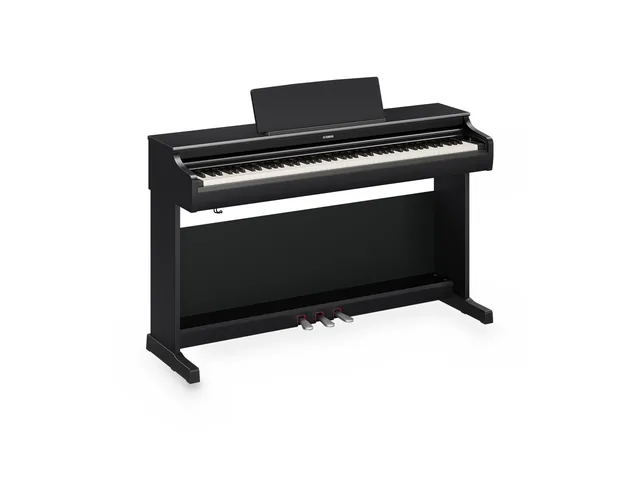
The best digital upright piano for most homes is the Yamaha YDP-166: GrandTouch-E keys with escapement, CFX sound, three pedals and Bluetooth. The Kawai CA501 has wooden keys, and the Yamaha YDP-146 costs least.

By Shahadat Shahi Published Updated
From a slim cabinet 299 mm deep to wooden keys with let-off: six digital upright pianos with three pedals, for homes that want a piano that stays put.
The short answer
Compare all 6-
No. 1 Our top pick
Best Overall
- Key action
- GrandTouch-E, synthetic ebony and ivory keytops, escapement
- Polyphony
- 192 notes
- Weight
- 42 kg (92 lb 10 oz)
GrandTouch-E keys with escapement, CFX sound, Bluetooth audio and MIDI.
Main limitation Plastic keys, not wood.
-
No. 2
Best Keys
- Key action
- Grand Feel Compact: 88 wooden keys, let-off, counterweights
- Polyphony
- 256 notes
- Weight
- 66 kg (145.5 lb)
88 wooden keys with let-off, Shigeru Kawai samples, 50 W + 50 W.
Main limitation 66 kg and 48.5 cm deep.
-
No. 3
Best Value
- Key action
- GHS (Graded Hammer Standard), matte black keytops
- Polyphony
- 192 notes
- Weight
- 38 kg
CFX sound, three pedals and Bluetooth in the Arius cabinet.
Main limitation GHS keys, no escapement.
-
No. 4
Best Kawai Console for Learners
- Key action
- Responsive Hammer Compact II, triple sensor
- Polyphony
- 192 notes
- Weight
- 37 kg (81.5 lb)
The CX202 is the console for learners who want Kawai's touch: triple-sensor keys,
SK-EX sound, built-in lessons, 20 W × 2 speakers and, unlike the KDP120 before it, Bluetooth audio for playing music from your phone. -
No. 5
Best Roland Console
- Key action
PHA-4 Standard, escapement, Ivory Feel- Polyphony
- 256 notes
- Weight
- 37.0 kg (82 lb)
The RP107 is the console to choose for Roland's escapement keys and Bluetooth audio at 37 kg.
-
No. 6
Best for Small Rooms
- Key action
- Smart Scaled Hammer Action, 5 touch levels
- Polyphony
- 192 notes
- Weight
- 34.0 kg
The
AP-S200 is the digital upright for small rooms: three pedals, 20 W + 20 W and Bluetooth in a cabinet 299 mm deep and 34 kg.
The
Compare all 6
Swipe the table sideways to see every column.
| Rank | Best for | Key action | Speakers | Bluetooth | Weight | Main downside | Amazon |
|---|---|---|---|---|---|---|---|
| 1Yamaha YDP-166#1 Best overall | Most homes | GrandTouch-E, escapement | 20 W × 2 | Audio and MIDI | 42 kg | Plastic keys, not wood | Check price on Amazon for the Yamaha YDP-166 (opens in a new tab) |
| 2Kawai CA501#2 Best keys | Wooden keys | Grand Feel Compact, wooden | 50 W + 50 W | MIDI and audio | 66 kg | Heavy and deep | Check price on Amazon for the Kawai CA501 (opens in a new tab) |
| 3Yamaha YDP-146#3 Best value | Value | GHS | 8 W × 2 | Audio and MIDI | 38 kg | No escapement | Check price on Amazon for the Yamaha YDP-146 (opens in a new tab) |
| 4Kawai CX202#4 Best for learners | Learners | RHC II, triple sensor | 20 W × 2 | MIDI and audio | 37 kg | No line outputs | Check price on Amazon for the Kawai CX202 (opens in a new tab) |
| 5Roland RP107#5 Best Roland | Roland keys, Bluetooth | 8 W × 2 | Audio and MIDI | 37.0 kg | Small speakers | Check price on Amazon for the Roland RP107 Digital Piano (opens in a new tab) | |
| 6Casio AP-S200#6 Small rooms | Small rooms | Smart Scaled Hammer Action | 20 W + 20 W | Adaptor included | 34.0 kg | No escapement | Check price on Amazon for the Casio AP-S200 (opens in a new tab) |
Tip
Measure the space before you choose: these cabinets are 136 to 142.5 cm wide and 299 to 485 mm deep, and they arrive in large, heavy boxes.
Weights and sizes are the makers' figures. Amazon pricing, sellers and finishes change often; use each "Check price on Amazon" button for the current offer.
Which digital upright fits your home?
Pick the route closest to you.
Start with Yamaha
- Needs
- Escapement keys, Bluetooth
- Risk
- Plastic keys, not wood
Start with Kawai CA501
- Needs
- Wooden keys, let-off
- Risk
- 66 kg, a deep cabinet
Start with Yamaha
- Needs
- CFX sound, three pedals, Bluetooth
- Risk
- No escapement
Start with Casio
- Needs
- 299 mm deep, 34 kg
- Risk
- No escapement
No. 1
Yamaha YDP-166
Best Digital Upright Overall
No. 2
Kawai CA501
Best Keys: Wooden
No. 3
Yamaha YDP-146
Best Value Console
No. 6
Casio AP-S200
Best for Small Rooms
Looking for the best digital upright piano? For most homes it's the Yamaha
Read the rest of the introduction
A digital upright piano, or console digital piano, is a digital piano built into a cabinet shaped like an acoustic upright: 88 weighted keys, three pedals and speakers inside, on a fixed stand. It never needs tuning, and it plays through headphones when the house is asleep.

What Is a Console Digital Piano?
A console digital piano is the home form of a digital piano: the keys, speakers and three pedals are built into a cabinet with a fixed stand, a music rest and usually a key cover, so it looks and sits like a small acoustic upright. Makers call them home pianos, consoles or cabinet pianos; on Amazon US you'll also see "upright digital piano".
A portable digital piano on a stand does the same job for less and moves, but you add the stand and pedals yourself; our guide to the best portable digital pianos covers those. If you want a grand piano's shape, our digital grand pianos guide covers the alternatives.
Quick Verdict
For learners, Roland keys or a small room: the Kawai CX202 has triple-sensor keys, lessons and 20 W × 2, the Roland RP107 escapement keys and Bluetooth audio, and the Casio AP-S200 is only 299 mm deep.
The 6 Best Digital Upright Pianos Compared
Best Digital Upright Overall
Yamaha YDP-166 — The Best Console Piano for Most Homes

Features
- Key action
- GrandTouch-E, synthetic ebony and ivory keytops, escapement
- Sound engine
- Yamaha CFX, VRM Lite
- Polyphony
- 192 notes
- Speakers
- 20 W × 2
- Weight
- 42 kg (92 lb 10 oz)
- Bluetooth
- Audio and MIDI
Decision question Do you want a home piano with escapement keys, three pedals and Bluetooth, in a cabinet that stays in one room?
Best for: families and students who want escapement keys and Bluetooth in a home cabinet. Not for: players who want wooden keys or the lowest cost.
Our verdict
The
Read the full review: Yamaha YDP-166
For wooden keys, the Kawai CA501 is the step up; to spend less, the
Pros
- +GrandTouch-E keys with escapement
- +Bluetooth audio and MIDI
- +20 W × 2 speakers
- +Two headphone jacks and a sliding key cover
Cons
- –No line outputs
- –42 kg
- –10 voices: a piano first
- –Plastic keys, not wood
- Best for
- families and students who want the best Arius keys and Bluetooth
- Main downside
- plastic keys, not wood
Who should skip it players who want wooden keys (the Kawai CA501) or the lowest cost (the
How it plays and sounds
The
Speakers and cabinet: 20 W × 2 through two 12 cm speakers, at 1,357 × 422 × 849 mm and 42 kg (92 lb 10 oz). Yamaha lists Black, Dark Rosewood, White Birch and White, and a bench depending on the area; the listing we link is black. Yamaha's YDP-166 specs have the full list.
View console specs
| Key action | GrandTouch-E, synthetic ebony and ivory keytops, escapement |
|---|---|
| Sound engine | Yamaha CFX, VRM Lite |
| Polyphony | 192 notes |
| Speakers | 20 W × 2 |
| Bluetooth | Audio and MIDI |
| Pedals | Three, half-pedal on the damper |
| Size | 1,357 × 422 × 849 mm |
| Weight | 42 kg (92 lb 10 oz) |
Take a closer look.
Best Digital Upright Overall

Best Keys: Wooden

The Grand Feel Compact wooden keys

Best Value Console

A
Best Keys: Wooden
Kawai CA501 — The Console Piano With Wooden Keys
- Angle
- The Grand Feel Compact wooden keys
Features
- Key action
- Grand Feel Compact: 88 wooden keys, let-off, counterweights
- Sound engine
- Harmonic Imaging XL,
SK-EX ,SK-5 , EX andK-60 - Polyphony
- 256 notes
- Speakers
- 50 W + 50 W, woofers and top speakers
- Weight
- 66 kg (145.5 lb)
- Bluetooth
- MIDI and audio
Decision question Do the keys come first, and do you want wooden keys with let-off in a cabinet?
Best for: serious students and returning players who want wooden keys at home. Not for: players on a budget or short of space.
Our verdict
The CA501 is the digital upright to buy if the keys matter most: wooden keys with let-off, Shigeru Kawai samples and the biggest speakers here.
Read the full review: Kawai CA501
For most first pianos, the
Pros
- +88 wooden keys with let-off and counterweights
- +Shigeru Kawai SK-EX and SK-5 samples
- +50 W + 50 W speaker system
- +Bluetooth MIDI and audio, line outputs
Cons
- –66 kg, the heaviest here
- –The deepest cabinet here, at 48.5 cm
- –More than most first-time buyers need
- –No 5-pin MIDI ports: USB and Bluetooth MIDI only
- Best for
- players who want wooden keys and the biggest speakers here
- Main downside
- 66 kg
Who should skip it players who'll move the piano, or want to spend less (the
How it plays and sounds
The CA501 is the console piano here with wooden keys. Kawai lists its Grand Feel Compact action: 88 wooden keys with grade-weighted hammers, Ivory Touch key surfaces, let-off simulation, triple sensors and counterweights in the bass. The sound is Kawai's Harmonic Imaging XL, sampled from the Shigeru Kawai
Speakers and cabinet: 50 W + 50 W through two woofers and two top speakers, Bluetooth MIDI and audio, line outputs, and Kawai's Grand Feel Pedal System with half-pedal on the damper and soft pedals. It's 142.5 cm wide and 48.5 cm deep and weighs 66 kg (145.5 lb); Kawai America lists a matching bench, and the listing we link is satin black. Kawai's CA501 specifications have the full list.
View console specs
| Key action | Grand Feel Compact: 88 wooden keys, let-off, counterweights |
|---|---|
| Sound engine | Harmonic Imaging XL, |
| Polyphony | 256 notes |
| Speakers | 50 W + 50 W, woofers and top speakers |
| Bluetooth | MIDI and audio |
| Pedals | Grand Feel Pedal System, half-pedal |
| Size | 142.5 cm wide, 48.5 cm deep |
| Weight | 66 kg (145.5 lb) |
Best Value Console
Yamaha YDP-146 — CFX Sound and Bluetooth in the Arius Cabinet for Less
- Angle
- A YDP-146 at home
Features
- Key action
- GHS (Graded Hammer Standard), matte black keytops
- Sound engine
- Yamaha CFX, VRM Lite
- Polyphony
- 192 notes
- Speakers
- 8 W × 2
- Weight
- 38 kg
- Bluetooth
- Audio and MIDI
Decision question Is a home cabinet with three pedals, CFX sound and Bluetooth enough, without escapement keys?
Best for: beginners and families who want a home cabinet for the least money. Not for: players who want escapement keys.
Our verdict
The
Read the full review: Yamaha YDP-146
Pros
- +CFX sound and 192-note polyphony, as on the YDP-166
- +Bluetooth audio and MIDI
- +Three pedals and a key cover
- +Two headphone jacks
Cons
- –GHS, Yamaha's entry action, without escapement
- –8 W × 2 speakers
- –No line outputs
- –10 voices: a piano first
- Best for
- beginners and families who want a cabinet with three pedals and Bluetooth for less
- Main downside
- no escapement
Who should skip it players who want escapement keys or bigger speakers (the
How it plays and sounds
The
Speakers and size: 8 W × 2 through two 12 cm speakers with diffusers, at 1,357 × 422 × 815 mm and 38 kg. Yamaha shows it in black, dark rosewood and white; the listing we link is black. Yamaha launched the
View console specs
| Key action | GHS (Graded Hammer Standard), matte black keytops |
|---|---|
| Sound engine | Yamaha CFX, VRM Lite |
| Polyphony | 192 notes |
| Speakers | 8 W × 2 |
| Bluetooth | Audio and MIDI |
| Pedals | Three, half-pedal on the damper |
| Size | 1,357 × 422 × 815 mm |
| Weight | 38 kg |
Best Kawai Console for Learners
Kawai CX202 — Kawai Keys, Lessons and Bluetooth Audio


- Angle
- A CX202 at home
Features
- Key action
- Responsive Hammer Compact II, triple sensor
- Sound engine
- Harmonic Imaging,
SK-EX - Polyphony
- 192 notes
- Speakers
- 20 W × 2
- Weight
- 37 kg (81.5 lb)
- Bluetooth
- MIDI and audio
Decision question Do you want a console with triple-sensor keys, lessons built in and speakers that fill a room?
Best for: students and families who want Kawai keys and lessons in a home cabinet. Not for: players who want escapement keys or line outputs.
Our verdict
The CX202 is the console for learners who want Kawai's touch: triple-sensor keys,
Read the full review: Kawai CX202
Pros
- +Triple-sensor Kawai keys
- +20 W × 2 speakers
- +Bluetooth MIDI and audio
- +Built-in lessons and Kawai's apps
Cons
- –No line outputs
- –17 voices: a piano first
- –Matte keys, no escapement or let-off
- –37 kg once assembled
- Best for
- learners who want Kawai keys, built-in lessons and stronger speakers
- Main downside
- no line outputs
Who should skip it players who want escapement keys (the
How it plays and sounds
The CX202 is Kawai's home console for learners, and the model Kawai names as the KDP120's successor. Kawai lists its Responsive Hammer Compact II action, with grade-weighted hammers, matte keys and triple sensors, Harmonic Imaging sound sampled from the Shigeru Kawai
Speakers and connections: 20 W × 2 through two 12 cm speakers, Bluetooth MIDI and audio, USB to host, two headphone jacks, and Kawai's PianoRemote and PiaBookPlayer apps, with built-in lesson books. It's 136.5 × 40.5 cm and weighs 37 kg (81.5 lb), in Premium Rosewood, Satin Black or Satin White; the listing we link is satin black. Kawai's CX202 specifications have the full list, and our review of the Kawai KDP120 explains what changed from the older model.
View console specs
| Key action | Responsive Hammer Compact II, triple sensor |
|---|---|
| Sound engine | Harmonic Imaging, |
| Polyphony | 192 notes |
| Speakers | 20 W × 2 |
| Bluetooth | MIDI and audio |
| Pedals | Grand Feel: damper (half-pedal), soft, sostenuto |
| Width | 136.5 cm |
| Weight | 37 kg (81.5 lb) |
Best Roland Console
Roland RP107 — Escapement Keys and Bluetooth Audio


- Angle
- An RP107 at home, with a bench sold separately
Features
- Key action
PHA-4 Standard, escapement, Ivory Feel- Sound engine
- SuperNATURAL Piano
- Polyphony
- 256 notes
- Speakers
- 8 W × 2
- Weight
- 37.0 kg (82 lb)
- Bluetooth
- Audio and MIDI
Decision question Do you want Roland's escapement keys and Bluetooth audio in a cabinet at 37 kg?
Best for: players who want escapement keys and Bluetooth audio in a home cabinet. Not for: players who want strong speakers or a bench included.
Our verdict
The RP107 is the console to choose for Roland's escapement keys and Bluetooth audio at 37 kg.
Read the full review: Roland RP107
Its speakers are the smallest of the Bluetooth picks here; the CX202 and
The Roland step up: the RP701 has the same keys with 12 W × 2 speakers, a display and an audio recorder, in a 46 kg cabinet, per Roland's RP701 specifications.
Pros
- +Escapement and Ivory Feel keys
- +Bluetooth audio and MIDI
- +256-note polyphony and 324 tones
- +USB for a flash drive
Cons
- –8 W × 2 speakers
- –No bench listed
- –Most tones only through the app
- –No line outputs
- Best for
- players who want escapement keys, Bluetooth audio and
256-note polyphony - Main downside
- 8 W × 2 speakers
Who should skip it players who want stronger speakers (the CX202) or a bench in the box.
How it plays and sounds
The RP107 is Roland's console on Amazon US. Roland lists its
Speakers and connections: 8 W × 2 through two 12 cm speakers, Bluetooth audio and MIDI, USB to a computer and to a flash drive, and two headphone jacks (one
View console specs
| Key action | |
|---|---|
| Sound engine | SuperNATURAL Piano |
| Polyphony | 256 notes |
| Speakers | 8 W × 2 |
| Bluetooth | Audio and MIDI |
| Pedals | Damper and soft (continuous), sostenuto |
| Size | 1,378 × 410 × 982 mm |
| Weight | 37.0 kg (82 lb) |
Best for Small Rooms
Casio AP-S200 — A Slim Console at 299 mm Deep


- Angle
- The AP-S200 against a wall
Features
- Key action
- Smart Scaled Hammer Action, 5 touch levels
- Sound engine
- AiR
- Polyphony
- 192 notes
- Speakers
- 20 W + 20 W
- Weight
- 34.0 kg
- Bluetooth
WU-BT10 adaptor included
Decision question Is floor space the limit, so a 299 mm deep cabinet makes the difference?
Best for: small rooms and apartments that need a cabinet with three pedals. Not for: players who want escapement or wooden keys.
Our verdict
The
Read the full review: Casio AP-S200
For better keys, the
Pros
- +299 mm deep, the slimmest here
- +34.0 kg, the lightest here
- +20 W + 20 W speakers
- +Bluetooth adaptor in the box
Cons
- –Bluetooth through an adaptor
- –No escapement
- –A slim cabinet without the depth of a classic upright
- –19 tones
- Best for
- small rooms that need a cabinet with three pedals
- Main downside
- a slim, light cabinet
Who should skip it players who want escapement or wooden keys (the
How it plays and sounds
The
Speakers and connections: 20 W + 20 W through two 12 cm speakers, two
View console specs
| Key action | Smart Scaled Hammer Action, 5 touch levels |
|---|---|
| Sound engine | AiR |
| Polyphony | 192 notes |
| Speakers | 20 W + 20 W |
| Bluetooth | |
| Pedals | Three, half-pedal on the damper |
| Size | 1,393 × 299 × 802 mm |
| Weight | 34.0 kg |
How to Choose a Digital Upright Piano
Five things decide which console piano suits your home.
Read more: keys and action, speakers and sound, Bluetooth and apps, space and weight, finish and bench
Keys and action
The keys matter most. The CA501 has 88 wooden keys with let-off; the
Speakers and sound
A cabinet has room for speakers. The CA501 lists 50 W + 50 W through woofers and top speakers; the
Bluetooth and apps
Bluetooth audio plays music from your phone through the piano, and Bluetooth MIDI connects apps without a cable. The
Space and weight
Measure before you buy. The picks are 136 to 142.5 cm wide and weigh 34 to 66 kg; the depth runs from 299 mm (
Finish and bench
Amazon listings often sell one finish: when we checked, the
Yamaha Upright Digital Pianos: Arius and Clavinova
Yamaha's digital uprights come in two lines. The Arius models are the home pianos sold widely online: the
Above the Arius sit Yamaha's Clavinova pianos, with wooden-key actions on the upper models. When we checked, Amazon US sold no Clavinova piano, so they have no button here; Yamaha sells them through its dealers.
Digital Upright Piano vs Acoustic Upright: What You're Comparing
An acoustic upright has strings and hammers, a sound no speaker fully copies, and it needs tuning and a stable room. A digital upright never needs tuning, plays through headphones, adds sounds, recording and apps, and weighs far less: 34 to 66 kg for the picks here.
If you have a home acoustic piano in mind and a budget to match, play one; for practice at any hour, in an apartment or a home that won't tune a piano, a digital upright is the practical choice. Our digital vs acoustic piano guide goes deeper, and our guide to cleaning piano keys and digital piano care covers the little upkeep a digital upright needs.
Other Console Pianos on Amazon US
Two more consoles had Amazon US offers when we checked. The Kawai CN201 has Kawai's Responsive Hammer III action with let-off and counterweights,
How We Pick
This guide ranks them from the makers' official spec pages, owner reports and published reviews, and every spec on the page comes from the maker's own page, linked in each chapter.
We rank on what matters most in a home piano, in this order: the keys, the sound and speakers, the pedals and connections, then the space it needs. Every pick had current Amazon US offers when we checked; we don't quote prices, because they change. No brand pays for a place, and our About page explains how we work. For portables and every other kind of piano, start with our best digital pianos guide.
Ready to explore more?
Frequently Asked Questions
What is a digital upright piano?
A digital upright piano is a digital piano in a cabinet shaped like an acoustic upright: 88 weighted keys, three pedals built in and speakers inside, on a fixed stand with a key cover. It needs no tuning and has a headphone jack, so it suits homes and apartments. Makers often call them console or home digital pianos.
Is a digital upright piano worth it?
If the piano will stay in one room, yes: a cabinet gives you three pedals, a key cover and speakers built into furniture, and it looks like a piano. A portable on a stand costs less and moves, but you add the stand and pedals yourself. If you'll move it often, a portable is the better buy.
What is the best upright digital piano?
For most homes, the Yamaha
Which Yamaha upright electric piano should I buy?
In Yamaha's Arius line, the
How much space does a console piano need?
Measure width, depth and height. The picks here are 136 to 142.5 cm wide; the depth runs from 299 mm (Casio
Do digital upright pianos need tuning?
No. A digital piano makes its sound electronically, so it never goes out of tune, and the cabinet needs only dusting and a dry cloth on the keys. That's one reason families choose one over an acoustic upright, which Yamaha's piano care guide says to tune once a year.
Shahadat Shahi
I write PianoRanked from London, and I spend a lot of my music time in my friend RA Mamun’s studio. I research this guide from the makers' published specs, owner reports and published reviews — no paid placements, no brand partnerships.
About meGet in touch Follow on Pinterest (opens in a new tab)