
Best Portable Digital Pianos & Keyboards 2026: 10 Top Picks
From a 10.5 kg piano that plays on batteries to wooden keys you can still move: ten portable digital pianos with 88 weighted keys.

By Shahadat Shahi Published Updated

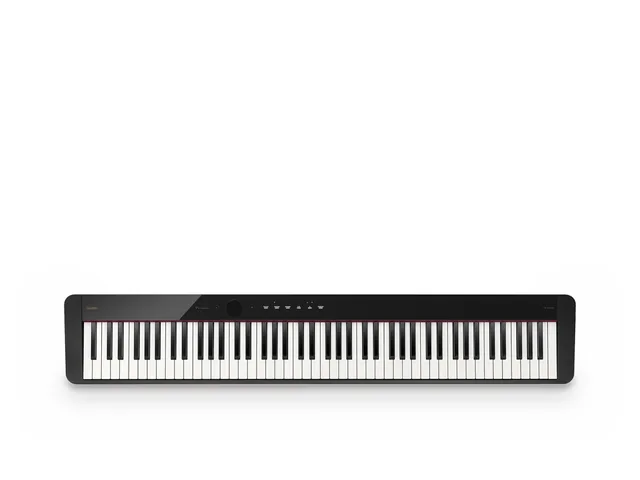
The short answer
Compare all 10-
No. 1 · Our top pick
Best Overall
- Key action
- Smart Scaled Hammer Action, 5 touch levels
- Polyphony
- 192 notes
- Weight
- 11.2 kg (24.7 lb)
88 weighted keys, 232 mm deep, 11.2 kg, batteries and Bluetooth in the box.
Main limitation 8 W + 8 W speakers.
-
No. 2
Best Yamaha
- Key action
- GHC (Graded Hammer Compact)
- Polyphony
- 192 notes
- Weight
- 11.5 kg (25 lb 6 oz)
Yamaha's CFX sound, Bluetooth audio and two headphone jacks at 11.5 kg.
Main limitation No battery power.
-
No. 3
Best for Gigs
- Key action
- PHA-4 Standard, escapement, Ivory Feel
- Polyphony
- 256 notes
- Weight
- 14.8 kg (32 lb 11 oz) with music rest
PHA-4 Standard keys with escapement, 11 W × 2 speakers and line outputs.
Main limitation 14.8 kg to carry.
-
No. 4
Lightest Weighted Portable
- Key action
- Scaled Hammer Action Keyboard II, 3 touch levels
- Polyphony
- 64 notes
- Weight
- 10.5 kg (23.1 lb)
The CDP-S160 is the portable to buy when weight decides: 10.5 kg, 232 mm deep and about 13 hours on batteries, with 88 weighted keys.
-
No. 5
Best Entry-Level Yamaha
- Key action
- GHS (Graded Hammer Standard)
- Polyphony
- 64 notes
- Weight
- 11.5 kg (25 lb 4 oz)
The P-45 is the simplest Yamaha portable: GHS keys, a short voice list and USB, at 11.5 kg.
-
No. 6
Best Entry-Level Action
- Key action
- PHA-4 Standard, escapement, Ivory Feel
- Polyphony
- 96 notes
- Weight
- 12.6 kg (27 lb 13 oz), music rest off
The FP-10 is the entry-level portable with the best keys here: Roland's escapement action at 12.6 kg.
-
No. 7
Best Kawai Portable
- Key action
- Responsive Hammer Compact (RHC)
- Polyphony
- 192 notes
- Weight
- 12 kg (26.5 lb)
The ES120 is the portable for players who want Kawai's keys and piano sound, with Bluetooth audio and two headphone jacks, at 12 kg.
-
No. 8
Best Premium Portable
- Key action
- GrandTouch-S, wooden white keys, escapement
- Polyphony
- 256 notes
- Weight
- 22.0 kg (48 lb 8 oz)
The P-525 is the portable for advanced players who want wooden keys and flagship sound, and who move the piano only now and then.
-
No. 9
Best Premium Roland Portable
- Key action
- PHA-4 Standard, escapement, Ivory Feel
- Polyphony
- 256 notes
- Weight
- 19.3 kg (42 lb 9 oz)
The FP-60X is for players who sing or play bigger rooms: the FP-30X's keys plus a mic input, more sounds and stronger speakers.
-
No. 10
Best Premium Kawai Portable
- Key action
- Responsive Hammer III, let-off, triple sensor, counterweights
- Polyphony
- 256 notes
- Weight
- 17.0 kg (37 1/2 lb), music rest off
The ES920 is the Kawai portable for players who want Kawai's best portable action, 40 W of speakers and full connections, at 17 kg.
The PX-S1100 is the all-rounder you can carry anywhere, the P-225 is the Yamaha to buy, and the FP-30X is the one that plays for other people.
Compare all 10
Swipe the table sideways to see every column.
| Rank | Best for | Weight | Depth | Key action | Battery power | Main downside | Amazon |
|---|---|---|---|---|---|---|---|
| 1Casio PX-S1100#1 · Best overall | Moving it often | 11.2 kg | 232 mm | Smart Scaled Hammer Action | 6 AA | 8 W + 8 W speakers | Check price on Amazon for the Casio PX-S1100 (opens in a new tab) |
| 2Yamaha P-225#2 · Best Yamaha | Yamaha sound, light body | 11.5 kg | 272 mm | GHC | No | No batteries | Check price on Amazon for the Yamaha P-225 (opens in a new tab) |
| 3Roland FP-30X#3 · Best for gigs | Lessons and small gigs | 14.8 kg | 284 mm | PHA-4 Standard, escapement | No | 14.8 kg to carry | Check price on Amazon for the Roland FP-30X (opens in a new tab) |
| 4Casio CDP-S160#4 · Lightest | Lightest carry | 10.5 kg | 232 mm | Scaled Hammer Action II | 6 AA, about 13 h | 64 notes, no Bluetooth | Check price on Amazon for the Casio CDP-S160 (opens in a new tab) |
| 5Yamaha P-45#5 · Entry-level Yamaha | A simple first Yamaha | 11.5 kg | 295 mm | GHS | No | 64 notes, 1 headphone jack | Check price on Amazon for the Yamaha P-45 (opens in a new tab) |
| 6Roland FP-10#6 · Entry-level action | Keys first, simple | 12.6 kg | 258 mm | PHA-4 Standard, escapement | No | 96 notes, 1 headphone jack | Check price on Amazon for the Roland FP-10 (opens in a new tab) |
| 7Kawai ES120#7 · Best Kawai | Kawai keys and sound | 12 kg | 28 cm | RHC | No | On/off pedal in the box | Check price on Amazon for the Kawai ES120 (opens in a new tab) |
| 8Yamaha P-525#8 · Best premium | Wooden keys | 22.0 kg | 376 mm | GrandTouch-S, wooden | No | The heaviest here | Check price on Amazon for the Yamaha P-525 (opens in a new tab) |
| 9Roland FP-60X#9 · Premium Roland | Singers, bigger rooms | 19.3 kg | 344 mm | PHA-4 Standard, escapement | No | 19.3 kg to carry | Check price on Amazon for the Roland FP-60X (opens in a new tab) |
| 10Kawai ES920#10 · Premium Kawai | Kawai, best action | 17.0 kg | 37.5 cm | Responsive Hammer III | No | Deeper and heavier | Check price on Amazon for the Kawai ES920 (opens in a new tab) |
Tip
Weigh the whole carry, not just the piano: a folding stand, a pedal and a gig bag come with it. If you'll carry everything in one trip, start with the lightest picks here, the CDP-S160, PX-S1100, P-45 and P-225, all under 12 kg.
Weights and depths are the makers' figures for the piano alone (the FP-30X with its music rest). Amazon pricing, sellers and bundles change often; use each "Check price on Amazon" button for the current offer.
Which portable piano fits the way you'll use it?
Pick the route closest to you. Each one starts with the portable that protects what matters most for that player.
Start with Casio PX-S1100
- Needs
- Light, slim, batteries, Bluetooth
- Risk
- Smaller speakers
Start with Casio CDP-S160
- Needs
- Lowest weight, long battery life
- Risk
- 64 notes, no Bluetooth
Start with Roland FP-30X
- Needs
- Escapement keys, speakers, line outputs
- Risk
- 14.8 kg to carry
Start with Yamaha P-525
- Needs
- Wooden keys, flagship sound
- Risk
- 22 kg to carry
No. 1
Casio PX-S1100
Best Overall Portable
No. 4
Casio CDP-S160
Lightest Weighted Portable
No. 3
Roland FP-30X
Best for Gigs and Lessons
No. 8
Yamaha P-525
Best Premium Portable
Looking for the best portable digital piano? For most players it's the Casio PX-S1100: 88 weighted keys, 232 mm deep, 11.2 kg and battery power. The Yamaha P-225 is the best Yamaha portable, the Roland FP-30X is the one with the speakers and outputs for lessons and small gigs, and the Casio CDP-S160 is the lightest at 10.5 kg. We haven't played these pianos: every spec comes from the makers' own pages, and we don't quote prices, because they change.
Read the rest of the introduction
A portable piano here means a digital piano with 88 weighted keys and no furniture cabinet, light enough to carry to lessons, gigs or another room. We rank them on what matters when you move them: weight, depth, battery power and the keys, then speakers and connections.

Portable Piano vs Portable Keyboard Piano: What's the Difference?
A portable piano is a digital piano with 88 weighted hammer-action keys and no cabinet, built around piano sound, so practice on it carries over to an acoustic piano. Every pick in this guide is one. A portable keyboard usually has 61 or 76 light keys, hundreds of sounds and backing rhythms, and often runs on batteries: easier to carry, but not built for piano technique.
If you're choosing between them, our digital piano vs keyboard guide explains the split, and our explainer on weighted vs semi-weighted keys covers the key action. For a cabinet piano that stays in one room, see our best digital pianos hub.
Quick Verdict
The best portable digital piano for most players is the Casio PX-S1100: 88 weighted keys in a 232 mm body, 11.2 kg, battery power and Bluetooth in the box. The Yamaha P-225 is the best Yamaha portable, and the Roland FP-30X has the speakers and outputs for lessons and small gigs.
For the lightest carry, a first Yamaha, entry-level escapement keys, Kawai, wooden keys or a mic input: the Casio CDP-S160 weighs 10.5 kg, the Yamaha P-45 keeps it simple, the Roland FP-10 has the FP-30X's keys, the Kawai ES120 and ES920 are Kawai's portables, the Yamaha P-525 has wooden keys, and the Roland FP-60X adds a mic input.
All 10 Portable Digital Pianos Compared by Weight and Depth
Best Overall Portable
Casio PX-S1100 — The Best Portable Digital Piano for Most Players


- Front
- From above
Features
- Key action
- Smart Scaled Hammer Action, 5 touch levels
- Polyphony
- 192 notes
- Speakers
- 8 W + 8 W
- Weight
- 11.2 kg (24.7 lb)
- Depth
- 232 mm (9.1 in)
- Battery power
- 6 AA, about 4 hours
Decision question Will you carry the piano often, and would batteries and Bluetooth make it easier to play anywhere?
Best for: players who move their piano often and want batteries and Bluetooth. Not for: players who need speakers for small gigs or wooden keys.
Read the full review: Casio PX-S1100
Our verdict
The PX-S1100 is the best portable digital piano for most players: weighted 88 keys in a 232 mm body, battery power and Bluetooth in the box, at 11.2 kg.
If you'd rather have stronger speakers and outputs for small gigs, the Roland FP-30X is the step up; if every gram counts, the Casio CDP-S160 is lighter still.
Pros
- +232 mm deep and 11.2 kg
- +Runs on six AA batteries
- +Bluetooth audio and MIDI adaptor in the box
- +Two headphone jacks and a 1/4-inch line output
Cons
- –8 W + 8 W speakers, less than the FP-30X
- –Bluetooth needs the plug-in adaptor
- –The SP-3 pedal is on/off; half-damper needs the optional SP-34 unit
- Best for
- players who move their piano often and want batteries and Bluetooth
- Main downside
- 8 W + 8 W speakers
Who should skip it players who want stronger speakers for small gigs (the Roland FP-30X) or wooden keys (the Yamaha P-525).
How it plays and sounds
The PX-S1100 is the portable most players should start with: 88 weighted keys in a body only 232 mm (9.1 in) deep that weighs 11.2 kg (24.7 lb) and runs on six AA batteries, for about four hours by Casio's figure. Casio lists its Smart Scaled Hammer Action keyboard with five touch levels, the Multi-dimensional Morphing AiR sound source, 192-note polyphony and 18 tones.
Speakers and connections: 8 W + 8 W, two headphone jacks, a 1/4-inch line output, an audio input and USB. Bluetooth audio and MIDI come through Casio's WU-BT10 adaptor, which is in the box with the SP-3 pedal and a music stand. Casio's PX-S1100 page has the full list.
View portable specs
| Key action | Smart Scaled Hammer Action, 5 touch levels |
|---|---|
| Weight | 11.2 kg (24.7 lb) |
| Depth | 232 mm (9.1 in) |
| Battery power | 6 AA, about 4 hours |
| Polyphony | 192 notes |
| Speakers | 8 W + 8 W |
| Connections | 2 headphone jacks, 1/4-inch line out, audio in, USB, Bluetooth audio and MIDI (WU-BT10 adaptor) |
| In the box | SP-3 pedal, music stand, WU-BT10 Bluetooth adaptor |
Take a closer look.

Best for Gigs and Lessons

Control panel
Best Yamaha Portable
Yamaha P-225 — The Yamaha Portable Piano Most Players Should Buy


- Angle
- Control panel
Features
- Key action
- GHC (Graded Hammer Compact)
- Polyphony
- 192 notes
- Speakers
- 7 W × 2
- Weight
- 11.5 kg (25 lb 6 oz)
- Depth
- 272 mm (10-11/16 in)
- Battery power
- No (AC adaptor)
Decision question Do you want Yamaha's concert grand sound and Bluetooth audio in a piano you can still carry?
Best for: players who want Yamaha's CFX sound in a light, slim body. Not for: players who need battery power.
Read the full review: Yamaha P-225
Our verdict
The P-225 is the Yamaha portable to buy: the CFX sound, Bluetooth audio and two headphone jacks, at 11.5 kg.
The P-45 costs less to start with and keeps Yamaha's GHS keys; the P-525 adds wooden keys at almost twice the weight.
Pros
- +Yamaha's CFX sound with VRM Lite
- +11.5 kg and 272 mm deep
- +Bluetooth audio and 24-bit USB audio
- +Two headphone jacks and an AUX output
Cons
- –No battery power
- –7 W × 2 speakers
- –Bluetooth MIDI needs the optional UD-BT01
- Best for
- players who want Yamaha's CFX sound in a light, slim body
- Main downside
- no battery power
Who should skip it players who need battery power (the Casio PX-S1100) or the lowest first cost (the Yamaha P-45).
How it plays and sounds
The P-225 is the Yamaha portable piano most players should buy, and the P-series successor to the P-125 this guide used to rank, which Amazon US no longer offered when we checked. Yamaha lists its GHC (Graded Hammer Compact) keyboard, the CFX concert grand sound with key-off samples and VRM Lite, 192-note polyphony and 24 voices, at 11.5 kg (25 lb 6 oz) and 272 mm deep.
Speakers and connections: 7 W × 2, two headphone jacks, an AUX output, USB to host with 24-bit USB audio, and Bluetooth audio. Bluetooth MIDI needs Yamaha's optional UD-BT01 adaptor. A footswitch and music rest are in the box, and the matching L-200 stand takes the LP-1 three-pedal unit. Yamaha's P-225 specs have the full list.
View portable specs
| Key action | GHC (Graded Hammer Compact) |
|---|---|
| Weight | 11.5 kg (25 lb 6 oz) |
| Depth | 272 mm (10-11/16 in) |
| Battery power | No (AC adaptor) |
| Polyphony | 192 notes |
| Speakers | 7 W × 2 |
| Connections | 2 headphone jacks, AUX OUT, USB to host (24-bit audio), Bluetooth audio |
| In the box | Footswitch, music rest, AC adaptor |
Best for Gigs and Lessons
Roland FP-30X — The Portable for Lessons, Rehearsals and Small Gigs
- Angle
- Control panel
Features
- Key action
- PHA-4 Standard, escapement, Ivory Feel
- Polyphony
- 256 notes
- Speakers
- 11 W × 2
- Weight
- 14.8 kg (32 lb 11 oz) with music rest
- Depth
- 284 mm (11-3/16 in)
- Battery power
- No (AC adaptor)
Decision question Will the piano play for other people, so stronger speakers and real line outputs matter?
Best for: players who take the piano to lessons, rehearsals and small gigs. Not for: players who carry their piano every day.
Read the full review: Roland FP-30X
Our verdict
The FP-30X is the portable to choose if your piano plays for other people: Roland's escapement keys, 11 W × 2 speakers and real line outputs, in a body you can still carry.
If you carry it often and play mostly for yourself, the PX-S1100 or the Roland FP-10, which has the same keys, is lighter.
Pros
- +PHA-4 Standard keys with escapement
- +11 W × 2 speakers and 1/4-inch line outputs
- +Bluetooth audio and MIDI built in
- +256-note polyphony
Cons
- –14.8 kg, heavier than most here
- –No battery power
- –The DP-2 is a small on/off pedal switch
- Best for
- players who take the piano to lessons, rehearsals and small gigs
- Main downside
- 14.8 kg, heavier than most here
Who should skip it players who carry their piano every day (the Casio PX-S1100 is 3.6 kg lighter).
How it plays and sounds
The FP-30X is the portable for players who take their piano to lessons, rehearsals and small gigs. Roland lists its PHA-4 Standard keyboard with escapement and Ivory Feel key tops, SuperNATURAL Piano sound, 256-note polyphony and 56 tones on the panel (321 through the Roland Piano App).
Speakers and connections: 11 W × 2, 1/4-inch line outputs, two headphone jacks, USB for MIDI and audio, a USB memory port, and Bluetooth audio and MIDI, at 14.8 kg (32 lb 11 oz) with the music rest and 284 mm deep. The DP-2 pedal switch is in the box; Roland's KSC-70 stand takes the KPD-70 three-pedal unit. Roland's FP-30X specifications have the full list.
View portable specs
| Key action | PHA-4 Standard, escapement, Ivory Feel |
|---|---|
| Weight | 14.8 kg (32 lb 11 oz) with music rest |
| Depth | 284 mm (11-3/16 in) |
| Battery power | No (AC adaptor) |
| Polyphony | 256 notes |
| Speakers | 11 W × 2 |
| Connections | 1/4-inch line outputs, 2 headphone jacks, USB (MIDI and audio), USB memory, Bluetooth audio and MIDI |
| In the box | DP-2 pedal switch, music rest, AC adaptor |
Lightest Weighted Portable
Casio CDP-S160 — The Lightest Weighted Portable Piano Here


- Angle
- On a table
Features
- Key action
- Scaled Hammer Action Keyboard II, 3 touch levels
- Polyphony
- 64 notes
- Speakers
- 8 W + 8 W
- Weight
- 10.5 kg (23.1 lb)
- Depth
- 232 mm (9.1 in)
- Battery power
- 6 AA, about 13 hours
Decision question Is carry weight the thing that decides it, with battery power a bonus?
Best for: players who carry their piano most and play on batteries. Not for: players who want Bluetooth or two headphone jacks.
Read the full review: Casio CDP-S160
Our verdict
The CDP-S160 is the portable to buy when weight decides: 10.5 kg, 232 mm deep and about 13 hours on batteries, with 88 weighted keys.
Spend more on the PX-S1100 for Bluetooth, two headphone jacks and 192-note polyphony.
Pros
- +10.5 kg, the lightest here
- +About 13 hours on six AA batteries
- +232 mm deep
- +Optional SP-34 three-pedal unit with half-damper
Cons
- –64-note polyphony
- –No Bluetooth
- –One headphone jack, which is also the output
- Best for
- players who carry their piano most and play on batteries
- Main downside
- 64-note polyphony and no Bluetooth
Who should skip it players who want Bluetooth, two headphone jacks or more polyphony (the Casio PX-S1100).
How it plays and sounds
The CDP-S160 is the lightest piano in this guide: 10.5 kg (23.1 lb) and 232 mm (9.1 in) deep, with 88 weighted keys. It runs on six AA batteries for about 13 hours by Casio's figure, the longest battery life here. Casio lists its Scaled Hammer Action Keyboard II with three touch levels, 64-note polyphony, 10 tones and a one-track recorder.
Speakers and connections: 8 W + 8 W, one stereo mini jack for headphones or output, an audio input and USB; there is no Bluetooth. The SP-3 pedal is in the box, and Casio's optional SP-34 unit adds three pedals with half-damper. It replaces the Casio CDP-S110 this guide used to rank, which Amazon US listed only through a single seller when we checked. Casio's CDP-S160 page has the full list. Our full review of the Casio CDP-S160 covers who it suits and how it compares with the P-45 and FP-10.
View portable specs
| Key action | Scaled Hammer Action Keyboard II, 3 touch levels |
|---|---|
| Weight | 10.5 kg (23.1 lb) |
| Depth | 232 mm (9.1 in) |
| Battery power | 6 AA, about 13 hours |
| Polyphony | 64 notes |
| Speakers | 8 W + 8 W |
| Connections | 1 headphone/output jack (stereo mini), audio in, USB |
| In the box | SP-3 pedal, AC adaptor |
Best Entry-Level Yamaha
Yamaha P-45 — The Simplest Way Into a Yamaha Portable Piano


- Angle
- From above
Features
- Key action
- GHS (Graded Hammer Standard)
- Polyphony
- 64 notes
- Speakers
- 6 W × 2
- Weight
- 11.5 kg (25 lb 4 oz)
- Depth
- 295 mm (11-1/2 in)
- Battery power
- No (AC adaptor)
Decision question Do you want the simplest Yamaha with weighted keys, and no extras you won't use?
Best for: beginners who want a simple Yamaha with weighted keys. Not for: players who want Bluetooth or more polyphony.
Read the full review: Yamaha P-45
Our verdict
The P-45 is the simplest Yamaha portable: GHS keys, a short voice list and USB, at 11.5 kg.
The P-225 is the better long-term Yamaha, with the CFX sound, 192-note polyphony, Bluetooth audio and two headphone jacks.
Pros
- +Yamaha's GHS weighted keys
- +11.5 kg
- +Simple to use
- +Half-pedal with the optional FC3A
Cons
- –64-note polyphony
- –One headphone jack, no AUX output
- –No Bluetooth
- Best for
- beginners who want a simple Yamaha with weighted keys
- Main downside
- 64-note polyphony and one headphone jack
Who should skip it players who want Bluetooth or the CFX sound (the Yamaha P-225).
How it plays and sounds
The P-45 is the simplest way into a Yamaha portable piano. Yamaha lists its GHS (Graded Hammer Standard) keyboard, AWM sound, 64-note polyphony and 10 voices, at 11.5 kg (25 lb 4 oz) and 295 mm (11-1/2 in) deep.
Speakers and connections: 6 W × 2, one headphone jack and USB to host; there is no Bluetooth and no AUX output. A footswitch, music rest and AC adaptor are in the box, and Yamaha lists half-pedal support with its optional FC3A pedal. Yamaha's P-45 specs have the full list.
View portable specs
| Key action | GHS (Graded Hammer Standard) |
|---|---|
| Weight | 11.5 kg (25 lb 4 oz) |
| Depth | 295 mm (11-1/2 in) |
| Battery power | No (AC adaptor) |
| Polyphony | 64 notes |
| Speakers | 6 W × 2 |
| Connections | 1 headphone jack, USB to host |
| In the box | Footswitch, music rest, AC adaptor |
Best Entry-Level Action
Roland FP-10 — Escapement Keys in an Entry-Level Portable


- Angle
- PHA-4 Standard keys
Features
- Key action
- PHA-4 Standard, escapement, Ivory Feel
- Polyphony
- 96 notes
- Speakers
- 6 W × 2
- Weight
- 12.6 kg (27 lb 13 oz), music rest off
- Depth
- 258 mm (10-3/16 in)
- Battery power
- No (AC adaptor)
Decision question Do the keys matter more to you than speakers, polyphony and Bluetooth audio?
Best for: beginners who want the FP-30X's keys in a lighter, simpler piano. Not for: players who want Bluetooth audio or line outputs.
Read the full review: Roland FP-10
Our verdict
The FP-10 is the entry-level portable with the best keys here: Roland's escapement action at 12.6 kg.
Step up to the FP-30X for Bluetooth audio, line outputs, two headphone jacks and 256-note polyphony.
Pros
- +PHA-4 Standard keys with escapement, as on the FP-30X
- +258 mm deep
- +Bluetooth MIDI for apps
- +Simple to use
Cons
- –96-note polyphony
- –One headphone jack
- –No Bluetooth audio or line outputs
- Best for
- beginners who want the FP-30X's keys in a lighter, simpler piano
- Main downside
- 96-note polyphony, MIDI-only Bluetooth
Who should skip it players who want Bluetooth audio or line outputs (the Roland FP-30X).
How it plays and sounds
The FP-10 puts Roland's PHA-4 Standard keys, with escapement and Ivory Feel, into an entry-level portable: the same keyboard as the FP-30X in a body 258 mm (10-3/16 in) deep at 12.6 kg (27 lb 13 oz) with the music rest off. Roland lists SuperNATURAL Piano sound and 96-note polyphony.
Speakers and connections: 6 W × 2, one stereo mini headphone jack that also works as an output, USB, and Bluetooth MIDI for apps (no Bluetooth audio). A pedal switch and music rest are in the box, and Roland's KSCFP10 stand fits it. Roland's FP-10 specifications have the full list.
View portable specs
| Key action | PHA-4 Standard, escapement, Ivory Feel |
|---|---|
| Weight | 12.6 kg (27 lb 13 oz), music rest off |
| Depth | 258 mm (10-3/16 in) |
| Battery power | No (AC adaptor) |
| Polyphony | 96 notes |
| Speakers | 6 W × 2 |
| Connections | 1 headphone jack (stereo mini, usable as output), USB, Bluetooth MIDI |
| In the box | Pedal switch, music rest, AC adaptor |
Best Kawai Portable
Kawai ES120 — Kawai's Portable Piano for Home and Lessons


- Front
- Control panel
Features
- Key action
- Responsive Hammer Compact (RHC)
- Polyphony
- 192 notes
- Speakers
- 10 W + 10 W
- Weight
- 12 kg (26.5 lb)
- Depth
- 28 cm (11 in)
- Battery power
- No (AC adaptor)
Decision question Do you want Kawai's keys and piano sound, with Bluetooth audio, in a portable?
Best for: players who want Kawai's keys and Shigeru Kawai piano sound. Not for: players who need battery power.
Read the full review: Kawai ES120
Our verdict
The ES120 is the portable for players who want Kawai's keys and piano sound, with Bluetooth audio and two headphone jacks, at 12 kg.
The ES920 adds Responsive Hammer III keys and 20 W × 2 speakers at 17 kg.
Pros
- +Shigeru Kawai SK-EX piano sound
- +Bluetooth MIDI and audio
- +Two headphone jacks and a line output
- +10 W + 10 W speakers
Cons
- –No battery power
- –The F-1SP pedal is on/off; half-pedal needs the optional F-10H
- –12 kg, heavier than the Casios and Yamahas here
- Best for
- players who want Kawai's keys and Shigeru Kawai piano sound
- Main downside
- the F-1SP pedal is on/off
Who should skip it players who need battery power (the Casio PX-S1100) or line outputs on a lighter piano.
How it plays and sounds
The ES120 is Kawai's portable piano for home and lessons. Kawai lists its Responsive Hammer Compact (RHC) action with grade-weighted hammers, Harmonic Imaging sound sampled from the Shigeru Kawai SK-EX and EX concert grands, 192-note polyphony and 25 sounds, at 12 kg (26.5 lb) and 28 cm (11 in) deep.
Speakers and connections: 10 W + 10 W, two 1/4-inch headphone jacks, a 1/4-inch line output, USB to host, and Bluetooth MIDI and audio. The F-1SP switch pedal is in the box; the damper input supports half-pedal with Kawai's optional F-10H. Kawai's ES120 page has the full list.
View portable specs
| Key action | Responsive Hammer Compact (RHC) |
|---|---|
| Weight | 12 kg (26.5 lb) |
| Depth | 28 cm (11 in) |
| Battery power | No (AC adaptor) |
| Polyphony | 192 notes |
| Speakers | 10 W + 10 W |
| Connections | 2 headphone jacks, 1/4-inch line out, USB to host, Bluetooth MIDI and audio |
| In the box | F-1SP switch pedal, music rest |
Best Premium Portable
Yamaha P-525 — Wooden Keys in a Portable Piano


- Angle
- Control panel
Features
- Key action
- GrandTouch-S, wooden white keys, escapement
- Polyphony
- 256 notes
- Speakers
- (20 W + 6 W) × 2
- Weight
- 22.0 kg (48 lb 8 oz)
- Depth
- 376 mm (14.8 in)
- Battery power
- No (AC adaptor)
Decision question Do you want wooden keys and flagship sound, and will you move the piano only now and then?
Best for: advanced players who want wooden keys and move the piano now and then. Not for: anyone who carries the piano often.
Read the full review: Yamaha P-525
Our verdict
The P-525 is the portable for advanced players who want wooden keys and flagship sound, and who move the piano only now and then.
For a piano you carry often, the lighter picks above make more sense.
Pros
- +GrandTouch-S wooden white keys with escapement
- +CFX and Bösendorfer Imperial sounds
- +The strongest speakers here
- +MIDI, AUX and Bluetooth audio and MIDI
Cons
- –22 kg, the heaviest here
- –376 mm deep
- –No battery power
- Best for
- advanced players who want wooden keys and move the piano now and then
- Main downside
- 22 kg, the heaviest here
Who should skip it anyone who carries the piano often: at 22 kg it's twice the PX-S1100.
How it plays and sounds
The P-525 is the portable with wooden keys. Yamaha lists its GrandTouch-S keyboard with wooden white keys, synthetic ebony and ivory keytops and escapement, the CFX and Bösendorfer Imperial piano sounds with VRM and Grand Expression Modeling, and 256-note polyphony.
Speakers and connections: (20 W + 6 W) × 2, two headphone jacks, AUX in and out, MIDI in and out, USB to host and to device, and Bluetooth audio and MIDI, at 22.0 kg (48 lb 8 oz) and 376 mm deep. The FC3A foot pedal and music rest are in the box; the L-515 stand takes the LP-1 three-pedal unit. Yamaha's P-525 specs have the full list.
View portable specs
| Key action | GrandTouch-S, wooden white keys, escapement |
|---|---|
| Weight | 22.0 kg (48 lb 8 oz) |
| Depth | 376 mm (14.8 in) |
| Battery power | No (AC adaptor) |
| Polyphony | 256 notes |
| Speakers | (20 W + 6 W) × 2 |
| Connections | 2 headphone jacks, AUX in/out, MIDI in/out, USB to host and device, Bluetooth audio and MIDI |
| In the box | FC3A foot pedal, music rest, AC adaptor |
Best Premium Roland Portable
Roland FP-60X — Roland's Portable for Bigger Rooms and Singers

Features
- Key action
- PHA-4 Standard, escapement, Ivory Feel
- Polyphony
- 256 notes
- Speakers
- 13 W × 2
- Weight
- 19.3 kg (42 lb 9 oz)
- Depth
- 344 mm (13-9/16 in)
- Battery power
- No (AC adaptor)
Decision question Do you sing while you play, or need more sounds and a microphone input?
Best for: players who sing or play bigger rooms and want a mic input. Not for: players who carry the piano often.
Read the full review: Roland FP-60X
Our verdict
The FP-60X is for players who sing or play bigger rooms: the FP-30X's keys plus a mic input, more sounds and stronger speakers.
If you only need the piano, the FP-30X gives you the same keys at 14.8 kg.
Pros
- +Microphone input for singing
- +358 tones and a display
- +The DP-10 continuous damper pedal in the box
- +Bluetooth audio and MIDI
Cons
- –19.3 kg to carry
- –344 mm deep
- –No battery power
- Best for
- players who sing or play bigger rooms and want a mic input
- Main downside
- 19.3 kg to carry
Who should skip it players who carry the piano often (the FP-30X has the same keys at 14.8 kg).
How it plays and sounds
The FP-60X is Roland's portable for players who sing or play bigger rooms. Roland lists the same PHA-4 Standard keyboard with escapement as the FP-30X, SuperNATURAL Piano sound, 256-note polyphony and 358 tones, with a display.
Speakers and connections: 13 W × 2 from a speaker box, a microphone input, a stereo input, 1/4-inch outputs, two headphone jacks, USB audio and MIDI, a USB memory port, and Bluetooth audio and MIDI, at 19.3 kg (42 lb 9 oz) and 344 mm deep. The DP-10 damper pedal is in the box. Roland's FP-60X specifications have the full list.
View portable specs
| Key action | PHA-4 Standard, escapement, Ivory Feel |
|---|---|
| Weight | 19.3 kg (42 lb 9 oz) |
| Depth | 344 mm (13-9/16 in) |
| Battery power | No (AC adaptor) |
| Polyphony | 256 notes |
| Speakers | 13 W × 2 |
| Connections | Mic input, stereo input, 1/4-inch outputs, 2 headphone jacks, USB audio and MIDI, USB memory, Bluetooth audio and MIDI |
| In the box | DP-10 damper pedal, music rest, AC adaptor |
Best Premium Kawai Portable
Kawai ES920 — Kawai's Best Portable Action, With Stronger Speakers

Features
- Key action
- Responsive Hammer III, let-off, triple sensor, counterweights
- Polyphony
- 256 notes
- Speakers
- 20 W × 2
- Weight
- 17.0 kg (37 1/2 lb), music rest off
- Depth
- 37.5 cm (14 3/4 in)
- Battery power
- No (AC adaptor)
Decision question Do you want Kawai's best portable action with 40 W of speakers and full MIDI, and can you carry 17 kg?
Best for: Kawai players who want Kawai's best portable action and full connections. Not for: players who want the lightest Kawai.
Read the full review: Kawai ES920
Our verdict
The ES920 is the Kawai portable for players who want Kawai's best portable action, 40 W of speakers and full connections, at 17 kg.
The ES120 is lighter and slimmer if you mostly play at home.
Pros
- +Responsive Hammer III with let-off and counterweights
- +Shigeru Kawai SK-EX and SK-5 samples, 256-note polyphony
- +20 W × 2 speakers and 4-band EQ faders
- +Full MIDI, line in and out, and Bluetooth
Cons
- –37.5 cm deep
- –No battery power
- –17 kg, heavier than most portables
- Best for
- Kawai players who want Kawai's best portable action, stronger speakers and full connections
- Main downside
- 17 kg and 37.5 cm deep
Who should skip it players who want the lightest Kawai (the ES120 is 12 kg).
How it plays and sounds
The ES920 is the top of Kawai's portables, the one Kawai America lists above the ES60 and ES120. Kawai lists its Responsive Hammer III action with grade-weighted hammers, Ivory Touch white keys, let-off, triple sensors and counterweights, Harmonic Imaging XL sound from the Shigeru Kawai SK-EX and SK-5, Kawai EX and K-60 pianos, 256-note polyphony and 38 voices, at 17.0 kg (37 1/2 lb) and 37.5 cm deep with the music rest off.
Speakers and connections: 20 W × 2 with a speakers on/off switch, 4-band EQ faders, an OLED display, 1/4-inch and 1/8-inch headphone jacks, 1/4-inch line outputs and a line input, MIDI in and out, USB to host and to device, and Bluetooth MIDI and audio. The F-10H pedal, which supports half-pedal, is in the box. Kawai America's ES920 page has the full list, and our Kawai ES920 review covers it in depth.
View portable specs
| Key action | Responsive Hammer III, let-off, triple sensor, counterweights |
|---|---|
| Weight | 17.0 kg (37 1/2 lb), music rest off |
| Depth | 37.5 cm (14 3/4 in) |
| Battery power | No (AC adaptor) |
| Polyphony | 256 notes |
| Speakers | 20 W × 2 |
| Connections | 1/4-inch and 1/8-inch headphone jacks, line out, line in, MIDI in/out, USB to host and device, Bluetooth MIDI and audio |
| In the box | F-10H pedal (half-pedal), music rest |
What Makes a Good Portable Piano?
Four things decide how portable a piano really is: weight, depth, battery power and what you need to plug in.
Read more: weight, depth, battery power, speakers and connections for lessons and gigs
Weight: the lightweight digital piano picks
The ten here run from 10.5 kg to 22 kg. The Casio CDP-S160 (10.5 kg), Casio PX-S1100 (11.2 kg) and Yamaha P-45 and P-225 (11.5 kg) are the lightweight digital piano picks; the Kawai ES120 (12 kg) and Roland FP-10 (12.6 kg) are close behind. The Roland FP-30X (14.8 kg) is fine to move now and then, and the Kawai ES920 (17.0 kg), Roland FP-60X (19.3 kg) and Yamaha P-525 (22.0 kg) are pianos you move a few times a year.
Depth: the slim and compact piano picks
Depth decides where a piano fits and how big a bag it needs. The two Casios are the slim digital piano picks at 232 mm (9.1 in) deep; the Roland FP-10 is 258 mm, the Yamaha P-225 272 mm, the Kawai ES120 28 cm, the Roland FP-30X 284 mm and the Yamaha P-45 295 mm. The Roland FP-60X (344 mm), Kawai ES920 (37.5 cm) and Yamaha P-525 (376 mm) need deeper bags and more room.
Battery power: a travel piano you can play anywhere
Battery power makes a piano a travel piano: you can play where there's no socket. The Casio CDP-S160 runs for about 13 hours and the PX-S1100 for about four on six AA batteries, by Casio's figures; every other pick here needs its AC adaptor. Bring headphones too: every pick has at least one headphone jack.
Speakers and connections for lessons and gigs
Built-in speakers decide whether the piano plays for a room on its own. The picks here range from 6 W × 2 (Yamaha P-45, Roland FP-10) to 20 W × 2 (Kawai ES920) and (20 W + 6 W) × 2 (Yamaha P-525). For an amplifier or PA, look for 1/4-inch line outputs: the FP-30X, FP-60X, ES120, ES920 and PX-S1100 have them, and the FP-60X adds a microphone input.
Smaller Than 88 Keys: Travel and Small Keyboard Pianos
If 88 keys is more than you need, a 61- or 76-key keyboard is the best travel keyboard choice: lighter, often battery-powered, with built-in sounds and rhythms. The trade-off is the keys, which are usually light and unweighted, so they don't build the touch an acoustic piano needs. Our 61-key keyboard guide ranks the best small keyboard pianos.
A mini keyboard, with 25 to 49 small keys, is a toy or a music-making controller rather than a piano. It's fine for a child's first notes or for sketching ideas, but if you want to learn piano, start with full-size keys.
Yamaha Portable Pianos: Which P-Series Model?
Yamaha's portable piano keyboard line is the P-series, and three of them are in this guide. The P-45 is the simplest, with GHS keys and 64-note polyphony; the P-225 adds the CFX sound, 192-note polyphony, Bluetooth audio and two headphone jacks on GHC keys; and the P-525 has wooden GrandTouch-S keys, the Bösendorfer Imperial sound and the strongest speakers here.
Our Yamaha P-series comparison sets the P-45 against its newer siblings, and the Yamaha P-225 review and P-525 review go deeper. For Yamaha's whole range, see our best Yamaha digital pianos guide.
Portable vs Console: When to Choose Each
Choose a portable if you'll move the piano at all: to lessons, gigs, another room or another home. Choose a console if the piano will stay in one place for years and you'd like three built-in pedals and a cabinet that looks like furniture.
Many portables can become a home piano with the maker's matching stand and pedal unit, such as Yamaha's L-200 and LP-1 for the P-225 or Roland's KSC-70 and KPD-70 for the FP-30X. For cabinet pianos, our digital upright piano guide and the Yamaha Arius review cover the options.
How We Pick: Research, Not Hands-On Reviews
We haven't played these pianos. This guide ranks them from the makers' official spec and feature pages, owner reports and published reviews, and every spec on the page comes from the maker's own page, linked in each chapter.
For a portable guide we rank on, in this order: weight and depth, the key action, battery power, then speakers, connections and what comes in the box. Every pick had current Amazon US offers when we checked; we don't quote prices, because they change. No brand pays for a place, and our About page explains how we work.
Ready to explore more?
Frequently Asked Questions
What is the best portable digital piano?
For most players, the Casio PX-S1100: 88 weighted keys in a body 232 mm deep, 11.2 kg, battery power and Bluetooth through the adaptor in the box. The Yamaha P-225 is the best Yamaha portable, the Roland FP-30X pairs escapement keys with line outputs for lessons and small gigs, and the Casio CDP-S160 is the lightest at 10.5 kg.
What is the lightest weighted portable piano?
In this guide, the Casio CDP-S160 at 10.5 kg (23.1 lb), then the Casio PX-S1100 at 11.2 kg, and the Yamaha P-45 and P-225 at 11.5 kg, all with 88 weighted keys. Lighter keyboards exist, but they have fewer keys or light, unweighted keys, which don't build the touch a piano needs.
Which portable pianos run on batteries?
Of the ten here, the two Casios: the CDP-S160 runs on six AA batteries for about 13 hours, and the PX-S1100 on six AA batteries for about four hours, by Casio's figures. The Yamaha, Roland and Kawai picks need their AC adaptors. Many 61- and 76-key keyboards also run on batteries.
Is a portable electric piano keyboard good enough to learn on?
Yes, if it has 88 weighted hammer-action keys, as every pick here does: practice on them carries over to an acoustic piano. Light, unweighted keys don't build that touch. For travel, the Casio PX-S1100 and CDP-S160 are the ones to pack, at 232 mm deep and on battery power.
Do I need a stand for a portable digital piano?
Yes. None of the ten includes a stand. A folding X-stand suits a piano you move, and a Z-stand or table-style stand suits one that stays put. Some makers sell matching stands: the Yamaha L-200 for the P-225, Roland's KSC-70 for the FP-30X and KSCFP10 for the FP-10.
What is the smallest portable acoustic piano?
Acoustic pianos need tuning, and even small ones are heavy: Keybird designs its 49-key L1 acoustic piano for portability and lists it at 39 kg on its own site. A portable digital piano with 88 weighted keys is far easier to move: the lightest here, the Casio CDP-S160, weighs 10.5 kg.
Shahadat Shahi
Founder of PianoRanked. I research this guide from the makers' published specs, owner reports and published reviews — no paid placements, no brand partnerships.