
Best Yamaha Digital Pianos, Electric Pianos & Keyboards 2026
Looking for a Yamaha keyboard piano? For most buyers it's the P-225: 88 weighted keys with Yamaha's GHC action, the CFX piano sound, 192-note polyphony, Bluetooth audio and two headphone jacks, at 11.5 kg. On a tighter budget, the P-145BT has the same keys; for a cabinet, the Arius YDP-146 or YDP-166; for wooden keys, the P-525.
By Shahadat Shahi Published Updated

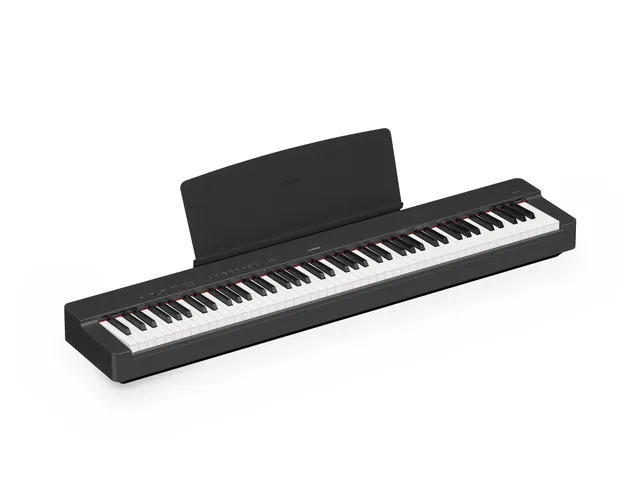
Best for Most Buyers
Quick Answer
Compare all seven-
No. 1 · Our top pick
Best for Most Buyers
- Key action
- GHC
- Voices
- 24
88 weighted GHC keys, CFX sound, 192-note polyphony, Bluetooth audio and two headphone jacks, at 11.5 kg.
-
No. 2
Best Budget Yamaha
- Key action
- GHC
- Voices
- 10
The P-225's GHC keys with Bluetooth audio, 64-note polyphony and a pedal-unit connector, at 11.1 kg.
-
No. 3
Best Console Piano
- Key action
- GHS
- Voices
- 10
An Arius cabinet with GHS keys, CFX sound, three pedals with half-pedaling, two headphone jacks and Bluetooth.
Yamaha makes portable P-series pianos, the DGX-670 with styles and a screen, Arius (YDP) and Clavinova home pianos, and CP stage pianos. This guide ranks the seven Yamaha digital pianos and keyboard pianos you can buy on Amazon US, explains Yamaha's key actions, and covers what the Arius YDP-146 and YDP-166 change from the YDP-145 and YDP-165.
We haven't played these pianos. Every spec comes from Yamaha USA's own spec pages, and we don't quote prices, because they change. If you're choosing between brands, our Yamaha vs Roland, Yamaha vs Casio and Yamaha vs Kawai comparisons go model by model, and our 88-key weighted keyboards guide compares Yamaha with every brand.
How we researched this
We haven't played the Yamaha pianos in this guide. It's built from:
- Yamaha USA spec pages: P-225, P-145BT, P-45, P-525, DGX-670, YDP-145 and YDP-165, YDP-146 and YDP-166 and CP88 and CP73
- Owner reports on Reddit and piano forums, and published reviews
- Amazon US listings, checked on October 21, 2026, so every piano we link had a current offer
Read more about how we pick and review pianos.
Quick Verdict
For most buyers, the best Yamaha digital piano is the P-225. Yamaha lists 88 weighted GHC keys, the CFX sound, 192-note polyphony, Bluetooth audio and two headphone jacks. Tight budget? The P-145BT has the same keys with Bluetooth audio and 64-note polyphony.
Want a cabinet? The Arius YDP-146 (GHS keys, Bluetooth) or YDP-166 (GrandTouch-E keys with escapement, 20 W × 2). Want styles and a screen? The DGX-670. Wooden keys? The P-525 in a portable, or the CP88 stage piano for professionals.
Which one fits you?
How will you use it?
Start with the Yamaha P-225, or the P-145BT on a tighter budget.
Start with the Yamaha YDP-146, or the YDP-166 for escapement keys.
Start with the Yamaha CP88.
All 7 Yamaha 88-Key Keyboards Compared
Here's how the seven Yamaha keyboard pianos with Amazon US offers compare. All seven have 88 weighted keys; the key action is the biggest difference, then the cabinet and the extras.
| Rank and Model | Key action | Voices | Speakers | Best for | Buy |
|---|---|---|---|---|---|
| #1Yamaha P-225 | GHC | 24 | 7 W × 2 | Most buyers | Check price on Amazon for the Yamaha P-225 (opens in a new tab) |
| #2Yamaha P-145BT | GHC | 10 | 7 W × 2 | Budget portable | Check price on Amazon for the Yamaha P-145BT (opens in a new tab) |
| #3Yamaha YDP-146 | GHS | 10 | 8 W × 2 | First console piano | Check price on Amazon for the Yamaha YDP-146 (opens in a new tab) |
| #4Yamaha YDP-166 | GrandTouch-E | 10 | 20 W × 2 | Console, better keys | Check price on Amazon for the Yamaha YDP-166 (opens in a new tab) |
| #5Yamaha DGX-670 | GHS | 601 | 6 W × 2 | Styles and a screen | Check price on Amazon for the Yamaha DGX-670 (opens in a new tab) |
| #6Yamaha P-525 | GrandTouch-S (wooden) | 44 | (20 W + 6 W) × 2 | Wooden keys, portable | Check price on Amazon for the Yamaha P-525 (opens in a new tab) |
| #7Yamaha CP88 | NW-GH3 (wooden) | 129 | None | Stage, professionals | Check price on Amazon for the Yamaha CP88 (opens in a new tab) |
Specs from Yamaha USA spec pages. Amazon prices, sellers and bundles change often; use each "Check price on Amazon" link for the current offer.
Best Yamaha for Most Buyers
Yamaha P-225 — The Best Yamaha for Most Buyers


- Angle
- Yamaha P-225 keyboard being played.
Features
- Key action
- GHC (Graded Hammer Compact), 88 keys, 4 touch settings
- Polyphony
- 192 notes
- Speakers
- 7 W × 2
- Weight
- 11.5 kg (25 lb 6 oz)
- Sound
- Yamaha CFX, with key-off samples and VRM Lite
- Voices
- 24
Best for: beginners and returning players who want a current Yamaha portable with CFX sound, Bluetooth audio and two headphone jacks.
Skip it if: you only need the basics (the P-145BT has the same keys), or you want wooden keys (the P-525) or a cabinet (the Arius YDP-146).
Read the full review: Yamaha P-225
Our verdict
The P-225 is the safest Yamaha keyboard piano for lessons and home practice: CFX sound, enough polyphony for pedalled music, Bluetooth audio, two headphone jacks and outputs, in a slim 11.5 kg body.
If you only need weighted keys and a good sound, the P-145BT has the same GHC keyboard for less. If you want wooden keys, look at the P-525.
Pros
- +CFX piano sound with 192-note polyphony
- +Bluetooth audio and a 24-bit USB audio interface
- +Two headphone jacks and AUX OUT
- +Slim and light at 11.5 kg
- +Black or white
Cons
- –Bluetooth MIDI needs an adaptor
- –7 W × 2 speakers
- –GHC is a compact action, not the YDP-166's GrandTouch-E
- –Stand and three-pedal unit sold separately
How it plays and sounds
The P-225 is the Yamaha keyboard piano most buyers should start with. Yamaha lists 88 weighted keys with its GHC (Graded Hammer Compact) action, matte black keytops and four touch settings, the CFX piano sound with key-off samples and VRM Lite, and 192-note polyphony. Yamaha's P-225 specs have the full list.
Speakers and connections: 7 W × 2, Bluetooth audio (Bluetooth MIDI needs Yamaha's UD-BT01 adaptor), USB that works as a 24-bit audio interface, AUX OUT jacks and two headphone jacks. It has 24 voices and 20 rhythms.
Size: 11.5 kg (25 lb 6 oz) and 272 mm deep, in black or white. The matching L-200 stand and LP-1 pedal unit are sold separately.
Our Yamaha P-225 review covers who should skip it, our Yamaha P-45 vs P-71, P-145BT and P-225 comparison puts the P-series side by side, and our Yamaha P-225 vs Roland FP-30X comparison covers its closest Roland rival.
View full specs
| Key action | GHC (Graded Hammer Compact), 88 keys, 4 touch settings |
|---|---|
| Sound | Yamaha CFX, with key-off samples and VRM Lite |
| Polyphony | 192 notes |
| Voices | 24 |
| Speakers | 7 W × 2 |
| Bluetooth | Audio (MIDI with the optional UD-BT01) |
| Connections | 2 headphone jacks, AUX OUT, USB (24-bit audio and MIDI) |
| Weight | 11.5 kg (25 lb 6 oz) |
| Finishes | Black, white |
Best Budget Yamaha
Yamaha P-145BT — The Budget Yamaha Portable

Features
- Key action
- GHC (Graded Hammer Compact), 88 keys, 4 touch settings
- Polyphony
- 64 notes
- Speakers
- 7 W × 2
- Weight
- 11.1 kg (24 lb 8 oz)
- Sound
- Yamaha CFIIIS, with damper resonance
- Voices
- 10
Best for: beginners on a budget who want a current Yamaha portable with Bluetooth audio.
Skip it if: you can stretch to the P-225 (more polyphony, CFX, two headphone jacks), or you want a cabinet from day one.
Read the full review: Yamaha P-145BT
Our verdict
The P-145BT is the Yamaha to buy when the budget is tight but you still want Bluetooth audio and Yamaha's newer GHC keyboard. For pedal-heavy music, two headphone jacks or outputs, the P-225 is worth the step up.
Pros
- +The same GHC keys as the P-225
- +Bluetooth audio
- +Connects to the optional LP-5A three-pedal unit
- +The lightest Yamaha here
Cons
- –64-note polyphony
- –One headphone jack
- –No AUX OUT jacks
- –CFIIIS sound rather than the P-225's CFX
How it plays and sounds
The P-145BT gives you the P-225's GHC keyboard for less. Yamaha lists 88 weighted GHC keys, the CFIIIS piano sound with damper resonance, 64-note polyphony and 10 voices. Yamaha's P-145BT specs have the full list.
Speakers and connections: 7 W × 2, Bluetooth audio, USB that works as a 16-bit audio interface, one headphone jack, and a connector for the optional LP-5A three-pedal unit (with the L-100 stand). It weighs 11.1 kg (24 lb 8 oz).
The P-143 and P-45: the P-143 is the same piano without Bluetooth or the pedal-unit connector. Yamaha USA still lists the P-45 too, with GHS keys, 64-note polyphony, 10 voices and no Bluetooth. Our Yamaha P-145 review explains how the P-143 differs, and our Yamaha P-45 review covers whether the P-45 is still worth buying next to the P-145BT.
View full specs
| Key action | GHC (Graded Hammer Compact), 88 keys, 4 touch settings |
|---|---|
| Sound | Yamaha CFIIIS, with damper resonance |
| Polyphony | 64 notes |
| Voices | 10 |
| Speakers | 7 W × 2 |
| Bluetooth | Audio |
| Connections | 1 headphone jack, USB (16-bit audio and MIDI), pedal-unit connector |
| Weight | 11.1 kg (24 lb 8 oz) |
Best Yamaha Console Piano
Yamaha YDP-146 — The Entry Arius Console


- Angle
- A YDP-146 at home (photo: Yamaha).
Features
- Key action
- GHS (Graded Hammer Standard), 88 keys
- Polyphony
- 192 notes
- Speakers
- 8 W × 2
- Weight
- 38 kg
- Sound
- Yamaha CFX, with VRM Lite
- Voices
- 10
Best for: families and beginners who want a Yamaha console piano with three pedals in a bedroom or practice room.
Skip it if: you want better keys or more speaker power (the YDP-166).
Read the full review: Yamaha YDP-146
Our verdict
The YDP-146 is the Yamaha console piano for families who want three pedals and furniture at the lowest Arius tier, with Bluetooth. The keys are GHS, so the upgrade over a portable is the cabinet and pedals, not the feel.
If you want better keys and louder speakers, the YDP-166 has GrandTouch-E keys with escapement and 20 W × 2. Our review of every Yamaha Arius covers the whole line-up.
Pros
- +Three pedals built in, with half-pedaling
- +CFX sound with 192-note polyphony
- +Bluetooth audio and MIDI
- +A sliding key cover and furniture finishes
Cons
- –GHS keys, the same family as the entry P-45
- –8 W × 2 speakers
- –No escapement listed (the YDP-166 has it)
- –38 kg once assembled
How it plays and sounds
The YDP-146 is Yamaha's entry Arius console, for a piano that stays in one room. Yamaha lists 88 weighted keys with the GHS (Graded Hammer Standard) action and matte black keytops, the CFX sound with VRM Lite, 192-note polyphony and 10 voices. Yamaha's YDP-146 specs have the full list.
Cabinet and pedals: three pedals built in (damper with half-pedaling, sostenuto and soft), a sliding key cover, two headphone jacks, Bluetooth audio and MIDI, and USB that works as a 24-bit audio interface. It's 1,357 × 422 × 815 mm and 38 kg, in dark rosewood, black or white; the listing we link is black.
Speakers: 8 W × 2, the smallest amplifiers in the Arius line, so it suits a bedroom or practice room better than a large living room.
The YDP-145: Yamaha launched the YDP-146 in June 2026, and Yamaha USA's Arius line-up now lists it and no longer the YDP-145; Yamaha doesn't call it a successor. On Yamaha's spec page, the YDP-145 has the same GHS keys, CFX sound and 8 W × 2, without Bluetooth. When we checked, it had no featured offer on Amazon US.
View full specs
| Key action | GHS (Graded Hammer Standard), 88 keys |
|---|---|
| Sound | Yamaha CFX, with VRM Lite |
| Polyphony | 192 notes |
| Voices | 10 |
| Speakers | 8 W × 2 |
| Pedals | Damper (half-pedal), sostenuto, soft |
| Bluetooth | Audio and MIDI |
| Connections | 2 headphone jacks, USB TO HOST (24-bit audio) |
| Size | 1,357 × 422 × 815 mm |
| Weight | 38 kg |
| Finishes | Dark rosewood, black, white |
Best Yamaha Arius for Growing Players
Yamaha YDP-166 — The Arius with Better Keys


- Angle
- A YDP-166 at home, in a dark finish (photo: Yamaha).
Features
- Key action
- GrandTouch-E, synthetic ebony and ivory keytops, escapement
- Polyphony
- 192 notes
- Speakers
- 20 W × 2
- Weight
- 42 kg
- Sound
- Yamaha CFX, with VRM Lite
- Voices
- 10
Best for: growing players who want a Yamaha cabinet with escapement keys and speakers that fill a living room.
Skip it if: you want wooden keys (the P-525 has them in a portable), or you'll move the piano.
Read the full review: Yamaha YDP-166
Our verdict
The YDP-166 is the Yamaha cabinet for players past the beginner stage: GrandTouch-E keys with escapement, Bluetooth audio and MIDI, and enough speaker power for a living room.
Pros
- +GrandTouch-E keys with escapement
- +20 W × 2 speakers
- +Bluetooth audio and MIDI
- +Three pedals with half-pedaling
Cons
- –Plastic keys, not wood
- –Only 10 voices
- –42 kg once assembled
- –No line outputs
How it plays and sounds
The YDP-166 is the Arius to buy for better keys. Yamaha lists 88 weighted keys with the GrandTouch-E keyboard, with synthetic ebony and ivory keytops and escapement, the CFX sound with VRM Lite, 192-note polyphony and 10 voices. Yamaha's YDP-166 specs have the full list.
Cabinet and speakers: 20 W × 2, two and a half times the YDP-146's amplification, three pedals with half-pedaling, a sliding key cover, two headphone jacks, Bluetooth audio and MIDI, and USB that works as a 24-bit audio interface. It's 1,357 × 422 × 849 mm and 42 kg, in black, dark rosewood, White Birch or white; the listing we link is White Birch.
The YDP-165: Yamaha launched the YDP-166 in June 2026, and Yamaha USA's Arius line-up now lists it and no longer the YDP-165; Yamaha doesn't call it a successor. On Yamaha's spec page, the YDP-165 has GH3 keys and the same 20 W × 2 and 42 kg, without Bluetooth. When we checked, it had no featured offer on Amazon US.
View full specs
| Key action | GrandTouch-E, synthetic ebony and ivory keytops, escapement |
|---|---|
| Sound | Yamaha CFX, with VRM Lite |
| Polyphony | 192 notes |
| Voices | 10 |
| Speakers | 20 W × 2 |
| Pedals | Damper (half-pedal), sostenuto, soft |
| Bluetooth | Audio and MIDI |
| Connections | 2 headphone jacks, USB TO HOST (24-bit audio) |
| Size | 1,357 × 422 × 849 mm |
| Weight | 42 kg |
| Finishes | Black, dark rosewood, White Birch, white |
Best Yamaha for Styles and Sounds
Yamaha DGX-670 — The Yamaha with Styles and a Screen


- Angle
- Yamaha DGX-670 color display, accompaniment controls, and keyboard.
Features
- Key action
- GHS (Graded Hammer Standard), 5 touch settings
- Polyphony
- 256 notes
- Speakers
- 6 W × 2
- Weight
- 21.4 kg (47 lb 3 oz)
- Sound
- Yamaha CFX, with VRM
- Voices
- 601 (plus 29 drum and effect kits)
Best for: players who want accompaniment styles, a screen and a microphone input on 88 weighted keys.
Skip it if: you only want a piano (the P-225 is lighter), or you need two headphone jacks.
Read the full review: Yamaha DGX-670
Our verdict
Buy the DGX-670 if you want to play with backing styles, sing into a microphone or explore hundreds of sounds on 88 weighted keys. If you only want a piano, the P-225 is lighter and simpler.
Pros
- +601 voices and 263 accompaniment styles
- +A 4.3-inch color screen
- +Microphone input
- +256-note polyphony and CFX sound
Cons
- –21.4 kg and 445 mm deep
- –6 W × 2 speakers
- –One headphone jack, which is also the output
- –GHS keys, Yamaha's entry action
How it plays and sounds
The DGX-670 is a Yamaha keyboard with 88 weighted keys and a lot more around them. Yamaha lists the GHS action with matte black keytops and five touch settings, the CFX sound with VRM, 256-note polyphony, 601 voices and 263 accompaniment styles, shown on a 4.3-inch color screen. Yamaha's DGX-670 specs have the full list.
Connections: a microphone input, AUX IN, a pedal-unit connector for the optional LP-1, USB that works as a 16-bit audio interface, a USB port for flash drives, Bluetooth audio, and one headphone jack that doubles as the output. It has 6 W × 2 amplification.
Size: 1,397 × 151 × 445 mm and 21.4 kg (47 lb 3 oz), in black or white, so it's much bigger than the P-series portables.
Our Yamaha DGX-670 review covers its styles, voices and screen, what changed from the DGX-660, and who should buy a piano-only model instead. For the difference between pianos and style keyboards, see our digital piano vs keyboard guide.
View full specs
| Key action | GHS (Graded Hammer Standard), 5 touch settings |
|---|---|
| Sound | Yamaha CFX, with VRM |
| Polyphony | 256 notes |
| Voices | 601 (plus 29 drum and effect kits) |
| Styles | 263 |
| Speakers | 6 W × 2 |
| Connections | Mic input, AUX IN, 1 headphone jack, USB (16-bit audio), USB TO DEVICE, pedal unit |
| Bluetooth | Audio |
| Weight | 21.4 kg (47 lb 3 oz) |
Best Yamaha with Wooden Keys
Yamaha P-525 — Wooden Keys in a Portable

Features
- Key action
- GrandTouch-S, wooden white keys, escapement, 6 touch settings
- Polyphony
- 256 notes
- Speakers
- (20 W + 6 W) × 2
- Weight
- 22.0 kg (48 lb 8 oz)
- Sound
- CFX and Bösendorfer Imperial, VRM, Grand Expression Modeling
- Voices
- 44 (plus 18 drum and effect kits)
Best for: advanced players and gigging pianists who want Yamaha's best portable keyboard and two concert grand sounds.
Skip it if: you're a beginner (the P-225 is plenty), or you'll carry the piano often.
Read the full review: Yamaha P-525
Our verdict
The P-525 is the Yamaha for experienced players who want wooden keys with escapement without buying a cabinet. For most learners, the P-225 is plenty, and the YDP-166 is the cabinet alternative.
Pros
- +Wooden white keys with escapement
- +CFX and Bösendorfer Imperial piano sounds
- +Bluetooth audio and MIDI
- +The strongest speakers among the Yamaha portables here
Cons
- –22.0 kg, twice the P-225
- –More than a beginner needs
- –Stand and three-pedal unit sold separately
- –Wider and deeper than the P-225
How it plays and sounds
The P-525 is the top of the P-series, and its keyboard is the reason: Yamaha lists GrandTouch-S, with wooden white keys, synthetic ebony and ivory keytops and escapement, and six touch settings. The sound pairs the CFX and Bösendorfer Imperial grands with VRM and Grand Expression Modeling, and polyphony is 256 notes. Yamaha's P-525 specs have the full list.
Speakers and connections: (20 W + 6 W) × 2, Bluetooth audio and MIDI, two headphone jacks, MIDI in and out, AUX IN and AUX OUT, USB-C to a computer and a USB port for flash drives. It has 44 voices plus 18 drum and effect kits, and the FC3A foot pedal is in the box.
Size: 22.0 kg (48 lb 8 oz) and 376 mm deep, in black or white. The L-515 stand and LP-1 pedal unit are sold separately.
Our Yamaha P-525 review covers its GrandTouch-S keys, what changed from the P-515 and how it compares with the Kawai ES920 and Roland FP-90X.
View full specs
| Key action | GrandTouch-S, wooden white keys, escapement, 6 touch settings |
|---|---|
| Sound | CFX and Bösendorfer Imperial, VRM, Grand Expression Modeling |
| Polyphony | 256 notes |
| Voices | 44 (plus 18 drum and effect kits) |
| Speakers | (20 W + 6 W) × 2 |
| Bluetooth | Audio and MIDI |
| Connections | 2 headphone jacks, MIDI in/out, AUX IN/OUT, USB-C to host, USB TO DEVICE |
| Weight | 22.0 kg (48 lb 8 oz) |
| Finishes | Black, white |
Best Yamaha for Professionals
Yamaha CP88 — The Yamaha Stage Piano for Professionals


- Angle
- Yamaha CP88 rear connection panel.
Features
- Key action
- NW-GH3 (Natural Wood Graded Hammer), synthetic ebony and ivory keytops
- Polyphony
- 128 notes
- Speakers
- None
- Weight
- 18.6 kg (41 lb 0 oz)
- Sound
- AWM2
- Voices
- 129 (18 piano, 19 electric piano, 92 sub)
Best for: gigging and session keyboardists who play through a PA or monitors.
Skip it if: you'll practice at home without speakers or monitors (the P-525 or YDP-166 have speakers).
Read the full review: Yamaha CP88
Our verdict
The CP88 is the best Yamaha keyboard for professionals who play live: wooden keys, XLR outputs and fast access to piano, electric piano and other sounds. Without speakers, it isn't a home practice piano. Our best stage pianos guide compares it with Roland, Kawai, Nord and Korg stage pianos.
Pros
- +Wooden-key NW-GH3 action
- +Balanced XLR outputs for stage PAs
- +Piano, electric piano and sub sections for live playing
- +Lighter than the P-525
Cons
- –No speakers: you need an amp, monitors or headphones
- –128-note polyphony
- –One headphone jack
- –Not a home practice piano
How it plays and sounds
The CP88 is Yamaha's stage piano for working musicians, with no built-in speakers. Yamaha lists 88 keys with the NW-GH3 (Natural Wood Graded Hammer) action and synthetic ebony and ivory keytops, AWM2 sound, 128-note polyphony and 129 voices (18 piano, 19 electric piano and 92 sub voices). Yamaha's CP88 specs have the full list. Our review of the Yamaha CP88 and CK88 covers the CP73 and the CK models too.
Connections: balanced XLR outputs and 1/4-inch outputs, one headphone jack, MIDI in and out, USB to a computer and to a device, an AUX input and four pedal inputs. The FC3A foot pedal is in the box.
Size: 1,298 × 364 × 141 mm and 18.6 kg (41 lb 0 oz). The CP73 is the same idea with 73 BHS (Balanced Hammer Standard) keys and 13.1 kg.
View full specs
| Key action | NW-GH3 (Natural Wood Graded Hammer), synthetic ebony and ivory keytops |
|---|---|
| Sound | AWM2 |
| Polyphony | 128 notes |
| Voices | 129 (18 piano, 19 electric piano, 92 sub) |
| Speakers | None |
| Outputs | Balanced XLR, 1/4-inch, 1 headphone jack |
| Connections | MIDI in/out, USB to host and device, AUX in, 4 pedal inputs |
| Weight | 18.6 kg (41 lb 0 oz) |
Take a closer look.
Best Yamaha for Most Buyers
Yamaha P-225 keyboard being played.
Best Yamaha Console Piano
A YDP-146 at home (photo: Yamaha).
Best Yamaha for Styles and Sounds
Yamaha DGX-670 color display, accompaniment controls, and keyboard.
Yamaha Pianoforte (Piano Forte): What It Means
Pianoforte is the original Italian name for the piano. It means soft-loud, which describes the instrument's biggest breakthrough: the player controls volume and expression by touch.
For buyers, the phrase can be confusing because it sounds formal, but the idea is simple. You are looking for a Yamaha that reacts well to your fingers, supports proper dynamics and feels musical instead of flat.
People searching for Yamaha piano forte are usually not looking for a different category. They are usually trying to find a good Yamaha digital piano with realistic action, strong piano tone and enough control for practice, lessons or serious home playing, which is what this guide covers.
Focus on the action first, then the sound and speakers. Players who want a Yamaha grand piano feel at home usually look at the Clavinova line above Arius.
Understanding the Yamaha Digital Piano Lineup
Yamaha organizes its 88-key digital pianos into families, each for a different use: portables, the DGX, Arius and Clavinova home pianos, and CP stage pianos. The family tells you more than the price.
P-Series — From the P-145BT Up
Yamaha's portables. The P-143 and P-145BT are the entry models, the P-225 the mainstream one and the P-525 the flagship with wooden keys. Yamaha USA still lists the older P-45 too.
Arius — YDP-146 and YDP-166 Consoles
Yamaha's console pianos: three pedals, a sliding key cover and furniture finishes. The YDP-146 has GHS keys and the YDP-166 GrandTouch-E with escapement, and both have Bluetooth.
DGX and CP — Styles, Screens and the Stage
The DGX-670 adds 263 styles, a color screen and a microphone input to 88 weighted keys. The CP88 and CP73 are stage pianos with no speakers and XLR outputs.
Yamaha's new Arius consoles
Yamaha launched the YDP-146 and YDP-166 in June 2026, and Yamaha USA's Arius line-up now lists them and no longer the YDP-145 and YDP-165; Yamaha doesn't call them successors. On Yamaha's spec page, both keep the CFX sound with VRM Lite, 192-note polyphony, three pedals and two headphone jacks, and add Bluetooth audio and MIDI and a 24-bit USB audio interface. The YDP-146 keeps GHS keys and 8 W × 2; the YDP-166 moves to the GrandTouch-E keyboard with escapement and keeps 20 W × 2.
When we checked, the YDP-145 and YDP-165 no longer had a featured offer on Amazon US, and the YDP-146 and YDP-166 did, so the new models are the ones we rank.
White Yamaha pianos
If you want a white Yamaha, Yamaha USA lists white versions of the P-225, P-525 and DGX-670, white for the YDP-145, YDP-146, YDP-165 and YDP-166, white ash for the YDP-165, and White Birch for the YDP-166.
Clavinova and the top Arius models
Above these, the Arius YDP-184 lists GH3 keys, 256-note polyphony and 30 W × 2, and the Clavinova line is Yamaha's premium home piano range. We don't rank them here; our digital upright pianos guide covers more cabinets.
Yamaha electronic keyboards with fewer keys
Yamaha's PSR portable keyboards are a different kind of instrument: most have 61 keys that aren't weighted, with lots of sounds and styles. They're fine for fun, but for piano lessons an 88-key weighted Yamaha is the better start. Our digital piano vs keyboard guide and weighted vs semi-weighted keys guide explain why.
Key Action Tiers Explained
The keyboard is the spec that matters most for technique, and Yamaha separates its models mainly by key action. Here are the five actions on the pianos above, from the entry GHS to the wooden-key actions.
GHS (Graded Hammer Standard)
GHS is Yamaha's entry weighted action, on the YDP-146 and the DGX-670 (and the older P-45). Like all of Yamaha's graded actions, it's heavier in the bass and lighter in the treble, as on an acoustic piano.
Read more
Yamaha lists matte black keytops and no escapement on these models.
GrandTouch-E and GH3
GrandTouch-E is the YDP-166's keyboard: synthetic ebony and ivory keytops instead of plain matte keys, and escapement.
Read more
GH3, with the same kind of keytops and no escapement listed, is on the Arius YDP-184 and the older YDP-165.
GrandTouch-S
GrandTouch-S is the P-525's keyboard: wooden white keys, synthetic ebony and ivory keytops and escapement, with six touch settings.
NW-GH3 (Natural Wood Graded Hammer)
NW-GH3 is the CP88's wooden-key action, with synthetic ebony and ivory keytops, built for the stage.
Why Choose Yamaha?
Yamaha's strength is range: there's a weighted 88-key model for almost every use. Here's where it wins and where other brands do better, from the makers' own spec pages.
Where the brand wins
Three strengths stand out.
+CFX sound across the range: Yamaha lists its CFX concert grand sound on the P-225, P-525, DGX-670 and every Arius model here.
+A model for every room: portables, consoles in several finishes, a style keyboard and stage pianos, all with 88 weighted keys.
+Wooden keys in a portable: the P-525's GrandTouch-S has wooden white keys with escapement.
Where the brand loses ground
Three weaknesses matter for some buyers.
–Escapement only at the top: Yamaha lists escapement on the P-525 and the new YDP-166, while Roland lists it from the entry FP-10 up.
–Bluetooth MIDI often needs an adaptor: the P-225 and DGX-670 list Bluetooth audio, with Bluetooth MIDI through the optional UD-BT01.
–Similar model names: the P-143, P-145BT, P-225 and older P-45 can appear side by side, so check the exact model before you buy.
When to look elsewhere
If escapement at an entry price matters, Roland's FP-10 and FP-30X list it; see our best Roland digital pianos and our Yamaha vs Roland digital piano comparison.
If a slim body or battery power matters, Casio's Privia line is worth a look; see our Yamaha vs Casio comparison. For portables from every brand, see our best portable digital pianos guide.
Explore more options
Frequently Asked Questions
Common questions about choosing a Yamaha keyboard piano.
Which Yamaha keyboard piano is best?
For most buyers, the P-225. Yamaha lists 88 weighted GHC keys, the CFX sound, 192-note polyphony, Bluetooth audio, two headphone jacks and AUX OUT, in an 11.5 kg body. The P-145BT is the budget choice with the same keys, and the P-525 adds wooden keys with escapement.
Which Yamaha digital piano is best for beginners?
The P-145BT or the P-225 if you want a portable, and the Arius YDP-146 if you want a cabinet with three pedals. All three have 88 weighted keys. The P-225 adds CFX sound, more polyphony and two headphone jacks to the P-145BT; the YDP-146 adds a cabinet, three pedals and CFX.
Do Yamaha keyboards have weighted keys?
Yamaha's digital pianos do: every model in this guide has 88 weighted keys, from the GHS and GHC actions to the wooden GrandTouch-S and NW-GH3. Yamaha's PSR portable keyboards are different; most have 61 keys that aren't weighted, so they're not a substitute for a piano if you're taking lessons.
What's the difference between the Yamaha YDP-165 and YDP-166?
Yamaha launched the YDP-166 in June 2026, and Yamaha USA's Arius line-up now lists it and no longer the YDP-165; Yamaha doesn't call it a successor. On Yamaha's spec pages it moves from GH3 to the GrandTouch-E keyboard with escapement, and adds Bluetooth audio and MIDI. Both list CFX sound, 20 W × 2 and 42 kg.
Is there a Yamaha stage piano?
Yes: the CP series. The CP88 has 88 wooden-key NW-GH3 keys, 129 voices, balanced XLR outputs and no speakers, at 18.6 kg; the CP73 has 73 BHS keys and weighs 13.1 kg. Yamaha's stage keyboard line also includes the CK and YC series.
Which Yamaha pianos come in white?
Yamaha USA lists white versions of the P-225, P-525 and DGX-670, and of the Arius YDP-145, YDP-146, YDP-165 and YDP-166. The YDP-165 also comes in white ash and the YDP-166 in White Birch, the finish of the YDP-166 listing we link.
Shahadat Shahi
Founder of PianoRanked. I research this guide from the makers' published specs, owner reports and published reviews — no paid placements, no brand partnerships.