
Best Digital Pianos Under $500 in 2026
An affordable digital piano under $500 can still be a real practice instrument, if you protect the action and choose the compromise you can live with.

By Shahadat Shahi Published Updated

The short answer
Compare all 5-
No. 1 · Our top pick
Best Overall
Check current price
- Key action
- Graded Hammer Standard (GHS)
- Polyphony
- 64 notes
- Weight
- 11.5 kg (25 lbs 4 oz)
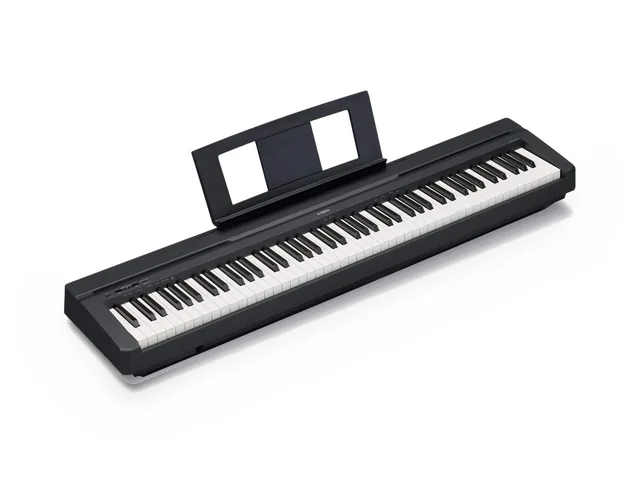
The simple, familiar choice at the $500 ceiling: GHS weighted keys, 10 voices and almost nothing to set up.
Main limitation 64-note polyphony can run out in long pedalled passages.
-
No. 2
Best Key Action
Check current price
- Key action
- PHA-4 Standard, with escapement and ivory feel
- Polyphony
- 96 notes
- Weight
- 12.6 kg (27 lbs 13 oz) without the music rest
PHA-4 Standard keys with escapement and ivory feel, the only escapement in this guide, plus Bluetooth MIDI.
Main limitation One mini headphone jack and modest 6 W × 2 speakers.
-
No. 3
Most Polyphony
Check current price
- Key action
- Responsive Hammer Lite, grade-weighted hammers, matte keys
- Polyphony
- 192 notes
- Weight
- 11 kg (24.25 lb) without the music rack
Kawai's Responsive Hammer Lite keys, the Shigeru Kawai SK-EX-based sound, 192-note polyphony and line outputs.
Main limitation No Bluetooth listed, and one headphone jack.
-
No. 4
Best for Sounds and Software
- Key action
- Natural Weighted Hammer Action (NH)
- Polyphony
- 120 notes
- Weight
- 11.4 kg (25.13 lb)
The B2 suits players who'll practise more if the piano sounds inspiring, and who want to record into a phone or computer over USB.
-
No. 5
Best Budget Under $500
- Key action
- Hammer action, adjustable touch response (per Donner)
- Polyphony
- 128 notes
Buy the DEP-20 if the budget is tight and you still want hammer-action keys.
The P-45 keeps it simple, the FP-10 protects action quality, and the ES60 brings the most polyphony and line outputs.
Compare all 5
Swipe the table sideways to see every column.
| Rank | Best for | Key action / feel | Polyphony | Main downside | Amazon |
|---|---|---|---|---|---|
| 1Yamaha P-45#1 · Simple, familiar default | Simple, familiar default | GHS (hammer) | 64 | 64-note polyphony, no Bluetooth | Check price on Amazon for the Yamaha P-45 (opens in a new tab) |
| 2Roland FP-10#2 · Best key action | Best key action | PHA-4 Standard (hammer, escapement) | 96 | One mini headphone jack | Check price on Amazon for the Roland FP-10 (opens in a new tab) |
| 3Kawai ES60#3 · Most polyphony | Pedalled music, line outputs | Responsive Hammer Lite (hammer) | 192 | No Bluetooth listed | Check price on Amazon for the Kawai ES60 (opens in a new tab) |
| 4Korg B2#4 · Sounds and software | Sounds, USB audio, apps | Natural Weighted Hammer (NH) | 120 | Live price has been above $500 | Check price on Amazon for the Korg B2 (opens in a new tab) |
| 5Donner DEP-20#5 · Cheapest hammer action | Hammer action for the least money | Hammer action (per Donner) | 128 | Less familiar brand | Check price on Amazon for the Donner DEP-20 (opens in a new tab) |
Tip
At this budget, the keyboard action is the spec that matters most; speakers, voice count and connectivity come second. A piano with a good hammer action and 10 voices teaches better technique than one with weaker keys and hundreds of sounds. When in doubt, pick the better keyboard.
Amazon pricing, sellers and bundles change often; use each "Check Price" link for the current offer.
Which compromise would make the wrong $500 piano feel wrong?
Choose the route closest to your situation. The price ceiling stays fixed; what changes is the compromise you should protect against.
Start with Yamaha P-45
- Needs
- A familiar name and little to set up
- Risk
- Outgrowing 64-note polyphony
Start with Roland FP-10
- Needs
- The best key feel at the ceiling
- Risk
- Choosing by brand alone
Start with Kawai ES60
- Needs
- Polyphony and line outputs
- Risk
- Expecting Bluetooth
Start with Donner DEP-20
- Needs
- Hammer action for the least money
- Risk
- A less familiar brand
No. 1
Yamaha P-45
Best Overall Under $500
No. 2
Roland FP-10
Best Key Action Under $500
No. 3
Kawai ES60
Most Polyphony Under $500
No. 5
Donner DEP-20
Best Budget Under $500
Looking for the best digital piano under $500? An affordable piano at this price can still be a real practice instrument: every pick here has 88 full-size weighted keys, and their makers list hammer actions on all five. What changes from one to the next is the compromise, from polyphony and speakers to Bluetooth and outputs. This guide is about weighted digital pianos, not MIDI controllers or unweighted keyboards; for a wider range, including pianos above $500, see our best digital pianos for beginners guide. We haven't played these pianos: every spec comes from the makers' own pages, and we don't quote prices, because they change.

What Counts as an Affordable Digital Piano?
An affordable digital piano isn't just the cheapest keyboard with piano sounds. For a serious beginner it should still cover the basics: 88 full-size weighted keys, touch sensitivity, a sustain pedal input, a headphone jack and a sound you won't tire of in a week. Under $500 you get those basics, with compromises: modest speakers, few outputs, limited Bluetooth and plastic, portable cases rather than furniture cabinets. What you shouldn't expect is wooden keys or a $1,000 piano's depth. That's fine if the keys are good enough to build habits: spend first on the action, then on everything else.
Buyer fit: choose this tier if you want an inexpensive weighted keyboard that still behaves like a practice instrument, not a toy. If you're comparing 61, 76 and 88 keys or still sorting out the difference between a digital piano and a keyboard, start there before choosing.
Quick Verdict
For most buyers, the best digital piano under $500 is the Yamaha P-45: weighted GHS keys, a familiar name and nothing complicated. The Roland FP-10 is the stronger instrument on paper, with escapement and Bluetooth MIDI, and the Kawai ES60 has the most polyphony.
On a tight budget: the Donner DEP-20 is the cheapest piano here with hammer-action keys. The Korg B2 is the pick for sounds and software, if its live price fits.
All 5 Affordable Digital Pianos Under $500 Compared
Best Overall Under $500
Yamaha P-45 — The Safe Default
Check current price · Yamaha


- Angle
- Controls and connection evidence
- Real home-practice context
Features
- Key action
- Graded Hammer Standard (GHS)
- Sound engine
- AWM stereo sampling
- Polyphony
- 64 notes
- Speakers
- 12 cm × 2, 6 W × 2
- Connectivity
- USB TO HOST, headphones, sustain
- Weight
- 11.5 kg (25 lbs 4 oz)
Decision question Do a familiar name and simplicity matter more than extra features?
Best for: beginners who want the simplest weighted piano, and children starting lessons. Not for: players who want Bluetooth, outputs or more polyphony for pedalled music.
Read the full review: Yamaha P-45
Our verdict
The P-45 is the low-risk answer for a first piano: weighted keys, a familiar name and nothing complicated. On paper the Roland FP-10 is the stronger instrument, with escapement and Bluetooth MIDI, and the Kawai ES60 has three times the polyphony; the P-45's case is simplicity.
Full review: our Yamaha P-45 review covers who it suits, who should skip it and how it compares with the newer P-145BT.
Pros
- +Familiar to most US piano teachers
- +GHS weighted keys with four touch settings
- +Very little to set up
- +Light at 11.5 kg
- +Yamaha still lists it, and the P-71 is the same piano
Cons
- –64-note polyphony
- –No Bluetooth and no line outputs
- –Only 10 voices and one headphone jack
- Best for
- beginners who want a simple, familiar piano with weighted keys
- Main downside
- 64-note polyphony can run out in long pedalled passages
- Price position
- Live price · verify
Who should skip it players who want Bluetooth, outputs or more polyphony (the FP-10 and ES60 have more).
How it plays and sounds
If your budget caps at $500 and you want the least to think about, the Yamaha P-45 is the affordable piano most teachers already know. Yamaha lists 88 keys with its Graded Hammer Standard (GHS) action, four touch settings, the AWM stereo sampling sound, 64-note polyphony, 10 voices, 6 W × 2 speakers and USB TO HOST, at 11.5 kg (25 lbs 4 oz), with a footswitch in the box. Yamaha announced it in 2015 and still lists it; the Amazon-only P-71 is the same piano. Yamaha's P-45 spec page lists the full feature set.
View full specs
| Key action | Graded Hammer Standard (GHS) |
|---|---|
| Keys | 88, weighted |
| Touch settings | Hard, Medium, Soft, Fixed |
| Sound engine | AWM stereo sampling |
| Polyphony | 64 notes |
| Voices | 10 |
| Speakers | 12 cm × 2, 6 W × 2 |
| Connectivity | USB TO HOST, headphones, sustain |
| Pedal included | Footswitch |
| Weight | 11.5 kg (25 lbs 4 oz) |
Take a closer look.
Best Overall Under $500
Controls and connection evidence
Real home-practice context

Best Key Action Under $500

Controls and connection evidence

Real home-practice context

Most Polyphony Under $500

On a Kawai stand (sold separately) with its switch pedal
Best Key Action Under $500
Roland FP-10 — The Best Action Under $500
Check current price · Roland
- Angle
- Controls and connection evidence
- Real home-practice context
Features
- Key action
- PHA-4 Standard, with escapement and ivory feel
- Sound engine
- SuperNATURAL Piano
- Polyphony
- 96 notes
- Speakers
- 12 cm × 2, 6 W × 2
- Connectivity
- USB Type B (computer), USB Type A (update), stereo mini headphone jack, pedal
- Weight
- 12.6 kg (27 lbs 13 oz) without the music rest
Decision question Will the stronger action matter more than outputs and speaker power?
Best for: self-taught learners and students whose teachers are happy with any brand, and anyone who wants the best key feel at this price. Not for: players who want louder speakers, line outputs or Bluetooth audio.
Read the full review: Roland FP-10
Our verdict
If the keys come first, the FP-10 is the strongest piano under $500 on paper: PHA-4 Standard with escapement is the same keyboard Roland puts on the FP-30X. Its limits are the modest speakers and the single mini jack, which is where the FP-30X earns its higher price.
Full review: our Roland FP-10 review explains what its PHA-4 Standard action gives you and what it leaves out.
Pros
- +PHA-4 Standard keys with escapement, the only escapement in this guide
- +SuperNATURAL Piano sound, 96-note polyphony
- +Bluetooth MIDI built in for apps
- +Ivory-feel key surface
Cons
- –One stereo mini headphone jack, which doubles as the only output
- –6 W × 2 speakers
- –Bluetooth MIDI only, no Bluetooth audio
- –12.6 kg, the heaviest of the four big-brand pianos here
- Best for
- learners who care most about the keys
- Main downside
- Only a mini headphone jack, and 6 W × 2 speakers
- Price position
- Live price · verify
Who should skip it players who want louder speakers or line outputs (look at the FP-30X).
How it plays and sounds
Roland didn't cut corners on the FP-10's keyboard. It has PHA-4 Standard, the same action as Roland's FP-30X, with escapement, the small notch you feel near the bottom of a grand piano's keystroke, and an ivory-feel surface: the only piano in this guide whose maker lists escapement. Roland lists the SuperNATURAL Piano sound, 96-note polyphony, 15 tones on the panel (36 through the Roland Piano App), 6 W × 2 speakers and Bluetooth MIDI for apps, at 12.6 kg without the music rest. Roland's FP-10 specifications list the full feature set.
View full specs
| Key action | PHA-4 Standard, with escapement and ivory feel |
|---|---|
| Keys | 88, weighted |
| Sound engine | SuperNATURAL Piano |
| Polyphony | 96 notes |
| Tones | 15 on the panel, 36 via the Roland Piano App |
| Speakers | 12 cm × 2, 6 W × 2 |
| Bluetooth | MIDI (Ver 4.0) |
| Connectivity | USB Type B (computer), USB Type A (update), stereo mini headphone jack, pedal |
| Pedal included | Pedal switch (half-pedal with the optional DP-10) |
| Weight | 12.6 kg (27 lbs 13 oz) without the music rest |
Most Polyphony Under $500
Kawai ES60 — Kawai's Sound for Under $500
Check current price · Kawai
- Angle
- On a Kawai stand (sold separately) with its switch pedal
Features
- Key action
- Responsive Hammer Lite, grade-weighted hammers, matte keys
- Sound engine
- Harmonic Imaging, SK-EX recording
- Polyphony
- 192 notes
- Speakers
- 12 cm × 2, 10 W × 2
- Connectivity
- USB-MIDI, line out (L/mono, R), one 1/4-inch headphone jack (front)
- Weight
- 11 kg (24.25 lb) without the music rack
Decision question Do 192-note polyphony and line outputs matter more than Bluetooth?
Best for: players who'll play pedalled music, and anyone who wants Kawai's sound and line outputs at this price. Not for: players who want Bluetooth or two headphone jacks.
Read the full review: Kawai ES60
Our verdict
The ES60 is the pick for players who'll hold the sustain pedal through long pieces, or who want to plug into an amplifier: 192 notes and line outputs are things the P-45 doesn't have. Its trade-offs are no Bluetooth and a basic switch pedal.
Full review: our Kawai ES60 review covers who it suits, who should skip it and what the ES120 adds.
Step up: our Kawai ES120 review covers the next model up, with Bluetooth audio and MIDI and two headphone jacks.
Pros
- +192-note polyphony, the most in this guide
- +Shigeru Kawai SK-EX-based sound
- +Line outputs for an amplifier
- +10 W × 2 speakers
- +Light at 11 kg
Cons
- –No Bluetooth listed
- –One headphone jack
- –The included F-1SP pedal is on/off only
- Best for
- players who want the most polyphony and a fuller speaker sound
- Main downside
- No Bluetooth, and one headphone jack
- Price position
- Live price · verify
Who should skip it players who want Bluetooth (the FP-10 has MIDI) or two headphone jacks.
How it plays and sounds
The ES60 is Kawai's entry portable, and it brings the most polyphony in this guide. Kawai lists its Responsive Hammer Lite action with grade-weighted hammers and matte keys, Harmonic Imaging sound from the Shigeru Kawai SK-EX concert grand, 192-note polyphony, 17 sounds and 10 W × 2 speakers, plus line outputs (L/mono, R) for an amplifier. It connects to Kawai's PianoRemote and PiaBookPlayer apps over USB, weighs 11 kg (24.25 lb) without the music rack, and comes with the F-1SP switch pedal; Kawai lists the F-10H as compatible for half-pedalling. Kawai America's ES60 page lists the full spec sheet.
View full specs
| Key action | Responsive Hammer Lite, grade-weighted hammers, matte keys |
|---|---|
| Keys | 88, weighted |
| Sound engine | Harmonic Imaging, SK-EX recording |
| Polyphony | 192 notes |
| Sounds | 17 |
| Speakers | 12 cm × 2, 10 W × 2 |
| Bluetooth | None listed |
| Connectivity | USB-MIDI, line out (L/mono, R), one 1/4-inch headphone jack (front) |
| Pedal included | F-1SP switch pedal (F-10H compatible) |
| Weight | 11 kg (24.25 lb) without the music rack |
Best for Sounds and Software
Korg B2 — The Sound-and-Software Pick
Check current price · Korg


- Angle
- Controls and connection evidence
Features
- Key action
- Natural Weighted Hammer Action (NH)
- Sound engine
- Stereo PCM
- Polyphony
- 120 notes
- Speakers
- 15 W × 2
- Connectivity
- USB Type B (MIDI and audio), Audio In, headphones (also line out), pedal
- Weight
- 11.4 kg (25.13 lb)
Decision question Does the live price fit your budget, and will the sounds keep you practising?
Best for: sound-curious beginners, songwriters and anyone recording over USB. Not for: action-first learners, or buyers whose $500 limit is firm on a day it costs more.
Read the full review: Korg B2
Our verdict
The B2 suits players who'll practise more if the piano sounds inspiring, and who want to record into a phone or computer over USB. If its price has moved above $500 on the day, compare it with the FP-10 first.
Pros
- +Grand piano sounds from German and Italian instruments
- +USB audio and MIDI to a phone, tablet or computer
- +15 W × 2 speakers, the most power among the four big-brand pianos here
- +Damper pedal and an app bundle included
Cons
- –Its live price has been above $500
- –No Bluetooth
- –Korg lists no escapement
- Best for
- players who want varied piano sounds, USB audio and bundled apps
- Main downside
- Its live price has been above the $500 line
- Price position
- Live price · verify
Who should skip it action-first learners (the FP-10 is stronger) or anyone whose $500 limit is firm on the day.
How it plays and sounds
The Korg B2 leans on sound and software. Korg lists its Natural Weighted Hammer Action (NH) keyboard with three touch settings, grand piano sounds drawn from German and Italian concert instruments, 120-note polyphony, 12 sounds and 15 W × 2 speakers. Its USB port carries MIDI and audio, there's an Audio In for a phone or music player, a damper pedal is in the box, and Korg bundles apps including a three-month Skoove lesson trial. It weighs 11.4 kg. Its list price sits at the $500 line, but the live Amazon price has been above it, so check before you buy. Korg's B2 specifications list the full feature set. The Amazon listing we link is the white B2, because the black B2 had no offers when we checked. Our Korg B2 review and Korg lineup guide covers it in depth.
View full specs
| Key action | Natural Weighted Hammer Action (NH) |
|---|---|
| Keys | 88, weighted |
| Touch settings | 3 |
| Sound engine | Stereo PCM |
| Polyphony | 120 notes |
| Sounds | 12 |
| Speakers | 15 W × 2 |
| Connectivity | USB Type B (MIDI and audio), Audio In, headphones (also line out), pedal |
| Pedal included | Damper pedal (half-pedal with the optional PU-2) |
| Weight | 11.4 kg (25.13 lb) |
Best Budget Under $500
Donner DEP-20 — The Cheapest Hammer-Action Pick
Check current price · Donner


- Angle
- Controls and connection evidence
Features
- Key action
- Hammer action, adjustable touch response (per Donner)
- Polyphony
- 128 notes
- Speakers
- Dual 25W amplifiers
- Connectivity
- Audio input and output, 1/4-inch headphone jack
- Keys
- 88 full-sized
- Voices
- 238
Decision question Is the lowest price worth a less familiar brand?
Best for: beginners on a tight budget who want hammer-action keys, and casual players. Not for: anyone whose teacher asks for a familiar brand.
Read the full review: Donner DEP-20
Our verdict
Buy the DEP-20 if the budget is tight and you still want hammer-action keys. If your teacher asks for a familiar brand, or you can stretch, the P-45 and FP-10 are the safer long-term pianos.
Under $300: our guide to cheap digital pianos under $300 covers the DEP-20 and the Alesis Recital in more detail.
Full review: our Donner DEP-20 review covers its keys, sounds and connections, and how Donner's DDP cabinet pianos compare.
Pros
- +Hammer-action keys for the least money in this guide
- +Sustain pedal included
- +128-note polyphony and 238 voices
- +Backlit LCD and a MIDI recording mode
Cons
- –A newer maker with a shorter track record
- –Less familiar to US piano teachers
- –Most of its 238 voices matter little for piano practice
- Best for
- buyers who want hammer-action keys for the least money
- Main downside
- A newer maker, less familiar to piano teachers
- Price position
- Live price · verify
Who should skip it anyone whose teacher asks for a Yamaha, Roland, Kawai or Korg.
How it plays and sounds
The Donner DEP-20 is the most affordable piano in this guide, and its price usually sits around the $300 line. Donner lists 88 full-sized hammer-action keys with adjustable touch response, 238 tones, 128-note polyphony, dual 25W amplifiers, a backlit LCD, a MIDI recording mode and a 1/4-inch headphone jack, and its Amazon listing includes a sustain pedal. Donner isn't a household piano name; the DEP-20 is its entry-level full-size piano. Donner's official DEP-20 page lists the full spec sheet (it shows the version sold with a stand and three-pedal unit).
View full specs
| Key action | Hammer action, adjustable touch response (per Donner) |
|---|---|
| Keys | 88 full-sized |
| Polyphony | 128 notes |
| Voices | 238 |
| Speakers | Dual 25W amplifiers |
| Connectivity | Audio input and output, 1/4-inch headphone jack |
| Pedal included | Sustain pedal (per the Amazon listing) |
What $500 Gets You — And What It Doesn't
Every pick in this guide is a full-size 88-key piano with weighted keys. Buying under $500 means accepting a specific set of compromises in exchange for keys that build real technique.
Read more: what you get under $500, what you give up versus the next tier, when to skip this tier
What you get under $500
Weighted hammer-action keys on all five, per their makers; touch sensitivity; a sound that's pleasant to practise with; USB for apps or a computer; and a portable body (11 to 12.6 kg for the four big-brand pianos). The Roland FP-10 adds escapement; the Kawai ES60 adds line outputs and 192-note polyphony.
What you give up versus the next tier
Polyphony: 64 to 192 notes here, against 192 to 256 one tier up. Speakers: 6 W to 15 W per side on the big-brand pianos here, against 11 W × 2 on the Roland FP-30X. Bluetooth: only the FP-10 has it, for MIDI; none of the five lists Bluetooth audio. Headphones and outputs: one headphone jack on each; the ES60 has dedicated line outputs, the DEP-20 lists an audio output, and the headphone jacks on the B2 and FP-10 double as outputs.
When to skip this tier
Three signs the next tier is the better buy: you have a clear multi-year practice plan and would rather buy once; you want Bluetooth audio for lessons and backing tracks (Yamaha's P-145BT and the Roland FP-30X have it); or you want two headphone jacks for practising with a teacher. Our guide to the best digital pianos under $1,000 covers that tier.
How to Choose the Best Piano Keyboard Under $500
With five pianos that all have weighted hammer-action keys, the best one for you depends on which compromise you can live with. Here's how to narrow it down.
Read more: the best inexpensive weighted keyboard starts with the action, speakers matter less than you think, don't pay extra for Bluetooth at this tier, check polyphony and outputs
The best inexpensive weighted keyboard starts with the action
At this budget, the keyboard matters most for technique. The makers list GHS on the Yamaha P-45, PHA-4 Standard with escapement on the Roland FP-10, Responsive Hammer Lite on the Kawai ES60, Natural Weighted Hammer Action on the Korg B2 and hammer-action keys on the Donner DEP-20. If you can try them, do; if not, the FP-10's escapement is the clearest step towards a grand piano's feel.
Speakers matter less than you think
The makers list 6 W × 2 for the P-45 and FP-10, 10 W × 2 for the ES60, 15 W × 2 for the B2 and dual 25W amplifiers for the DEP-20. More power means more headroom in a bigger room, but wattage doesn't describe tone, and much practice happens on headphones anyway.
Don't pay extra for Bluetooth at this tier
Of the five, only the Roland FP-10 lists Bluetooth, for MIDI apps. All five connect to apps or a computer over USB, and the Korg B2's USB also carries audio. If Bluetooth audio for lessons from a phone matters, that's a reason to look one tier up.
Check polyphony and outputs
Polyphony is how many notes the piano can sound at once, and the sustain pedal uses it up quickly. The makers list 64 notes for the P-45, 96 for the FP-10, 120 for the B2, 128 for the DEP-20 and 192 for the ES60. If you'll plug into an amplifier, the ES60's line outputs are the cleanest way to do it.
Frequently Asked Questions
What's the best affordable digital piano?
For most people with a budget under $500, the Yamaha P-45: GHS weighted keys and almost nothing to set up. If the action matters most, the Roland FP-10 adds escapement and Bluetooth MIDI; for the most polyphony, the Kawai ES60 has 192 notes. All three had current Amazon US offers at or under $500 when we checked.
Is an affordable digital piano good enough for serious learning?
Yes, if it has 88 weighted, touch-sensitive keys, and every piano in this guide does: the makers list hammer actions on all five. The limits at this price are polyphony on the P-45 (64 notes), modest speakers and few outputs. For years of lessons, the Roland FP-10 and the Kawai ES60 have the most room to grow.
Do all these pianos under $500 have fully weighted keys?
Yes. Yamaha lists GHS on the P-45, Roland PHA-4 Standard on the FP-10, Kawai Responsive Hammer Lite on the ES60, Korg its Natural Weighted Hammer Action on the B2, and Donner hammer-action keys on the DEP-20. The Roland FP-10 is the only one of the five whose maker lists escapement.
What's the best keyboard under $500 if my budget is tighter?
The Donner DEP-20 is the cheapest piano in this guide with hammer-action keys, and its price usually sits around the $300 line. Below that, the choice gets narrow: our guide to cheap digital pianos under $300 covers the DEP-20 and the Alesis Recital, and when a used piano is the smarter buy.
What's the best piano keyboard under $500 for kids?
For a child starting lessons, the Yamaha P-45 is the simple choice: 88 GHS weighted keys, four touch settings and a footswitch in the box. The Kawai ES60 adds 192-note polyphony and lesson songs through Kawai's PiaBookPlayer app. Both weigh about 11 kg, light enough to move between rooms.
Should I spend a little more than $500?
If you can, the next step adds real features. Yamaha's P-145BT, which usually costs a little more than the P-45, adds Bluetooth audio and the newer GHC keys; the Roland FP-30X adds 256-note polyphony, 11 W × 2 speakers and Bluetooth audio and MIDI. Our guide to the best digital pianos under $1,000 covers that tier.
Shahadat Shahi
Founder of PianoRanked. I research this guide from the makers' published specs — no paid placements, no brand partnerships.