
Best Digital Pianos & Keyboards for Beginners 2026
A first piano should make practice easier now, support proper technique, and still feel right after the beginner stage.

By Shahadat Shahi Published Updated

The short answer
Compare all 7-
No. 1 · Our top pick
Best Overall
- Key action
- Graded Hammer Compact (GHC)
- Polyphony
- 192 notes
- Weight
- 11.5 kg
CFX sound, 192-note polyphony, Bluetooth audio and Smart Pianist — the safest first piano for serious beginners.
Main limitationA higher starting commitment than the P-45.
-
No. 2
Runner-Up
- Key action
- Graded Hammer Standard (GHS)
- Polyphony
- 64 notes
- Weight
- 11.5 kg
Yamaha's GHS weighted keys in a simple, light body — the smarter pick for a lower first commitment.
Main limitationLess feature and progression headroom.
-
No. 3
Best Action
- Key action
- PHA-4 Standard (graded hammer with escapement)
- Polyphony
- 96 notes
- Weight
- 12.6 kg (music rest detached)
Roland's PHA-4 Standard keys with escapement and Bluetooth MIDI — the best key feel at the entry level.
Main limitationModest speakers and one headphone jack.
-
No. 4
Best Slim & Portable Beginner Pick
- Key action
- Scaled Hammer Action II, 3 touch levels
- Polyphony
- 64 notes
- Weight
- 10.5 kg
If your living situation makes storage non-negotiable — a small apartment, a dorm room, a shared family space — the CDP-S160 is the pick: 88 weighted keys in a slim body that runs on batteries.
-
No. 5
Best Sound Library
- Key action
- Natural Weighted Hammer Action (NH), 3 touch settings
- Polyphony
- 120 notes
- Weight
- 11.4 kg
Pick the B2 if sound character motivates your practice more than action articulation.
-
No. 6
Best Budget Pick
- Key action
- Responsive Hammer Lite, grade-weighted
- Polyphony
- 192 notes
- Weight
- 11 kg
The ES60 is the pick for beginners who want Kawai's piano sound and 192-note polyphony in a simple, light portable.
-
No. 7
Best Ultra-Budget Trial
- Key action
- 88 full-size hammer-action keys, adjustable touch
- Polyphony
- 128 notes
- Weight
- About 25 lb
Buy this when you want to find out whether piano sticks without a big first commitment.
The P-225 leads for longer runway; the P-45 reduces the first commitment; the FP-10 protects the best key feel at the entry level.
Compare all 7
Swipe the table sideways to see every column.
| Rank | Best for | Key action / feel | Main strength | Main downside | Price position | Amazon |
|---|---|---|---|---|---|---|
| 1Yamaha P-225#1 · Default starting point | Lessons + runway | GHC · graded hammer | Best all-round starting point | Highest commitment here | Upper end | Check price on Amazon for the Yamaha P-225 (opens in a new tab) |
| 2Yamaha P-45#2 · Simpler Yamaha | Simple first start | GHS · graded hammer | Focused, low-friction operation | Less progression headroom | Middle | Check price on Amazon for the Yamaha P-45 (opens in a new tab) |
| 3Roland FP-10#3 · Action-led | Action-first | PHA-4 · graded hammer | Strongest action-led case | Modest speakers | Middle | Check price on Amazon for the Roland FP-10 (opens in a new tab) |
| 4Casio CDP-S160#4 · Compact route | Small space | Scaled Hammer Action II | Slim, light, runs on batteries | 64-note polyphony | Lower-middle | Check price on Amazon for the Casio CDP-S160 (opens in a new tab) |
| 5Korg B2#5 · Sound motivation | Sound-led | NH · weighted hammer | Sound and practice motivation | No Bluetooth | Lower-middle | Check price on Amazon for the Korg B2 (opens in a new tab) |
| 6Kawai ES60#6 · Kawai entry | Kawai sound, simple panel | Responsive Hammer Lite | SK-EX sound, line outputs | No Bluetooth | Lower-middle | Check price on Amazon for the Kawai ES60 (opens in a new tab) |
| 7Donner DEP-20#7 · Low-stakes trial | Trying piano first | Hammer action, 88 keys | Lowest barrier to trying | Action not named or graded | Lowest | Check price on Amazon for the Donner DEP-20 (opens in a new tab) |
Specs from the makers' pages. Prices change often; use each "Check price on Amazon" button for the current offer.
All seven options qualify as good beginner pianos: each has 88 weighted hammer-action keys that support proper technique, sound that makes practice rewarding, and an upgrade path later. The differentiators are whether you want app and Bluetooth support, the simplest possible interface, or the best key feel at the entry level.
What would make the wrong piano feel wrong?
Choose the sentence closest to your situation. It changes which compromise should carry the most weight.
Start with Yamaha P-225 or P-45
- Needs
- A lesson-ready instrument with familiar teacher acceptance.
- Risk
- Buying too little and replacing it quickly.
Start with Yamaha P-45
- Needs
- A simple route into daily, low-friction practice.
- Risk
- Paying for complexity before habit exists.
Start with Roland FP-10
- Needs
- A key feel that remains satisfying as technique develops.
- Risk
- Letting speakers or controls obscure the action decision.
Start with Casio CDP-S160
- Needs
- Compact ownership and reliable headphone practice.
- Risk
- Mistaking a slim piano body for a small complete setup.
No. 1
Yamaha P-225
Best Overall for Beginners
No. 2
Yamaha P-45
Runner-Up Pick
No. 3
Roland FP-10
Best Action for Learning
No. 4
Casio CDP-S160
Best Slim & Portable Beginner Pick
Use the ranking as a starting point, then let action, ownership and runway change it.
Choosing the best digital pianos for beginners — whether listed as a keyboard piano or digital keyboard piano — doesn't have to be intimidating, even though the spec sheets and brand jargon can make it feel that way. We've researched seven proven beginner pianos and ranked them by what genuinely matters for a first-time buyer: a key action that builds real piano technique, a sound that makes you want to practice, and learning support (apps, lesson modes, included tutorials) that helps when you don't yet have a teacher. We haven't played them: the ranking draws on the makers' specs, owner reports and published reviews. Every starter digital piano on this list has a strong claim to being the best digital piano for beginners for a particular kind of learner — one you'll be glad you bought six months in, not one you'll need to upgrade away from.
Read the rest of the introduction
The short version: the best piano for beginners who want room to grow is the Yamaha P-225, with Yamaha's CFX sound, 192-note polyphony, Bluetooth audio and the Smart Pianist app. The Yamaha P-45 is the runner-up — the same brand, a simpler feature set and a lower starting commitment. For the best key feel at the entry level, the Roland FP-10. Once you pick your piano, learn correct piano fingering so you build good habits from day one.
This guide is for someone choosing a first serious beginner digital piano, not a toy keyboard, a strict bargain-only list, or only a travel-friendly instrument. A beginner piano keyboard can still be compact and approachable, but the keyboard piano for beginners we recommend should feel stable enough for lessons, daily practice, and proper technique from the start.

Keyboard, Digital or Electronic Piano for Beginners?
Technique first
Digital piano
88 weighted keys, piano-focused layout and a sustain-pedal route.
Portability first
Keyboard piano
Often lighter, sometimes fewer keys, useful when mobility matters more.
Search-language umbrella
Electronic piano
A broad retail term—inspect the key count and action rather than the label.
Choosing the right name matters because the difference between a digital piano and keyboard is not always obvious when these terms overlap online. A digital piano is built to copy an acoustic piano as closely as possible. It usually has 88 weighted keys, piano-focused sounds, a sustain pedal input, and a layout made for proper technique. A 61-key keyboard can work for casual exploration, and 76 keys can stretch farther, but 88 weighted keys are the safer starting point if lessons are likely. A keyboard piano is usually lighter, more portable, and sometimes has fewer keys or lighter action. It can be useful for casual practice, travel, or younger players, but it may not build finger strength as well. Electronic piano is a broad term. Many stores use it interchangeably with keyboard piano, digital piano, or home piano. If a beginner is serious about learning real piano technique, start with a digital piano with weighted 88 keys. It gives better habits from day one and makes future upgrades easier. Choose lighter keyboards only when space, price, or portability matters more overall. If you are searching for the best keyboard piano for beginners or an electronic piano for beginners, this guide covers both — every pick has weighted keys and works equally well as a digital piano or keyboard for serious practice.
The Best Piano for Beginners: All 7 Recommended Picks Compared
Best Overall for Beginners
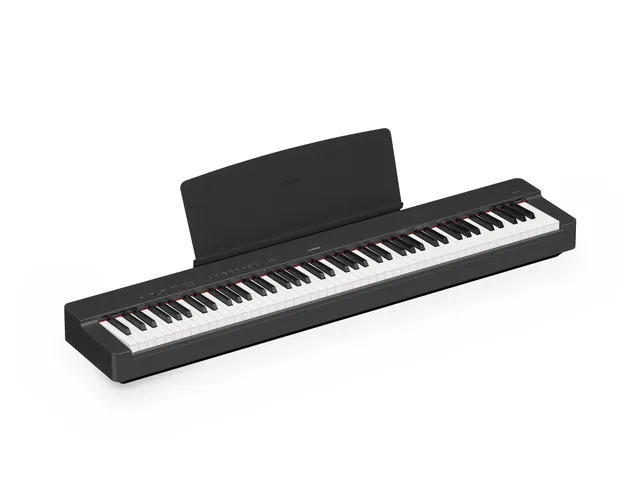
Yamaha P-225 — The Beginner Pick That Won't Hold You Back
Current price varies · Yamaha


- Angle
- Control panel
- Keys from the side
Features
- Key action
- Graded Hammer Compact (GHC)
- Sound engine
- Yamaha CFX, key-off samples, VRM Lite
- Polyphony
- 192 notes
- Speakers
- 7 W × 2
- Connectivity
- Bluetooth audio, USB audio and MIDI, AUX out, 2 headphone jacks
- Weight
- 11.5 kg
Decision questionIs a longer runway worth a higher starting commitment?
Best for: beginners serious about lessons who want to grow into the instrument over several years. Not for: someone testing whether they enjoy piano — the simpler P-45 is the smarter bet there.
Read the full review: Yamaha P-225
Our verdict
If you want one best piano for beginners pick that you won't outgrow in a year, this is it. The P-225 adds what the P-45 leaves out: the CFX sound, three times the polyphony, Bluetooth audio, two headphone jacks and a matching three-pedal option, in a body that still weighs 11.5 kg.
Pros
- +CFX piano sound with 192-note polyphony
- +Bluetooth audio and USB audio built in
- +Two headphone jacks for teacher and student
- +Smart Pianist app support
- +Takes Yamaha's three-pedal unit on the L-200 stand
Cons
- –A higher starting commitment than the P-45
- –Bluetooth MIDI needs Yamaha's optional UD-BT01 adaptor
- –7 W × 2 suits a bedroom more than a big living room
- Best for
- beginners serious about lessons who want room to grow for years.
- Main downside
- A higher starting commitment than the P-45 or FP-10
- Price position
- Upper end
Who should skip itSkip it if the simplest, lowest-commitment start matters more than extra headroom.
How it plays and sounds
The P-225 is the safest first piano to grow into, and the successor in Yamaha's P-series line to the P-125 we used to rank here, which Amazon US no longer offered when we checked. Yamaha lists its GHC (Graded Hammer Compact) action, the CFX concert grand sound with key-off samples and VRM Lite resonance, 192-note polyphony and 24 voices. Yamaha's P-225 specs have the full list.
Speakers and connections: 7 W × 2, Bluetooth audio for playing music from your phone through the piano, USB audio and MIDI to a computer, an AUX output and two headphone jacks, at 11.5 kg and 272 mm deep. Yamaha's free Smart Pianist app controls the piano from a phone or tablet. Yamaha's matching L-200 stand takes the LP-1 three-pedal unit.
View full specs
| Key action | Graded Hammer Compact (GHC) |
|---|---|
| Keys | 88, weighted |
| Sound engine | Yamaha CFX, key-off samples, VRM Lite |
| Polyphony | 192 notes |
| Voices | 24 |
| Speakers | 7 W × 2 |
| Connectivity | Bluetooth audio, USB audio and MIDI, AUX out, 2 headphone jacks |
| Weight | 11.5 kg |
Take a closer look.
Best Overall for Beginners
Control panel
Keys from the side

Runner-Up Pick

Exact control surface

Real beginner-practice context

Best Action for Learning

Exact top panel and action view

Real home-practice context
Runner-Up Pick
Yamaha P-45 — The Teacher's Default Recommendation
Current price varies · Yamaha
- Angle
- Exact control surface
- Real beginner-practice context
Features
- Key action
- Graded Hammer Standard (GHS)
- Sound engine
- AWM Stereo Sampling
- Polyphony
- 64 notes
- Speakers
- 6 W × 2
- Connectivity
- USB to host, headphones, sustain pedal
- Weight
- 11.5 kg
Decision questionIs a simpler first-lesson choice more appropriate?
Best for: kids in formal lessons or adult beginners who want zero distractions and just want to learn. Not for: tech-savvy beginners who want app integration to supplement learning.
Read the full review: Yamaha P-45
Our verdict
If you want a simple Yamaha with weighted keys, often because your teacher suggested one, this is the answer. The polyphony will limit pedal-heavy pieces eventually, but that's a later problem, not a day-one one. As a first piano, the P-45 lets you focus on practicing rather than configuring. If you want more headroom from the start, the P-225 is its step up.
Pros
- +Many teachers know it well
- +Yamaha's GHS hammer action, graded like an acoustic piano
- +Genuinely simple — no menus to navigate, just play
- +Light at 11.5 kg
Cons
- –64-note polyphony can cut off notes in heavily pedalled passages
- –No Bluetooth and no app integration
- –Only 10 voices, which limits casual exploration
- Best for
- kids in formal lessons or adult beginners who want zero distractions and just want to learn.
- Main downside
- 64-note polyphony can cut off notes in heavily pedalled passages
- Price position
- Middle
Who should skip itSkip it if richer features and longer progression headroom matter more than simplicity.
How it plays and sounds
The P-45 has been Yamaha's entry P-series piano for years, and many teachers know it well: Yamaha's GHS hammer action, stripped down to the essentials. No app integration, no Bluetooth, no menu diving — just turn it on and play. For some beginners, that simplicity is exactly the point. Yamaha lists 64-note polyphony, 10 voices, 6 W × 2 speakers and USB to a computer, at 11.5 kg. Yamaha's P-45 specs have the full list.
View full specs
| Key action | Graded Hammer Standard (GHS) |
|---|---|
| Keys | 88, weighted |
| Sound engine | AWM Stereo Sampling |
| Polyphony | 64 notes |
| Voices | 10 |
| Speakers | 6 W × 2 |
| Connectivity | USB to host, headphones, sustain pedal |
| Weight | 11.5 kg |
Best Action for Learning
Roland FP-10 — The Beginner That Punches Above Its Price
Current price varies · Roland
- Angle
- Exact top panel and action view
- Real home-practice context
Features
- Key action
- PHA-4 Standard (graded hammer with escapement)
- Sound engine
- SuperNATURAL Piano
- Polyphony
- 96 notes
- Speakers
- 6 W × 2
- Connectivity
- Bluetooth MIDI, USB MIDI, 1 headphone jack (doubles as output)
- Weight
- 12.6 kg (music rest detached)
Decision questionShould action quality lead the decision?
Best for: serious beginners who want the best action at this level and value technique-building above brand recognition. Not for: students whose teacher specifically prefers Yamaha.
Read the full review: Roland FP-10
Our verdict
Among the best pianos for beginners at this level, the FP-10 wins on key feel. The escapement-equipped PHA-4 keyboard is the strongest action here for building technique. The trade-off is the smaller tone library, the speakers, and the fact that some teachers default to recommending Yamaha. If your teacher is open-minded — or you're self-teaching — it's a strong pick over the P-45.
Pros
- +Roland's PHA-4 Standard keys with escapement at the entry level
- +Bluetooth MIDI works with the Roland Piano App
- +Ivory Feel key tops
- +The same keyboard as the FP-30X, so technique transfers
Cons
- –Less familiar to some US teachers than Yamaha
- –15 tones on the panel
- –6 W × 2 speakers are modest in a living room
- –One headphone jack, which is also the only output
- Best for
- serious beginners who want the best action at this level and value technique-building above brand recognition.
- Main downside
- Modest 6 W × 2 speakers and one headphone jack
- Price position
- Middle
Who should skip itSkip it if stronger onboard speakers and more direct controls matter more than key feel.
How it plays and sounds
Most entry pianos use a basic graded hammer action. Roland put its PHA-4 Standard keyboard, with escapement and Ivory Feel key tops, into the FP-10 — the same keyboard as the FP-30X (covered in our 88-key weighted keyboards guide). For technique-building, that's a real advantage. Roland lists SuperNATURAL Piano sound, 96-note polyphony, 15 tones on the panel (36 through the Roland Piano App), Bluetooth MIDI, 6 W × 2 speakers and 12.6 kg with the music rest detached. Roland's FP-10 specifications have the full list.
View full specs
| Key action | PHA-4 Standard (graded hammer with escapement) |
|---|---|
| Keys | 88, weighted |
| Sound engine | SuperNATURAL Piano |
| Polyphony | 96 notes |
| Voices | 36 (15 on the panel) |
| Speakers | 6 W × 2 |
| Connectivity | Bluetooth MIDI, USB MIDI, 1 headphone jack (doubles as output) |
| Weight | 12.6 kg (music rest detached) |
Best Slim & Portable Beginner Pick
Casio CDP-S160 — The Easy-to-Live-With Beginner Piano
Current price varies · Casio


- Angle
- From above on a table
Features
- Key action
- Scaled Hammer Action II, 3 touch levels
- Polyphony
- 64 notes
- Speakers
- 8 W + 8 W
- Connectivity
- 1 headphone/output jack, audio in, USB
- Weight
- 10.5 kg
- Keys
- 88, weighted
Decision questionDoes a slim, light body that runs on batteries matter most?
Best for: apartment dwellers, students and anyone whose practice space is shared or limited. Not for: beginners with dedicated piano space who'd rather invest in a Yamaha or Roland action.
Read the full review: Casio CDP-S160
Our verdict
If your living situation makes storage non-negotiable — a small apartment, a dorm room, a shared family space — the CDP-S160 is the pick: 88 weighted keys in a slim body that runs on batteries. If you stick with piano, its 64-note polyphony is the first thing you'll outgrow.
Pros
- +232 mm deep and 10.5 kg, the lightest piano here
- +About 13 hours on six AA batteries
- +Takes Casio's optional SP-34 three-pedal unit
- +A one-track recorder
Cons
- –64-note polyphony, like the P-45
- –One headphone jack, which is also the output
- –No Bluetooth
- Best for
- apartment dwellers, students and anyone whose practice space is shared or limited.
- Main downside
- 64-note polyphony and one headphone jack
- Price position
- Lower-middle
Who should skip itSkip it if you have a dedicated piano space and want a more refined action.
How it plays and sounds
The CDP-S160 is Casio's simplest 88-key piano, and the successor to the CDP-S110 we used to rank here, which Amazon US only offered from a single third-party seller when we checked. Casio lists its Scaled Hammer Action Keyboard II with three touch-sensitivity levels, 64-note polyphony, 10 tones and a one-track recorder. Casio's CDP-S160 page has the full list.
Speakers, size and power: 8 W + 8 W, one stereo mini jack for headphones that doubles as the output, an audio input and USB to a computer or tablet, at 1,322 × 232 × 99 mm and 10.5 kg. It runs on six AA batteries (about 13 hours, Casio's figure) or its adaptor. Casio doesn't list Bluetooth for it.
View full specs
| Key action | Scaled Hammer Action II, 3 touch levels |
|---|---|
| Keys | 88, weighted |
| Polyphony | 64 notes |
| Voices | 10 |
| Speakers | 8 W + 8 W |
| Connectivity | 1 headphone/output jack, audio in, USB |
| Power | 6 AA batteries (about 13 hours) or AC adaptor |
| Weight | 10.5 kg |
Best Sound Library
Korg B2 — The Most Musical-Sounding Beginner Pick
Current price varies · Korg


- Angle
- Exact device-connection evidence
- White finish: the listing we link
Features
- Key action
- Natural Weighted Hammer Action (NH), 3 touch settings
- Polyphony
- 120 notes
- Speakers
- 15 W × 2
- Connectivity
- USB audio and MIDI, audio in, headphones
- Weight
- 11.4 kg
- Keys
- 88, weighted
Decision questionDoes sound character motivate your practice more than action articulation?
Best for: beginners who care about sound character, plan to record themselves, or play styles outside strict classical. Not for: students who need Bluetooth, or whose teacher wants a Yamaha or Roland action.
Read the full review: Korg B2
Our verdict
Pick the B2 if sound character motivates your practice more than action articulation. Its five pianos and 15 W × 2 speakers make it the most musical-sounding pick here. If you're a classical-track beginner working with a strict teacher, the Yamaha and Roland actions are the safer choice.
Pros
- +Five piano sounds, German and Italian
- +15 W × 2, the most power among the pianos here
- +USB audio for recording practice
- +Skoove lessons trial included
Cons
- –No Bluetooth
- –Less widely recommended by US classical teachers than Yamaha
- –Half-pedalling needs Korg's optional PU-2 pedal unit
- Best for
- beginners who care about sound character, plan to record themselves, or play styles outside strict classical.
- Main downside
- No Bluetooth
- Price position
- Lower-middle
Who should skip itSkip it if the action is your first priority, or you need Bluetooth.
How it plays and sounds
The B2 is Korg's 88-key portable. Korg lists its Natural Weighted Hammer Action (NH), heavier in the low register and lighter in the high register, and 12 sounds, five of them pianos: two German and three Italian. It has 120-note polyphony and 15 W × 2 speakers, a USB port that carries MIDI and audio, and an audio input, at 11.4 kg. Korg doesn't list Bluetooth, and it bundles a three-month Skoove trial and the KORG Module app. Korg's B2 specifications have the full list. When we checked, Amazon US had offers for the white B2; the black listing was unavailable.
View full specs
| Key action | Natural Weighted Hammer Action (NH), 3 touch settings |
|---|---|
| Keys | 88, weighted |
| Polyphony | 120 notes |
| Voices | 12, including 5 pianos (2 German, 3 Italian) |
| Speakers | 15 W × 2 |
| Connectivity | USB audio and MIDI, audio in, headphones |
| Weight | 11.4 kg |
| Bonus | Three-month Skoove trial, KORG Module app |
Best Budget Pick
Kawai ES60 — Kawai's Simplest Hammer Action
Current price varies · Kawai


- Angle
- Hands on the keys
- Control panel
Features
- Key action
- Responsive Hammer Lite, grade-weighted
- Sound engine
- Harmonic Imaging, SK-EX samples
- Polyphony
- 192 notes
- Speakers
- 10 W × 2
- Connectivity
- 1 headphone jack, 1/4-inch line out, USB to host
- Weight
- 11 kg
Decision questionDo a good piano sound and line outputs matter more than Bluetooth?
Best for: first-time players who want a light, simple Kawai with weighted keys and a good piano sound. Not for: beginners who want Bluetooth or two headphone jacks.
Read the full review: Kawai ES60
Our verdict
The ES60 is the pick for beginners who want Kawai's piano sound and 192-note polyphony in a simple, light portable. For Bluetooth or two headphone jacks, look at the P-225 or the Kawai ES120 in our 88-key weighted keyboard guide.
Pros
- +Kawai's SK-EX piano sound with 192-note polyphony
- +1/4-inch line outputs, which many entry pianos leave out
- +10 W × 2 speakers
- +A simple panel
Cons
- –No Bluetooth listed
- –One headphone jack
- –An on/off switch pedal in the box
- Best for
- beginners who want Kawai's piano sound and a simple panel at its entry level.
- Main downside
- No Bluetooth and one headphone jack
- Price position
- Lower-middle
Who should skip itSkip it if you want Bluetooth or two headphone jacks.
How it plays and sounds
The ES60 is Kawai's most affordable ES model, and it takes the slot of the Alesis Recital Pro we used to rank here, which Amazon US listed as unavailable when we checked. Kawai lists its Responsive Hammer Lite action with grade-weighted hammers, Harmonic Imaging sound sampled from the Shigeru Kawai SK-EX concert grand, 192-note polyphony and 17 sounds. Kawai's ES60 specifications have the full list.
Speakers and connections: 10 W × 2, one 1/4-inch headphone jack at the front, 1/4-inch line outputs and USB to a computer, at 11 kg and 26 cm deep. Kawai doesn't list Bluetooth, and the included pedal is an on/off switch. Our Kawai ES60 review covers it in depth.
View full specs
| Key action | Responsive Hammer Lite, grade-weighted |
|---|---|
| Keys | 88, weighted |
| Sound engine | Harmonic Imaging, SK-EX samples |
| Polyphony | 192 notes |
| Voices | 17 |
| Speakers | 10 W × 2 |
| Connectivity | 1 headphone jack, 1/4-inch line out, USB to host |
| Weight | 11 kg |
Best Ultra-Budget Trial
Donner DEP-20 — The "Will I Stick With This?" Piano
Current price varies · Donner


- Angle
- Exact control evidence
Features
- Key action
- 88 full-size hammer-action keys, adjustable touch
- Polyphony
- 128 notes
- Speakers
- Dual 25 W
- Connectivity
- 2 headphone jacks (1/8-inch), 1/4-inch audio in and out, USB-MIDI
- Weight
- About 25 lb
- Voices
- 238 tones, 200 rhythms
Decision questionDo you want the lowest-commitment way to try a full 88-key piano?
Best for: kids or curious adults trying piano for the first time with the lowest commitment. Not for: beginners who want a well-documented action from a maker with consistent specs.
Read the full review: Donner DEP-20
Our verdict
Buy this when you want to find out whether piano sticks without a big first commitment. It has 88 full-size hammer-action keys, two headphone jacks and real outputs. For a piano a serious beginner will keep for years, the Yamaha, Roland, Casio and Kawai picks above come from makers that name and describe their actions.
Pros
- +88 full-size hammer-action keys at the lowest commitment here
- +Two headphone jacks and 1/4-inch audio outputs
- +238 tones for casual exploration
- +Sustain pedal in the box
Cons
- –Donner doesn't name the action or say whether it's graded
- –Donner's page contradicts itself on weight and touch settings
- –Less proven than the Yamaha, Roland and Casio picks
- Best for
- kids or curious adults trying piano for the first time with the lowest commitment.
- Main downside
- Donner doesn't name the action or say whether it's graded
- Price position
- Lowest
Who should skip itSkip it if you want a maker that names its action and lists consistent specs.
How it plays and sounds
The DEP-20 is the lowest-commitment way to try a full-size piano here. Donner lists 88 full-size hammer-action keys with adjustable touch, its DREAM sound source, 128-note polyphony, 238 tones and 200 rhythms, dual 25 W speakers, two 1/8-inch headphone jacks, 1/4-inch audio in and out, USB-MIDI and a sustain pedal in the box. Donner's DEP-20 page has the full list.
What to know: Donner doesn't name the action or say whether it's graded, and its own page gives two weights (25.5 lb in the spec table, under 25 lb in the description). Our Donner DEP-20 review covers it in depth.
View full specs
| Key action | 88 full-size hammer-action keys, adjustable touch |
|---|---|
| Polyphony | 128 notes |
| Voices | 238 tones, 200 rhythms |
| Speakers | Dual 25 W |
| Connectivity | 2 headphone jacks (1/8-inch), 1/4-inch audio in and out, USB-MIDI |
| Weight | About 25 lb |
| Includes | Sustain pedal, music rest, power adapter |
How to Choose Your First Piano
Must protect
1. Action · 2. 88-key range · 3. stable setup
These determine whether the instrument supports real practice.
Then compare
Speakers · controls · app support · portability
Useful differentiators after the learning foundation is sound.
Finally verify
Exact package contents and full ownership cost
The piano body is not always the complete practice setup.
If you've never bought a piano before, the spec sheets read like a foreign language — and the marketing copy isn't much help either. If you're looking for the best keyboard for starters, use the standards below rather than settling for a toy or unweighted board. The best piano keyboard for beginners should feel close to an acoustic instrument, which means weighted hammer-action keys that build proper technique from your first session. Choosing the best digital piano for beginners comes down to a few factors, every time. Here's the short version of what actually matters when picking a starter digital piano or entry level digital piano — and what you can safely ignore. Across the best digital pianos for beginners we recommend, the same factors come up over and over again.
Read more: key action — the most important spec, sound quality — don't get distracted by voice counts, must-haves vs nice-to-haves, budget tiers — what you should expect at each level
Key action — the most important spec
If you only get one thing right, get this right: insist on fully-weighted hammer action, not "semi-weighted" or "touch-sensitive." Hammer action uses small physical hammers inside each key to recreate the resistance of an acoustic piano. This is what builds the finger strength, control, and dynamics that real piano playing requires. Semi-weighted boards use springs only — they feel almost like organ keys and actively work against proper technique development. Most piano teachers ask for hammer action for new students, and all seven pianos in this guide have it.
Sound quality — don't get distracted by voice counts
One excellent grand piano sound beats 200 mediocre voices every time. As a beginner, you'll spend most of your practice time on the default piano sound. Pianos in this guide range from 10 voices (Yamaha P-45) to 238 tones (Donner DEP-20), and the count says little about how good the piano sound is. Don't let "238 voices!" marketing pull you toward a worse instrument. The piano voice quality and the speaker output are what affect your actual practice experience. The best keyboard pianos for beginners err on the side of fewer-but-better sounds rather than overwhelming you with options.
Must-haves vs nice-to-haves
Most digital piano for beginners purchases run into the same trap: paying for features that don't actually help you learn. Here's how to filter. Must-have: 88 fully-weighted keys, headphone jack (so you can practice at night), at least 64-note polyphony, sustain pedal input. Nice-to-have: Bluetooth (for app integration), more than 64-note polyphony (lets you use the sustain pedal heavily), a lesson app or Skoove trial (Yamaha P-225 with Smart Pianist, Korg B2 with Skoove), recording function. Don't worry about: hundreds of voices, accompaniment patterns, drum kits, song-mode "auto-play" features. None of these help you learn piano.
Budget tiers — what you should expect at each level
The best digital pianos for beginners fall into three tiers. The lowest-commitment entry level: the Donner DEP-20 and Casio CDP-S160 give you 88 weighted keys with the fewest extras. The sweet spot for serious beginners: the Yamaha P-45, Roland FP-10, Korg B2 and Kawai ES60, with proven hammer actions from the major makers; our digital pianos under $500 guide goes deeper on this range. The step up you won't outgrow quickly: the Yamaha P-225, with CFX sound, 192-note polyphony and Bluetooth audio. Beyond that, the returns for absolute beginners shrink — the money is often better spent on lessons and accessories. If you outgrow your beginner board, our 88-key weighted keyboards guide covers upgrade picks like the Roland FP-30X and Kawai ES120.
For structured beginner lessons before you find a teacher, free or low-cost options like Hoffman Academy, Pianote, and Yamaha's Smart Pianist app cover the first six months of learning effectively.
Tip
Most piano teachers recommend practicing on a fully-weighted keyboard from day one. Starting on semi-weighted or unweighted keys builds habits that are hard to unlearn later.
Starter Pianos for Adults, Kids and Students
A good starter piano depends on who's learning. Here's how the seven picks fit the most common first-time buyers.
Read more: a good starter piano for adults, entry-level pianos for students, portable electric keyboards for beginners, starting out at home, which type of instrument is best
A good starter piano for adults
Adult beginners usually do best with a piano that removes friction: weighted keys, a decent piano sound and headphones for quiet practice. The Yamaha P-225 is the pick to grow into, with Bluetooth audio for playing along with lessons; the Yamaha P-45 is the simplest, and the Roland FP-10 has the best key feel at the entry level.
Entry-level pianos for students
For a child in lessons, two headphone jacks let a parent or teacher listen in, which the P-225 and the Donner DEP-20 have. For a student in a dorm or a shared room, the Casio CDP-S160 is the slimmest and lightest here and runs on batteries.
Portable electric keyboards for beginners
Every pick here is a portable electric piano with 88 weighted keys that sits on a desk or a stand, so it can move between rooms. If you want a lighter keyboard with fewer keys for songs and chords rather than piano lessons, our 61-key keyboard guide ranks portable keyboards, and our keyboard stand guide covers what to put a piano on.
Starting out at home: what makes a great starter piano
A great starter piano does three things: its weighted keys build technique, its piano sound makes you want to practise, and it fits the room you have. That's why every pick here has 88 weighted hammer-action keys, and why the Casio CDP-S160 and Yamaha P-45 suit small spaces while the Yamaha P-225 suits a home where the piano will stay out.
Which type of instrument is best: digital or acoustic?
For most beginners, a digital piano: it never needs tuning, has a headphone jack for quiet practice, takes far less space and costs far less than an acoustic piano of similar quality. An acoustic piano makes sense when you have the space, the budget and a teacher who recommends one. A digital piano with 88 weighted keys builds the technique an acoustic piano needs.
Your First 90 Days: A Beginner's Timeline
Days 1–7
Make practice easy to start
Weeks 2–4
Build repeatable hand position and rhythm
Month 2
Connect short pieces into a routine
Month 3
Review progress before changing equipment
Buying the best digital piano for beginners is the easy part. The harder question is what to actually do with it once you've unboxed it. Here's a realistic 90-day timeline based on common practice patterns — not a rigid prescription, but a useful map for what to expect from your first three months at the keyboard.
Read more: week 1-2, month 1, months 2-3
Week 1-2: Setup, Posture, and Hand Position
Your first two weeks should focus almost entirely on physical mechanics, not music. Set up your piano at the right height — your forearms should be parallel to the floor when your hands rest on the keys, with your bench positioned so the bend at your knees is roughly 90 degrees. Wrong height is the most common silent killer of beginner technique; a chair that's too low forces you to angle your wrists upward, which causes tension and slow finger movement.
Spend time on hand position before you spend time on songs. Your fingers should curve naturally as if holding a tennis ball, with your fingertips contacting the keys. Practice five-finger exercises (C-D-E-F-G ascending then descending) with each hand separately, watching your fingers in a mirror or phone-camera selfie video. The goal isn't speed — it's noticing how each finger moves independently and keeping your wrist relaxed. Twenty minutes of careful hand-position work beats two hours of rushed song practice.
Month 1: First Songs and Building a Practice Routine
By week three or four, start your first real songs. "Twinkle, Twinkle Little Star," "Mary Had a Little Lamb," and similar nursery-tune material exist for a reason: they're short, single-line melodies that let you practice reading note names while your hands are still developing. Yamaha's Smart Pianist app (with the P-225) and the Roland Piano App (with the FP-10) both help at this stage.
Set a fixed practice time. Adult beginners almost universally do better with a daily 20-minute slot at the same time each day — right after coffee, immediately after work, or just before bed — than with sporadic longer sessions. Children should aim for 15 minutes daily, ideally with a parent reviewing what was practiced. Resist the temptation to skip "boring" technique drills for "fun" song time; the technique work is what makes the songs sound good.
Tip
The single most effective beginner habit is practicing for 20 minutes daily rather than 2 hours on weekends. Consistency builds muscle memory faster than marathon sessions.
Months 2-3: Sheet Music, Scales, and Considering a Teacher
Around month two, start reading basic sheet music. The treble and bass clefs are intimidating only until you've read them for a few weeks; resources like the Royal Conservatory of Music's online learning materials and the free Hoffman Academy beginner course give a structured path. Begin major scales (C, G, D, F) one octave with each hand separately, then together. Scales are where finger independence is built — skip them at your peril.
Month three is when most self-taught beginners hit their first plateau. The new-piano excitement has worn off, sheet music feels harder than expected, and progress is harder to see week-over-week. This is the natural moment to consider a teacher: 30 minutes weekly with a real teacher (or a high-quality video lesson program) cuts through the plateau in ways no app can. We cover the teacher-versus-app decision in detail in the next section.
Setting Up Your Practice Space

Your practice environment matters more than buyers expect. Even the best beginner piano fails if it's positioned in a noisy hallway, lit by harsh overhead fluorescents, or facing a TV that pulls your attention every two minutes. Here's how to set up a space that actually invites you to sit down and play.
Read more: choosing the right room, lighting and seating height, headphones vs speakers, cable management and minimizing distractions
Choosing the Right Room
Pick the quietest, most consistent spot in your home — ideally a corner of a bedroom, a dedicated home-office nook, or a spare room. Avoid open-plan living rooms where TV noise, kitchen activity, or family conversation interrupt practice. Hard floors plus bare walls make a piano sound cleaner than carpeted, soft-furnished rooms (which absorb high frequencies and dull the tone), but hard rooms also amplify finger noise on the keys; a small rug under the piano stand is a good compromise. Position the piano so you face away from doors and windows when seated — visual movement behind your music stand pulls your eye and ruins concentration.
Lighting and Seating Height
Lighting is non-negotiable. You need enough light to read sheet music comfortably without squinting; a small clip-on music-stand light or a properly positioned floor lamp is usually enough. Avoid lighting that casts your hands in shadow on the keys. Bench height — covered briefly in the timeline section above — deserves repeating: forearms parallel to the floor, knees at 90 degrees. Most piano benches are adjustable for this reason; if yours isn't, replace it before you replace the piano.
Headphones vs Speakers: When Each Matters
Use speakers when you're practicing alone in a private space, recording, or playing for fun. Use headphones for late-night practice, apartment living, or any situation where you'd otherwise hold back from full-volume playing. The honest insight: most beginners practice too quietly on speakers because they're worried about disturbing others. Headphones eliminate that hesitation and let you play with proper dynamic range, which is critical for developing musical expression. Plan for both modes — speakers for inspiration, headphones for serious practice.
Cable Management and Minimizing Distractions
A piano with cables snaking everywhere quietly discourages practice. Use Velcro cable ties to bundle your power cord, sustain pedal cable, and headphone cable along the back of the stand or piano leg. Position the power outlet behind the piano if possible so the cord doesn't cross your seating area. Keep your phone in another room during practice sessions, or at minimum put it on Do Not Disturb — phone notifications are the single biggest cause of broken practice flow for adult beginner piano students. A physical practice journal (a spiral notebook works) on the music stand for tracking what you worked on each day is more effective than any app.
Teacher vs App: How Should a Beginner Learn?

Teacher leads
Best when accountability and immediate correction matter.
App leads
Best when flexible repetition lowers the barrier to starting.
Hybrid route
Use scheduled feedback to correct the practice an app helps you repeat.
The teacher-versus-app question is the most contested topic in beginner piano education. Both approaches work; both have honest weaknesses. Here's how to think about which path fits your situation.
Read more: when apps are the right choice, when you need a teacher (usually around month 6), the hybrid approach
When Apps Are the Right Choice
Learning apps shine for absolute beginners in their first six to twelve months. The interactive feedback, gamified progression, and 24/7 availability lower the barrier to daily practice in a way no weekly teacher can match. Simply Piano (by JoyTunes) is the most beginner-friendly option — visual key highlighting, listening-based feedback, and a curriculum that progresses smoothly through level 1. Flowkey takes a song-first approach with a larger catalog including pop and classical pieces. Yamaha's Smart Pianist app (with the P-225) and the Roland Piano App (with the FP-10) are free. All four are credible for the first-year beginner piano learning path.
When You Need a Teacher (Usually Around Month 6)
Apps cannot watch you play. They cannot see that your wrist is tense, that your thumb is tucking under incorrectly on a scale, or that your shoulders are hunched. These are the technical issues that limit advanced progress, and they're invisible to even the most sophisticated app. Most self-taught players hit a wall around month six where progress slows despite continued practice — that's the signal you need a teacher. A weekly 30-minute lesson with a qualified teacher costs $30-$60 and accelerates progress dramatically by catching technical issues before they become permanent habits. Many teachers suggest bringing in lessons by around month six of structured practice.
Tip
Most piano learning apps offer a free trial. Test Simply Piano, Flowkey, and your piano's native app before committing — the one that keeps you coming back is the right choice.
The Hybrid Approach: App + Occasional Teacher
For most beginners, the best path is a hybrid: a daily-use app for self-directed practice plus occasional teacher check-ins (every two to four weeks) for technical feedback. This pattern gets you the convenience and gamification of app-based learning with the targeted human feedback that prevents bad habits from forming. Budget $30-$50 monthly for the teacher visits and another $10-$20 for an app subscription — a fraction of what weekly traditional lessons cost, with most of the same long-term benefit. Start with the app alone, schedule your first teacher session at month three or four, and reassess from there based on how your progress is going.
Common Beginner Mistakes to Avoid
01Do not let feature count outrank key feel.
02Do not budget for the piano body alone.
03Do not hide a poor setup behind motivation advice.
Most beginners make at least one of these mistakes early on. The good news: all of them are fixable if you catch them before the habits cement. The bad news: they're easy to slip into without realizing.
Read more: buying keys without hammer action, skipping fundamentals to play songs, practicing too long without breaks, ignoring dynamics and pedal technique, not recording yourself
Buying Keys Without Hammer Action
The single most expensive beginner mistake is buying the wrong keyboard to save money. An unweighted MIDI controller or a semi-weighted "starter keyboard" looks like a deal until you discover — six months in — that the technique you've built doesn't transfer to a real piano. Unweighted keys feel like organ keys; semi-weighted keys feel like a stiffer organ. Neither prepares your fingers for the resistance of an actual piano hammer. Even an entry-level hammer-action piano such as the Casio CDP-S160 is better long-term value than an unweighted controller, because it actually teaches piano technique. Our guide to weighted vs semi-weighted keys explains the difference.
Watch out
Semi-weighted and unweighted keyboards feel completely different from a real piano. If you learn on unweighted keys for 6 months then switch to weighted, your technique will need significant retraining.
Skipping Fundamentals to Play Songs
Every beginner wants to skip scales and finger exercises to get to the songs. It feels like the fundamentals are a tax on having fun. They aren't — they're the foundation that makes the songs sound good. Beginners who skip scale practice can usually play a recognizable rendition of "Frère Jacques" within a month, but the playing sounds stiff and effortful. Beginners who include 5-10 minutes of scales and Hanon exercises in every practice session sound noticeably more fluid playing the same song after the same time period. Treat fundamentals as the warmup that earns the song time.
Practicing Too Long Without Breaks
Adult beginners often try to make up for lost time with two-hour Sunday practice sessions. Don't. Beyond about 25-30 minutes of focused practice, attention degrades, technique gets sloppy, and you start reinforcing wrong patterns rather than correct ones. Short daily sessions (20 minutes for adults, 15 for children) consistently produce better results. If you have an hour available on a weekend, split it into two 30-minute blocks with a real break in between — walk around, drink water, stretch your hands. Your wrists will thank you, and your retention will measurably improve.
Ignoring Dynamics and Pedal Technique
Most beginner piano players spend their first year playing every note at the same volume and pedaling either fully on or fully off. This is the difference between sounding like a beginner and sounding musical — and it's almost entirely a habit, not a skill ceiling. From day one, pay attention to volume contour: louder where the music intensifies, softer where it relaxes. From month three or four, start practicing intentional pedal release on phrase endings rather than just leaving the pedal down through entire passages. These two habits separate musical playing from mechanical playing more than any single technical exercise can.
Not Recording Yourself
Every beginner thinks they sound better than they do until they hear a recording of themselves. That's not a critique — it's just how brains work, your ears smooth over your own playing in real time. The fix is simple: record a 30-second voice memo on your phone once a week of whatever you're working on. Listen back the next day. The flaws you didn't notice while playing become obvious, and you'll fix them within a few sessions. This single habit accelerates beginner piano progress more than almost any other deliberate practice technique.
What Else You'll Need to Get Started


Not a guaranteed bundle. Included accessories and exact compatibility must be verified against the listing you actually choose.
Even the best digital pianos for beginners are only part of a complete starter setup. Plan for the basic accessories that turn a piano in a box into a piano you can practice on properly.
Read more: a proper stand, an adjustable bench, headphones (especially for apartments), the pedal
A proper stand
Almost no beginner pianos in this guide ship with a stand. An X-frame keyboard stand is the usual beginner choice — adjustable height, foldable for storage, stable enough for practice. For a more permanent home setup, a Z-frame or a matching furniture stand feels sturdier and looks better in a living room. Our keyboard stand guide ranks both kinds. The piano-style benches that piano stores sell aren't necessary at this stage.
An adjustable bench
Don't practice from a folding chair — it puts your wrists at the wrong angle and will give you poor posture habits in your first months. A height-adjustable padded keyboard bench lets you set your forearms parallel to the keys, which matters for technique and back health. Our adjustable piano bench guide covers the options, including Yamaha's PKBB1.
Headphones (especially for apartments)
Even a great-sounding beginner piano like the Korg B2 isn't going to please your neighbors at 10 PM. A pair of closed-back over-ear headphones with a 1/4" adapter (or 3.5mm if your piano supports it) lets you practice silently. The Audio-Technica ATH-M30x and Sony MDR-7506 are classic safe picks.
The Pedal: Why It Matters More Than You Think
Of all the accessories in this section, the sustain pedal is the one most often dismissed as an afterthought — and it's the one that most directly affects how musical your practice sounds. The bundled "sustain pedal" that ships in the box with most beginner pianos is actually a small plastic switch pedal: a binary on/off footswitch that doesn't behave anything like a real piano pedal. Pressing it engages 100% sustain instantly; releasing it cuts the sustain instantly. There's no middle ground.
A real acoustic piano pedal is continuously variable — you can apply 30%, 50%, or 70% damper engagement by how far down you press the pedal, a technique called half-pedaling. Half-damper-capable pedals (sometimes called "continuous control" or "half-pedal" pedals) replicate this on a digital piano via a TRS jack, and the difference is night-and-day for any pianist past the absolute beginner phase.
Classical and jazz pianists need the upgrade earliest. Pieces by Chopin, Debussy, or Bill Evans rely on subtle pedal blending that simply isn't possible with a switch pedal — you'll know you need the upgrade the moment you hit your first piece with marked half-pedal notation. Pop and rock players can get away with the switch pedal longer, since pop pedaling tends to be on/off in nature, but even there you'll feel the difference within a year.
Two upgrade picks are the usual standards for beginner pianos: the Yamaha FC3A for Yamaha's P-series and the Roland DP-10 for Roland's FP-series, which Roland lists as capable of half-pedalling on the FP-10. Both are piano-style continuous pedals; half-pedalling works where the piano supports it. Our sustain pedal guide covers which pianos do. Replacing the bundled switch pedal with one of these is the single highest-leverage accessory upgrade you can make to any beginner piano.
Want more options?
Frequently Asked Questions
What is the best piano for beginners?
For most beginners who want room to grow, the Yamaha P-225: 88 weighted keys, Yamaha's CFX sound, 192-note polyphony, Bluetooth audio and two headphone jacks. The Yamaha P-45 is the simpler, lower-commitment pick, and the Roland FP-10 has the best key feel at the entry level. All seven pianos in this guide have 88 weighted hammer-action keys.
Do I really need 88 keys to start, or will 61 work?
Get 88 keys if you can. Many piano lesson books and pieces use more than five octaves, and a 61-key keyboard usually has unweighted keys as well. The only good reason to start on 61 keys is if you want a light portable keyboard for songs and chords rather than piano lessons; our 61-key keyboard guide covers those.
Which piano brand is best for beginners?
There's no single best brand, but Yamaha, Roland, Kawai, Casio and Korg all make good beginner pianos with weighted keys. Yamaha's P-series is the one many teachers know best, Roland's FP-10 has the strongest entry-level action, Kawai is known for its piano sound, and Casio makes the slimmest and lightest models.
Are weighted keys really necessary for beginners?
Yes, if your goal is to learn piano technique that transfers to an acoustic piano. Weighted keys develop the finger strength and control real piano playing needs, while semi-weighted or unweighted keyboards let you press keys with too little effort. Every piano in this guide has 88 weighted hammer-action keys for that reason.
Can I learn piano without a teacher using just an app?
You can learn the basics this way, especially with apps such as Hoffman Academy, Pianote or Yamaha's Smart Pianist. Apps work well for the first months of learning. After that, many self-taught pianists hit a plateau where a teacher's feedback on hand position, posture and dynamics makes the difference. Treat apps as a starter phase, not a permanent solution.
Can I learn piano as an adult beginner, or is it too late?
It's not too late. Adults often progress quickly at first because they can direct their own practice and understand concepts such as key signatures and chords. Finger independence can take longer to develop, but it comes with daily practice. The biggest predictor isn't age, it's consistency: twenty minutes every day beats three hours on a Sunday.
Shahadat Shahi
Founder of PianoRanked. I research what performs best using spec analysis, user reviews, and market data — no paid placements, no brand partnerships.