
Best Piano Books for Beginners 2026
The right beginner book is not a song collection. It is a learning sequence matched to the reader’s age, pace, support and preferred way of practicing.

By Shahadat Shahi Published Updated
The short answer
Compare all 5-
No. 1 Our top pick
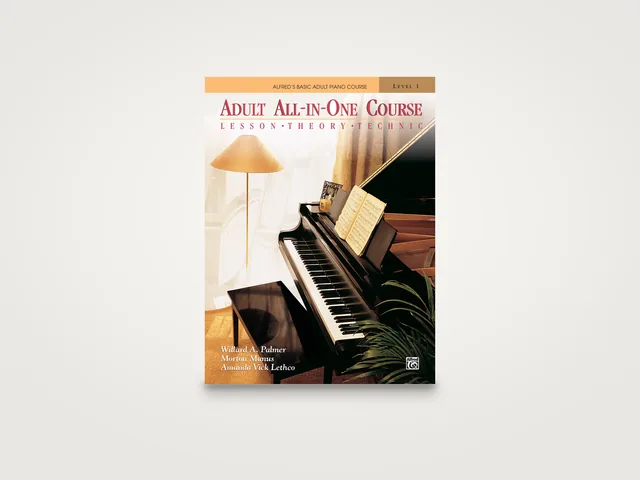
Alfred's Adult All-in-One Course Book 1
Best Overall
- Audience
- Adult beginners
- Approach
- All-in-one lesson, theory and technique
- Support
- Designed for use with a teacher
Alfred calls it its best-selling method for beginning adults: lesson, theory and technique in one book, designed for use with a teacher.
Main limitation Traditional style — less visually modern than Faber.
-
No. 2
Faber Adult Piano Adventures All-in-One
Best for Self-Learners
- Audience
- Adult self-learners
- Approach
- Visual all-in-one progression
- Support
- Online videos and audio (QR codes)
The book Faber points independent adult learners to, with online videos and audio for every piece.
Main limitation Videos and audio are online only, through QR codes.
-
No. 3
Hal Leonard Adult Piano Method Book 1
Best for Busy Adults
- Audience
- Busy adult beginners
- Approach
- Quick-paced adult method
- Support
- 150+ online accompaniments (PLAYBACK+)
Over 150 online accompaniments and a pace Hal Leonard calls quick but comfortable.
Main limitation Moves quickly, by Hal Leonard's own description.
-
No. 4
John Thompson's Adult Piano Course Book 1
Classic Traditional Method
- Audience
- Adult classical learners
- Approach
- Traditional classical method
- Support
- Book only (an edition with online audio is sold separately)
A solid traditional method for classically minded adults; choose the online-audio edition if you want play-along tracks.
-
No. 5
Best for Young Beginners (Ages 7–11)
- Audience
- Children aged 7–11
- Approach
- Primer: pre-staff notation to the grand staff
- Support
- Theory, Technic and Performance books sold separately
A structured first method for children of 7 to 11.
Alfred's is the safest all-round method with a teacher; Faber supports self-teaching; Hal Leonard adds a quick pace with online accompaniments.
Compare all 5
Swipe the table sideways to see every column.
| Rank | Best for | Teaching approach | Learning support | Main downside | Amazon |
|---|---|---|---|---|---|
| 1Alfred's Adult All-in-One Course Book 1#1 Best Overall | Adult beginners | All-in-one lesson, theory and technique | Designed for use with a teacher | Traditional style — less visually modern than Faber | Check price on Amazon for the Alfred's Adult All-in-One Course Book 1 (opens in a new tab) |
| 2Faber Adult Piano Adventures All-in-One#2 Best for Self-Learners | Adult self-learners | Visual all-in-one progression | Online videos and audio; Faber's pick for independent learners | Videos and audio online only | Check price on Amazon for the Faber Adult Piano Adventures All-in-One (opens in a new tab) |
| 3Hal Leonard Adult Piano Method Book 1#3 Best for Busy Adults | Busy adult beginners | Quick-paced adult method | 150+ online accompaniments | Moves quickly | Check price on Amazon for the Hal Leonard Adult Piano Method Book 1 (opens in a new tab) |
| 4John Thompson's Adult Piano Course Book 1#4 Classic Traditional Method | Adult classical learners | Traditional classical method | Book only; an online-audio edition is sold too | Classical and folk pieces rather than popular songs | Check price on Amazon for the John Thompson's Adult Piano Course Book 1 (opens in a new tab) |
| 5Bastien Piano Basics Primer#5 Best for Young Beginners | Children aged 7–11 | Primer: pre-staff to grand staff | Theory, Technic and Performance books | Adult learners will find the pacing too slow | Check price on Amazon for the Bastien Piano Basics Primer (opens in a new tab) |
What kind of structure will this beginner actually follow?
Age, teacher support and learning style matter more than finding the most popular cover.
Start with Alfred's
- Needs
- A proven all-in-one studio sequence
- Risk
- Choosing novelty over reinforcement
Start with Faber
- Needs
- Clear visual explanations and variety
- Risk
- A text-heavy book that stalls momentum
Start with Hal Leonard
- Needs
- A model of timing and sound
- Risk
- Moving too quickly through fundamentals
Start with Bastien
- Needs
- Gentle pacing and age-fit language
- Risk
- Accidentally buying an adult method
No. 1
Alfred's Adult All-in-One Course Book 1
Best Overall
No. 2
Faber Adult Piano Adventures All-in-One
Best for Self-Learners
No. 3
Hal Leonard Adult Piano Method Book 1
Best for Busy Adults
No. 5
Bastien Piano Basics Primer
Best for Young Beginners (Ages 7–11)
The right piano book gives you structure that no app can replace. Many beginners buy the wrong book, grab a random song collection, or skip books entirely and rely on YouTube, and then stall because they never built a foundation. A good method book teaches you to read music, develop finger technique, and understand theory in a logical sequence where each chapter builds on the last. Piano books for beginners are not optional extras: they are the most direct route to real playing ability.
Read the rest of the introduction
We compared five well-known method books by teaching approach, adult friendliness and the support each includes, from the publishers' own descriptions and published reviews by teachers and learners. Three are designed for adults. One is a classic traditional method. One is specifically for children — included because adult beginners sometimes buy it by mistake. For adults comparing piano books for adult beginners, the important distinction is not simply difficulty: adult methods move faster, explain theory directly, and use age-appropriate repertoire.
A method book works best when technique is checked alongside reading. Use our piano fingering chart as a quick hand-position reference, and review the most common beginner piano mistakes before repeated practice turns an avoidable habit into muscle memory.

The 5 best piano books for beginners
Best Overall
Alfred's Adult All-in-One Course Book 1

Cover identity and learner-facing format
Book fit
- Audience
- Adult beginners
- Approach
- All-in-one lesson, theory and technique
- Support
- Designed for use with a teacher
- Pages
- 160, wire-o binding that lies flat
- Audio
- None in this edition (CD and DVD editions sold separately)
Decision question Do you want the safest all-in-one method for lessons with a teacher, even if it looks traditional?
Best foradult beginners who want one proven lesson, theory and technique sequence
Who should skip it Skip it if a more visual self-teaching layout is what will keep you engaged.
Read the full review: Alfred's Adult All-in-One Course Book 1
Our verdict
The safest all-in-one choice for an adult beginner with a teacher. Learning alone? Start with Faber, or Alfred's Self-Teaching course.
Alfred calls it "the best-selling piano method book for beginning adult pianists". It covers lesson material, theory, and technique exercises in a single 160-page volume, and Alfred designs it for use with a piano teacher. Chapters progress logically from learning note names through reading both clefs to playing simple pieces with both hands, with chord theory, playing styles and folk, classical and contemporary songs along the way.
If you have a teacher and only buy one piano book, this is it. The progression is methodical — you do not skip steps, and each new skill is reinforced through multiple exercises before moving forward. Learning alone? Alfred sells a separate version written for adults who teach themselves, the Self-Teaching Adult Piano Course, with online audio.
What we like
- +All-in-one: lesson, theory, technique in one volume
- +Wire-o binding lies flat on the music rest
- +Clear progression from first note to simple pieces
What could be better
- –Traditional style — less visually modern than Faber
- –No audio in this edition
- Main downside
- Traditional style — less visually modern than Faber
View book fit
| Audience | Adult beginners |
|---|---|
| Approach | All-in-one lesson, theory and technique |
| Support | Designed for use with a teacher |
| Pages | 160, wire-o binding that lies flat |
| Audio | None in this edition (CD and DVD editions sold separately) |
Best for Self-Learners
Faber Adult Piano Adventures All-in-One

Cover identity and learner-facing format
Book fit
- Audience
- Adult self-learners
- Approach
- Visual all-in-one progression
- Support
- Online videos and audio (QR codes)
- Pages
- 184, spiral bound
Decision question Will videos and a step-by-step layout help you practice consistently without a teacher?
Best foradults learning without a teacher who value clear visual explanations
Who should skip it Skip it if you have a teacher who prefers a more traditional studio method.
Read the full review: Faber Adult Piano Adventures All-in-One
Our verdict
The top choice for adults learning without a teacher, with videos and audio for every piece.
Faber tells independent adult learners with no prior lessons to start with this book. Lessons, technique and theory come in one 184-page spiral book, and the current Enhanced Edition adds QR-code videos for every piece: Faber says the online support includes over two hours of instructional videos and audio accompaniment tracks. Book 1 covers notation, chord playing and musical form, step by step, and theory, technique and repertoire are woven together rather than separated into isolated sections.
The repertoire mix stands out: classical, folk, ragtime and popular pieces, from Greensleeves and Danny Boy to The Entertainer and The Lion Sleeps Tonight, which keeps practice varied across weeks and months.
What we like
- +Videos and audio accompaniments for every piece
- +Faber recommends it to independent adult learners
- +Mix of classical and contemporary repertoire
What could be better
- –Videos and audio need an internet connection or a download
- Main downside
- Videos and audio are online only, through QR codes
View book fit
| Audience | Adult self-learners |
|---|---|
| Approach | Visual all-in-one progression |
| Support | Online videos and audio (QR codes) |
| Pages | 184, spiral bound |
Best for Busy Adults
Hal Leonard Adult Piano Method Book 1

Cover identity and learner-facing format
Book fit
- Audience
- Busy adult beginners
- Approach
- Quick-paced adult method
- Support
- 150+ online accompaniments (PLAYBACK+)
- Pages
- 96
Decision question Do you want a quicker pace with play-along accompaniments?
Best forbusy adult beginners who want online accompaniments and a quick pace
Who should skip it Skip it if you want the gentlest, slowest first progression.
Read the full review: Hal Leonard Adult Piano Method Book 1
Our verdict
The pick for busy adults who want play-along accompaniments and a quicker pace.
The strongest choice if you want play-along accompaniments: Hal Leonard includes over 150 orchestrated accompaniments online, reached with a code in the book, and its PLAYBACK+ player can slow a track without changing its pitch or loop a passage. That is useful for self-taught beginners who have no reference point for a piece's rhythm.
Hal Leonard aims the book at busy adult beginners and describes it as well-paced, moving quickly but comfortably, with lessons, solos, technique and theory in one 96-page book. If you want the gentlest possible start, Alfred's or Faber may suit you better.
What we like
- +Over 150 online accompaniments included
- +A quick pace keeps busy adults moving
- +Good variety of musical styles
What could be better
- –Moves quickly for a complete beginner
- Main downside
- Moves quickly, by Hal Leonard's own description
View book fit
| Audience | Busy adult beginners |
|---|---|
| Approach | Quick-paced adult method |
| Support | 150+ online accompaniments (PLAYBACK+) |
| Pages | 96 |
Classic Traditional Method
John Thompson's Adult Piano Course Book 1

Cover identity and learner-facing format
Book fit
- Audience
- Adult classical learners
- Approach
- Traditional classical method
- Support
- Book only (an edition with online audio is sold separately)
- Pages
- 80
Decision question Do you prefer a classical, no-nonsense method over modern presentation?
Best forclassically minded adults who prefer direct, time-tested instruction
Who should skip it Skip it if you want popular songs; if you want play-along tracks, choose the edition with online audio.
Read the full review: John Thompson's Adult Piano Course Book 1
Our verdict
A solid traditional method for classically minded adults; choose the online-audio edition if you want play-along tracks.
Willis Music compiled it for the mature student, with classical arrangements, well-known folk tunes and original pieces, and it encourages playing artistically and with understanding. Thompson takes a no-nonsense classical approach with heavy emphasis on note reading and musical structure, and the publisher describes both current editions as recently re-engraved and updated.
Best for adults who prefer straightforward classical instruction. The book-only edition we link has no audio; Hal Leonard also sells Book 1 with online audio. Book 2 follows when you finish.
What we like
- +Classical arrangements, folk tunes and original pieces
- +Strong classical foundation
- +Recently re-engraved and updated, per the publisher
What could be better
- –Few popular songs
- –No audio in the book-only edition
- Main downside
- Classical and folk pieces rather than popular songs
View book fit
| Audience | Adult classical learners |
|---|---|
| Approach | Traditional classical method |
| Support | Book only (an edition with online audio is sold separately) |
| Pages | 80 |
Best for Young Beginners (Ages 7–11)
Bastien Piano Basics Primer

Cover identity and learner-facing format
Book fit
- Audience
- Children aged 7–11
- Approach
- Primer: pre-staff notation to the grand staff
- Support
- Theory, Technic and Performance books sold separately
- Pages
- 64
Decision question Is the learner a young child who needs age-specific pacing and vocabulary?
Best forchildren aged 7 to 11 starting piano lessons
Who should skip it Adults should choose Alfred's or Faber instead.
Read the full review: Bastien Piano Basics Primer
Our verdict
A structured first method for children of 7 to 11. Not for adults — choose Alfred's or Faber instead.
Kjos designs the Primer for average-age beginners of 7 to 11; for ages 5 and 6 it sells Piano for the Young Beginner. Adults should choose Alfred's or Faber above.
Kjos describes Bastien Piano Basics as time-tested and best-selling. The Primer is the main lesson book, correlated page by page with separate Theory, Technic and Performance books. It starts with pre-staff notation before the grand staff and teaches reading by steps, skips and repeated notes, with full-color illustrations and many duet parts. Kjos also sells a 2025 Enhanced edition with an app for play-along accompaniments and recording.
Adults searching for beginner piano books occasionally land here because of its popularity. If you are an adult, choose one of the adult methods above instead: Bastien's pacing and vocabulary are designed for children.
What we like
- +Lesson book correlated page by page with Theory, Technic and Performance
- +Full-color illustrations and duet parts
- +Pre-staff start before the grand staff
What could be better
- –Designed for children (ages 7 to 11)
- –Adult learners will find the pacing too slow
- Main downside
- Adult learners will find the pacing too slow
View book fit
| Audience | Children aged 7–11 |
|---|---|
| Approach | Primer: pre-staff notation to the grand staff |
| Support | Theory, Technic and Performance books sold separately |
| Pages | 64 |
Do you need a piano book or can you use an app?
Apps like Simply Piano and Flowkey are good at two things: keeping you motivated through gamification and teaching you to play specific songs by following on-screen prompts. That is genuinely useful, especially in the first few weeks when everything feels overwhelming.
What apps do not do well is teach theory and technique. Most app-only learners can play along with the screen but cannot read sheet music, do not understand why chords work together, and develop hand positions that a teacher would correct immediately. These gaps compound over time, and many app-only learners later hit a ceiling they cannot break through without going back to fundamentals.
Beginner piano books solve this by building theory alongside playing from the very first page. You learn why you are playing each note, not just which note to press. Technique exercises train your fingers to move correctly rather than just quickly. The structured progression means each skill supports the next.
The best approach is both. Use a method book as your primary learning structure — it gives you the foundation. Use an app for variety, motivation, and learning songs you enjoy outside of the method book's repertoire. If you are wondering how long it takes to learn piano, the answer gets shorter when you combine structured method work with consistent daily practice.
What to look for in piano books for beginners
Three criteria separate a good method book from a bad one.
1. Theory alongside playing. A method book should teach you to read music and understand key signatures, time signatures, and chord structure as you play — not in a separate theory section you skip. Books that are just song collections teach you to mimic without understanding. That is fine for casual fun, but it does not build real skill.
2. Written for your age group. Adult and children's method books cover the same fundamentals but at different speeds and with different language. An adult using a children's book wastes time on material paced for developing motor skills. A child using an adult book gets overwhelmed by text-heavy explanations. Match the book to the learner.
3. Progressive structure. Each chapter should build on the last. If you can open to a random page and play it without having done the earlier chapters, the book is a song collection, not a method. Real method books have dependencies — Chapter 5 assumes you mastered Chapter 4. That structure is what produces lasting improvement.
Avoid books marketed as "easy piano songbooks" or "simplified sheet music." These are reference collections, not teaching methods. They assume you already know how to read music and play. Starting with one as a beginner is like buying a dictionary to learn a language. Hal Leonard itself describes its Easy Piano folios as arrangements for players with a few years of experience at the piano.
Piano Method Books vs Piano Music Books
A piano method book is a course: lessons, theory and technique in a set order, level by level, like the five books above. A piano music book is a collection of pieces to play, such as pop songs, film themes, classical favorites or hymns, arranged at a particular level. Beginners need the method first; music books are the reward alongside it.
Read more: easy piano books for beginners
Easy piano books for beginners
The easiest way to add piano music books is to pick ones written for your method and level. Faber publishes Popular, Classics and Christmas books for Adult Piano Adventures Book 1, and Hal Leonard publishes Popular Hits, Christmas Favorites and Traditional Hymns books to go with its Adult Piano Method. Each matches the notes and rhythms the method has taught so far.
Piano Methods for Beginners: Adults and Kids
The right method depends on the learner's age and on whether a teacher will check their progress. Adult methods move faster and explain theory directly; children's methods are paced and worded for a child's age.
Read more: for adults with a teacher, for adults learning alone, the best piano books for kids
For adults with a teacher
Alfred's Adult All-in-One Course is designed for lessons, and its Book 2 and Book 3 continue the same course. John Thompson's Adult Piano Course suits a teacher with a classical bent.
For adults learning alone
The best adult piano books for self-teaching include help you can hear and see: Faber Adult Piano Adventures (videos and audio for every piece), Hal Leonard's Adult Piano Method (online accompaniments) and Alfred's Self-Teaching Adult Piano Course, a version of Alfred's course written for adults who teach themselves, with online audio.
The best piano books for kids
Children's methods are paced and worded for their age. Bastien Piano Basics Primer is for ages 7 to 11. Faber's Basic Piano Adventures, starting with the Primer Level Lesson Book (with Adventure Learning Videos), is written for ages 6 to 11, and Alfred's Basic Piano Library Level 1A suits ages 5 and up. For ages 5 and 6, Faber points to My First Piano Adventures and Kjos to Piano for the Young Beginner. If your child needs an instrument too, our guide to the best keyboards for kids starts with full-size keys.
What Comes After Book 1: a Piano Curriculum for Beginners
Each method is a series, so the next book continues where the last left off: Alfred's All-in-One Book 2 (with online audio) and Book 3, Faber Adult Piano Adventures Book 2, Hal Leonard Adult Piano Method Book 2, John Thompson's Adult Piano Course Book 2 (early to mid-intermediate), and Bastien Piano Basics Level 1 after the Primer. Staying in one series is the simplest piano curriculum for beginners, because each book assumes exactly what the last one taught.
Read more: piano teaching books by level
Piano teaching books by level
Teachers usually pair the lesson book with its companions at the same level. Faber's Basic Piano Adventures has four core books per level (Lesson, Theory, Technique & Artistry and Performance), and Bastien's Primer works the same way with Piano, Theory, Technic and Performance.
Ready to pair your book with the right instrument?
FAQ
What is the best beginner piano book for adults?
With a teacher, Alfred's Adult All-in-One Course Book 1: lesson, theory and technique in one book, designed for use with an instructor. Learning alone, Faber Adult Piano Adventures All-in-One Book 1, which includes online videos and audio for every piece, or Alfred's Self-Teaching Adult Piano Course. Avoid children's methods such as Bastien, which are paced for kids.
Do I need a piano book to learn piano?
Not strictly, but a method book gives you the structure most apps leave out. Apps like Simply Piano and Flowkey help with motivation and learning songs, while a method book builds reading, theory and technique in order. Most piano teachers start students on a method book, and an app works well alongside it for variety.
Can I learn piano from a book without a teacher?
Yes. Faber Adult Piano Adventures, Hal Leonard's Adult Piano Method and Alfred's Self-Teaching Adult Piano Course are written with self-teaching adults in mind, with online audio (and videos, in Faber's case). Progress is slower without someone checking your hand position, so an occasional lesson every few weeks helps catch technique problems early.
How long does a piano method book take to complete?
There's no fixed time: it depends on daily practice and on whether you have a teacher. Book 1 courses such as Alfred's (160 pages) and Faber's (184 pages) are built to take months, with each unit reviewed before the next. Move on to Book 2 when the last pieces are secure, not by the calendar.
Which Alfred piano books are best for beginners?
For adults with a teacher, Alfred's Basic Adult All-in-One Course Book 1; for adults learning alone, Alfred's Self-Teaching Adult Piano Course, with online audio. For children, Alfred's Basic Piano Library starts at Level 1A for ages 5 and up, with the Prep Course for the youngest beginners, and Alfred lets students switch between its courses.
Are Faber piano books good for beginners?
Yes, for adults and children. Faber's Adult Piano Adventures All-in-One Book 1 is the book Faber recommends to adults starting without lessons, with videos and audio for every piece. For children, Basic Piano Adventures, starting with the Primer Level Lesson Book, is written for ages 6 to 11, with Theory, Technique & Artistry and Performance books alongside.
Shahadat Shahi
I write PianoRanked from London, and I spend a lot of my music time in my friend RA Mamun’s studio. I research this guide from the publishers' own descriptions and published reviews — no paid placements, no brand partnerships.
About meGet in touch Follow on Pinterest (opens in a new tab)