
Best 88-Key Weighted Keyboards 2026: Top Picks Ranked
Original rankings and buyer guidance, presented with exact-model identity and buyer-inspectable evidence.

By Shahadat Shahi Published Updated

The short answer
Compare all 8-
No. 1 · Our top pick
Best Overall
- Key action
- PHA-4 Standard, graded hammer with escapement
- Polyphony
- 256 notes
- Weight
- 14.8 kg (with music rest)
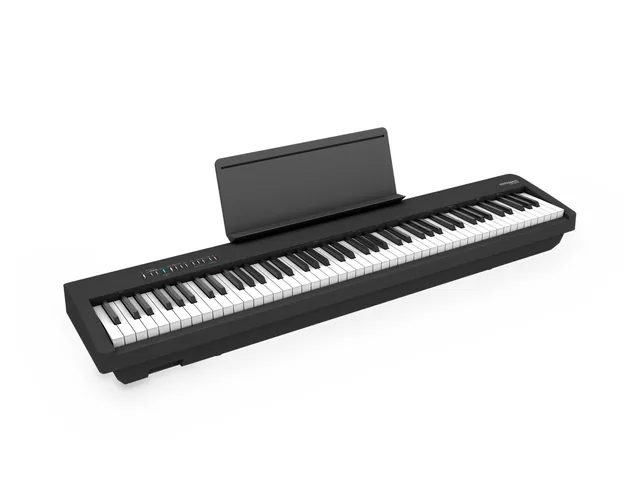
The closest thing to an acoustic-piano replacement here — PHA-4 Standard keys with escapement, 256-note polyphony and Bluetooth audio.
-
No. 2
Runner-Up
- Key action
- Graded Hammer Compact (GHC)
- Polyphony
- 192 notes
- Weight
- 11.5 kg
Yamaha's CFX sound, 192-note polyphony and Bluetooth audio in a light, 11.5 kg body.
-
No. 3
Best Action Feel
- Key action
- Responsive Hammer Compact (RHC), grade-weighted
- Polyphony
- 192 notes
- Weight
- 12 kg (26.5 lb)
For piano-focused players — classical, jazz, anyone who wants the action to disappear — the ES120 is the pick.
-
No. 4
Best Slim Design
- Key action
- Smart Scaled Hammer Action, 5 touch levels
- Polyphony
- 192 notes
- Weight
- 11.2 kg
If portability is non-negotiable — if you're moving the piano weekly, gigging, or living in a small apartment — the PX-S1100 wins this guide.
-
No. 5
Best Budget Yamaha
- Key action
- Graded Hammer Standard (GHS)
- Polyphony
- 64 notes
- Weight
- 11.5 kg
The P-45 is the right pick if you want a simple Yamaha with weighted keys.
-
No. 6
Best Sound Library
- Key action
- Natural Weighted Hammer Action (NH), 3 touch settings
- Polyphony
- 120 notes
- Weight
- 11.4 kg
If you care more about sound character than action, the B2 is the pick: five pianos, loud speakers and USB audio.
-
No. 7
Budget Pick
- Key action
- PHA-4 Standard, graded hammer with escapement
- Polyphony
- 96 notes
- Weight
- 12.6 kg (music rest detached)
The FP-30X's PHA-4 Standard keys at the lowest commitment in this guide, with Bluetooth MIDI.
-
No. 8
Best Ultra-Budget
- Key action
- 88 full-size hammer-action keys, adjustable touch
- Polyphony
- 128 notes
- Weight
- About 25 lb
Buy the DEP-20 when the lowest commitment matters most: 88 hammer-action keys, two headphone jacks and real outputs.
The FP-30X protects technique transfer; the P-225 protects Yamaha's sound and familiarity; the ES120 protects action feel for piano-focused players; the FP-10 protects a top-class action at the lowest commitment.
Quick Comparison: All 8 Picks
Swipe the table sideways to see every column.
| Rank | Best for | Key Action | Polyphony | Speakers | Main downside | Amazon |
|---|---|---|---|---|---|---|
| #1Roland FP-30X | Most players | PHA-4 Standard, escapement | 256 notes | 11 W × 2 | 14.8 kg | Check price on Amazon for the Roland FP-30X (opens in a new tab) |
| #2Yamaha P-225 | Yamaha sound | GHC (graded hammer compact) | 192 notes | 7 W × 2 | Compact action | Check price on Amazon for the Yamaha P-225 (opens in a new tab) |
| #3Kawai ES120 | Action feel | RHC (Responsive Hammer Compact) | 192 notes | 10 W + 10 W | 25 sounds | Check price on Amazon for the Kawai ES120 (opens in a new tab) |
| #4Casio PX-S1100 | Slim and portable | Smart Scaled Hammer Action | 192 notes | 8 W + 8 W | Touch buttons | Check price on Amazon for the Casio PX-S1100 (opens in a new tab) |
| #5Yamaha P-45 | Simple Yamaha | GHS (graded hammer standard) | 64 notes | 6 W × 2 | 64-note polyphony | Check price on Amazon for the Yamaha P-45 (opens in a new tab) |
| #6Korg B2 | Sound and USB audio | NH (Natural Weighted Hammer) | 120 notes | 15 W × 2 | No Bluetooth | Check price on Amazon for the Korg B2 (opens in a new tab) |
| #7Roland FP-10 | Action at entry level | PHA-4 Standard, escapement | 96 notes | 6 W × 2 | Modest speakers | Check price on Amazon for the Roland FP-10 (opens in a new tab) |
| #8Donner DEP-20 | Lowest commitment | Hammer action (not named) | 128 notes | Dual 25 W | Action not named or graded | Check price on Amazon for the Donner DEP-20 (opens in a new tab) |
Specs from the makers' pages. Prices change often; use each "Check price on Amazon" button for the current offer.
Which route matches your decision?
Use the awards and trade-offs to jump to the most relevant chapter.
Read Full chapter
- Best for
- Best Overall
- Trade-off
- 14.8 kg, heavier than most here
Read Full chapter
- Best for
- Yamaha's CFX sound
- Trade-off
- GHC is a compact action, below Roland's PHA-4
Read Full chapter
- Best for
- Kawai ES120
- Trade-off
- Fewer sounds than the FP-30X
Read Full chapter
- Best for
- Casio PX-S1100
- Trade-off
- Action is responsive but slightly bouncy at the back of the keys
No. 1
Roland FP-30X
Best Overall
No. 2
Yamaha P-225
Best Yamaha
No. 3
Kawai ES120
Best Action Feel
No. 4
Casio PX-S1100
Best Slim Design
A fully-weighted 88-key digital piano is the most important piece of gear a serious beginner can buy — and the cheapest way to ruin your practice is to get the wrong one. We compared the major models from the makers' specs, owner reports and published reviews to rank the eight best 88-key weighted keyboards that deserve your money. We haven't played them, and we don't quote prices, because they change.
Read the rest of the introduction
The short version: the Roland FP-30X is the best overall thanks to its PHA-4 Standard action and SuperNATURAL sound engine — it's the most acoustic-piano-like board here. The Yamaha P-225 is the Yamaha to choose, with the CFX sound and Bluetooth audio. For the best hammer action at the lowest commitment, the Roland FP-10.
This guide is for players who specifically want a full-size weighted keyboard that feels closer to a real piano than a light synth-style board. If your priority is travel weight, see our best portable digital pianos; if the budget ceiling matters most, start with our best digital pianos under $500.

Best Overall
Roland FP-30X — Best 88-Key Weighted Keyboard Overall
Current price varies · Roland


- Angle
- PHA-4 Standard keybed and control strip
Features
- Key action
- PHA-4 Standard, graded hammer with escapement
- Sound engine
- SuperNATURAL Piano
- Polyphony
- 256 notes
- Speakers
- 11 W × 2
- Connectivity
- Bluetooth audio and MIDI, USB audio and MIDI, line out, 2 headphone jacks
- Weight
- 14.8 kg (with music rest)
Best for: serious students who want the action and sound to disappear, and anyone who plans to keep their first piano past intermediate lessons. Not for: players who need the slimmest, lightest board to carry every week.
Read the full review: Roland FP-30X
Our verdict
The FP-30X is the easy answer for most players: Roland's PHA-4 Standard keys with escapement, enough polyphony for pedal-heavy music, Bluetooth audio and real line outputs, in a piano that will carry a beginner through the intermediate years. Look elsewhere only if you need a slimmer body (the Casio PX-S1100) or a lower first commitment (the Roland FP-10 or Yamaha P-45).
Pros
- +PHA-4 Standard keys with escapement
- +256-note polyphony and 321 tones
- +Bluetooth audio and MIDI built in
- +1/4-inch line outputs and two headphone jacks
Cons
- –14.8 kg, heavier than most here
- –The DP-2 in the box is a small on/off footswitch
- –A one-song recorder
- Best for
- serious students who want the action and sound to disappear
- Main downside
- 14.8 kg, heavier than most here
How it plays and sounds
The FP-30X is the closest thing to an acoustic-piano replacement in this guide. Roland lists its PHA-4 Standard keyboard with escapement and Ivory Feel key tops, SuperNATURAL Piano sound, 256-note polyphony and 56 tones on the panel (321 through the Roland Piano App). Roland's FP-30X specifications have the full list.
Speakers and connections: 11 W × 2, Bluetooth audio and MIDI, USB audio and MIDI, a USB memory port, 1/4-inch line outputs and two headphone jacks, at 14.8 kg with the music rest. Roland's matching KSC-70 stand takes the KPD-70 three-pedal unit; the DP-2 footswitch is in the box.
View full specs
| Key action | PHA-4 Standard, graded hammer with escapement |
|---|---|
| Keys | 88, weighted |
| Sound engine | SuperNATURAL Piano |
| Polyphony | 256 notes |
| Voices | 321 (56 on the panel) |
| Speakers | 11 W × 2 |
| Connectivity | Bluetooth audio and MIDI, USB audio and MIDI, line out, 2 headphone jacks |
| Weight | 14.8 kg (with music rest) |
Take a closer look.
Best Overall
PHA-4 Standard keybed and control strip

Best Action Feel

Control panel and Responsive Hammer Compact keybed
Best Yamaha
Yamaha P-225 — Best Yamaha for Most Players
Current price varies · Yamaha


- Angle
- Control panel
Features
- Key action
- Graded Hammer Compact (GHC)
- Sound engine
- Yamaha CFX, key-off samples, VRM Lite
- Polyphony
- 192 notes
- Speakers
- 7 W × 2
- Connectivity
- Bluetooth audio, USB audio and MIDI, AUX out, 2 headphone jacks
- Weight
- 11.5 kg
Best for: players who want a Yamaha with CFX sound, Bluetooth audio and two headphone jacks. Not for: players for whom key action comes first (the FP-30X or Kawai ES120).
Read the full review: Yamaha P-225
Our verdict
If you want a Yamaha, this is the one to buy: the CFX sound, Bluetooth audio, two headphone jacks and a light body. Roland's FP-30X has the stronger action and speakers; the P-225 has the sound many players prefer and the Yamaha familiarity many teachers know.
Pros
- +Yamaha's CFX sound with VRM Lite and 192-note polyphony
- +Bluetooth audio and USB audio built in
- +Light at 11.5 kg
- +Smart Pianist app support
Cons
- –GHC is a compact action, below the FP-30X's PHA-4 Standard
- –7 W × 2, less than the FP-30X's 11 W × 2
- –Bluetooth MIDI needs Yamaha's optional UD-BT01 adaptor
- Best for
- players who want Yamaha's CFX sound, Bluetooth audio and a light body
- Main downside
- GHC is a compact action
How it plays and sounds
The P-225 is the Yamaha most players should start with, and the successor in Yamaha's P-series line to the P-125 we used to rank here, which Amazon US no longer offered when we checked. Yamaha lists its GHC (Graded Hammer Compact) action, the CFX concert grand sound with key-off samples and VRM Lite, 192-note polyphony and 24 voices. Yamaha's P-225 specs have the full list.
Speakers and connections: 7 W × 2, Bluetooth audio, USB audio and MIDI, an AUX output and two headphone jacks, at 11.5 kg and 272 mm deep. It works with Yamaha's Smart Pianist app, and the matching L-200 stand takes the LP-1 three-pedal unit.
View full specs
| Key action | Graded Hammer Compact (GHC) |
|---|---|
| Keys | 88, weighted |
| Sound engine | Yamaha CFX, key-off samples, VRM Lite |
| Polyphony | 192 notes |
| Voices | 24 |
| Speakers | 7 W × 2 |
| Connectivity | Bluetooth audio, USB audio and MIDI, AUX out, 2 headphone jacks |
| Weight | 11.5 kg |
Best Action Feel
Kawai ES120 — The Best Key Action for Piano-Focused Players
Current price varies · Kawai
- Front
- Control panel and Responsive Hammer Compact keybed
Features
- Key action
- Responsive Hammer Compact (RHC), grade-weighted
- Sound engine
- Harmonic Imaging, SK-EX and EX samples
- Polyphony
- 192 notes
- Speakers
- 10 W + 10 W
- Connectivity
- Bluetooth MIDI and audio, USB, 2 headphone jacks, line out
- Weight
- 12 kg (26.5 lb)
Best for: piano-focused players (classical, jazz) who want the action to do exactly what their fingers expect. Not for: hobbyists who'd rather have hundreds of sounds than Kawai's action.
Read the full review: Kawai ES120
Our verdict
For piano-focused players — classical, jazz, anyone who wants the action to disappear — the ES120 is the pick. The trade-off is a smaller sound library. If you're mainly playing piano repertoire and don't need hundreds of sounds, it's money well spent.
Pros
- +Kawai's Responsive Hammer Compact action
- +Shigeru Kawai SK-EX and EX piano samples
- +Bluetooth MIDI and audio
- +Two headphone jacks and line outputs
Cons
- –25 sounds, fewer than the FP-30X's 321
- –A compact action, below Kawai's Responsive Hammer III
- –An on/off switch pedal in the box
- Best for
- piano-focused players who want Kawai's action and SK-EX sound
- Main downside
- Fewer tones than the FP-30X
How it plays and sounds
Kawai is known first for its key actions, and the ES120's Responsive Hammer Compact action, with grade-weighted hammers and matte key surfaces, is the reason to buy it. Kawai lists Harmonic Imaging sound with 88-key stereo samples of the Shigeru Kawai SK-EX and EX concert grands, 192-note polyphony and 25 sounds. Kawai's ES120 specifications have the full list.
Speakers and connections: 10 W + 10 W, Bluetooth MIDI and audio, two headphone jacks, 1/4-inch line outputs and USB to a computer, at 12 kg (26.5 lb). The included F-1SP pedal is an on/off switch. Our Kawai ES120 review covers it in depth.
View full specs
| Key action | Responsive Hammer Compact (RHC), grade-weighted |
|---|---|
| Keys | 88, weighted |
| Sound engine | Harmonic Imaging, SK-EX and EX samples |
| Polyphony | 192 notes |
| Voices | 25 |
| Speakers | 10 W + 10 W |
| Connectivity | Bluetooth MIDI and audio, USB, 2 headphone jacks, line out |
| Weight | 12 kg (26.5 lb) |
Best Slim Design
Casio PX-S1100 — Best Slim & Portable Pick
Current price varies · Casio


- Front
- Touch-control panel and slim keybed
Features
- Key action
- Smart Scaled Hammer Action, 5 touch levels
- Sound engine
- Multi-dimensional Morphing AiR
- Polyphony
- 192 notes
- Speakers
- 8 W + 8 W
- Connectivity
- Bluetooth audio and MIDI (adaptor included), 2 headphone jacks, line out, USB
- Weight
- 11.2 kg
Best for: gigging musicians, small apartments, anyone moving the piano weekly. Not for: players who want physical buttons or the strongest speakers.
Read the full review: Casio PX-S1100
Our verdict
If portability is non-negotiable — if you're moving the piano weekly, gigging, or living in a small apartment — the PX-S1100 wins this guide. For a stationary home setup, the FP-30X or P-225 give you more piano.
Pros
- +232 mm deep and 11.2 kg
- +Runs on AA batteries
- +Bluetooth adaptor in the box
- +Two headphone jacks and line outputs
Cons
- –Touch buttons can be awkward with gloves or damp fingers
- –8 W + 8 W, less than the Roland and Kawai
- –Battery life is about 4 hours
- Best for
- players who move the piano or live in small apartments
- Main downside
- Touch buttons rather than physical ones
How it plays and sounds
The PX-S1100 is one of the slimmest 88-key weighted pianos you can buy, at 232 mm deep and 11.2 kg, and it runs on six AA batteries (about 4 hours, Casio's figure). Casio lists its Smart Scaled Hammer Action Keyboard with five touch levels, the Multi-dimensional Morphing AiR sound source, 192-note polyphony and 18 tones. Casio's PX-S1100 page has the full list.
Speakers and connections: 8 W + 8 W, two headphone jacks, 1/4-inch line outputs, an audio input and USB. Bluetooth audio and MIDI come through Casio's WU-BT10 adaptor, which is in the box. Our Casio Privia PX-S1100 review covers it in depth.
View full specs
| Key action | Smart Scaled Hammer Action, 5 touch levels |
|---|---|
| Keys | 88, weighted |
| Sound engine | Multi-dimensional Morphing AiR |
| Polyphony | 192 notes |
| Voices | 18 |
| Speakers | 8 W + 8 W |
| Connectivity | Bluetooth audio and MIDI (adaptor included), 2 headphone jacks, line out, USB |
| Weight | 11.2 kg |
| Battery | 6 AA, about 4 hours |
Best Budget Yamaha
Yamaha P-45 — Best Entry-Level Yamaha
Current price varies · Yamaha


- Angle
- Compact home setup with full keyboard, stand, and pedal placement
Features
- Key action
- Graded Hammer Standard (GHS)
- Sound engine
- AWM Stereo Sampling
- Polyphony
- 64 notes
- Speakers
- 6 W × 2
- Connectivity
- USB to host, headphones
- Weight
- 11.5 kg
Best for: kids starting lessons or adult beginners who want a simple, proven Yamaha. Not for: intermediate players — the 64-note polyphony can cut off notes in pedalled passages.
Read the full review: Yamaha P-45
Our verdict
The P-45 is the right pick if you want a simple Yamaha with weighted keys. Its limitations — 64-note polyphony, 10 voices and no Bluetooth — matter as repertoire gets harder; the P-225 is the step up. For a child starting lessons, it's a sound first piano.
Pros
- +Yamaha's GHS graded hammer action
- +Simple to use
- +Light at 11.5 kg
- +The lowest-commitment Yamaha
Cons
- –64-note polyphony can cut off notes when you pedal heavily
- –Only 10 voices
- –No Bluetooth, no app integration, no recording
- Best for
- kids starting lessons and beginners who want a simple Yamaha
- Main downside
- 64-note polyphony can cut off notes when you pedal heavily
How it plays and sounds
The P-45 is Yamaha's entry P-series piano, built around the GHS hammer action with a stripped-down sound and feature set. Yamaha lists AWM stereo sampling, 64-note polyphony, 10 voices, 6 W × 2 speakers and USB to a computer, at 11.5 kg. Many piano teachers know it as a minimum spec for a serious student. Yamaha's P-45 specs have the full list.
View full specs
| Key action | Graded Hammer Standard (GHS) |
|---|---|
| Keys | 88, weighted |
| Sound engine | AWM Stereo Sampling |
| Polyphony | 64 notes |
| Voices | 10 |
| Speakers | 6 W × 2 |
| Connectivity | USB to host, headphones |
| Weight | 11.5 kg |
Best Sound Library
Korg B2 — Best Voices for the Money
Current price varies · Korg


- Angle
- USB/device connection workflow
- White finish: the listing we link
Features
- Key action
- Natural Weighted Hammer Action (NH), 3 touch settings
- Polyphony
- 120 notes
- Speakers
- 15 W × 2
- Connectivity
- USB audio and MIDI, audio in, headphones
- Weight
- 11.4 kg
- Keys
- 88, weighted
Best for: home recordists and players who care more about sound than action articulation. Not for: students who need Bluetooth, or whose teacher wants a Yamaha or Roland action.
Read the full review: Korg B2
Our verdict
If you care more about sound character than action, the B2 is the pick: five pianos, loud speakers and USB audio. If technique-building action comes first, prefer the Roland FP-10 or Yamaha P-45.
Pros
- +Five piano sounds, German and Italian
- +15 W × 2 speakers
- +USB audio for recording at home
- +Skoove trial and KORG Module included
Cons
- –No Bluetooth
- –Fewer teachers know it than the Yamaha and Roland
- –Half-pedalling needs Korg's optional PU-2 pedal unit
- Best for
- home players who care about sound and want USB audio
- Main downside
- No Bluetooth
How it plays and sounds
The Korg B2 stands out on sound. Korg lists 12 sounds, five of them pianos (two German and three Italian), with 120-note polyphony and 15 W × 2 speakers, and its Natural Weighted Hammer Action (NH), heavier in the low register and lighter in the high register. The USB port carries MIDI and audio, there's an audio input, and Korg bundles a three-month Skoove trial and the KORG Module app; it doesn't list Bluetooth. It weighs 11.4 kg. Korg's B2 specifications have the full list. When we checked, Amazon US had offers for the white B2; the black listing was unavailable.
View full specs
| Key action | Natural Weighted Hammer Action (NH), 3 touch settings |
|---|---|
| Keys | 88, weighted |
| Polyphony | 120 notes |
| Voices | 12, including 5 pianos (2 German, 3 Italian) |
| Speakers | 15 W × 2 |
| Connectivity | USB audio and MIDI, audio in, headphones |
| Weight | 11.4 kg |
Best Value
Roland FP-10 — Best Budget Hammer Action
Current price varies · Roland


- Angle
- Keys close-up
Features
- Key action
- PHA-4 Standard, graded hammer with escapement
- Sound engine
- SuperNATURAL Piano
- Polyphony
- 96 notes
- Speakers
- 6 W × 2
- Connectivity
- Bluetooth MIDI, USB MIDI, 1 headphone jack (doubles as output)
- Weight
- 12.6 kg (music rest detached)
Best for: beginners and returning players who want the best action at the lowest commitment. Not for: players who want louder speakers, Bluetooth audio or line outputs (the FP-30X).
Read the full review: Roland FP-10
Our verdict
The FP-10 is the best way to get a top-class action at the lowest commitment in this guide. Its PHA-4 Standard keys, escapement included, will carry a beginner well into intermediate repertoire; its speakers, polyphony and single output are where it saves, and the FP-30X adds them back with the same keys.
Pros
- +The FP-30X's PHA-4 Standard keys at the entry level
- +Bluetooth MIDI for apps
- +Ivory Feel key tops
- +The lightest Roland with PHA-4 Standard keys
Cons
- –96-note polyphony
- –6 W × 2 speakers
- –One headphone jack, which is also the only output
- Best for
- beginners who want the best action at the lowest commitment
- Main downside
- 6 W × 2 speakers and one headphone jack
How it plays and sounds
The FP-10 takes the slot of the Alesis Recital Pro we used to rank here, which Amazon US listed as unavailable when we checked. It's Roland's entry portable, with the same PHA-4 Standard keyboard as the FP-30X, escapement and Ivory Feel key tops included. Roland lists SuperNATURAL Piano sound, 96-note polyphony, 15 tones on the panel (36 through the Roland Piano App), Bluetooth MIDI and 6 W × 2 speakers, at 12.6 kg with the music rest detached. Roland's FP-10 specifications have the full list.
Our Roland FP-10 review and FP-10 vs FP-30X comparison cover what the FP-30X adds.
View full specs
| Key action | PHA-4 Standard, graded hammer with escapement |
|---|---|
| Keys | 88, weighted |
| Sound engine | SuperNATURAL Piano |
| Polyphony | 96 notes |
| Voices | 36 (15 on the panel) |
| Speakers | 6 W × 2 |
| Connectivity | Bluetooth MIDI, USB MIDI, 1 headphone jack (doubles as output) |
| Weight | 12.6 kg (music rest detached) |
Best Ultra-Budget
Donner DEP-20 — The Lowest-Commitment Option (With Caveats)
Current price varies · Donner


- Angle
- Control panel and voice-selection surface
Features
- Key action
- 88 full-size hammer-action keys, adjustable touch
- Polyphony
- 128 notes
- Speakers
- Dual 25 W
- Connectivity
- 2 headphone jacks (1/8-inch), 1/4-inch audio in and out, USB-MIDI
- Weight
- About 25 lb
- Voices
- 238 tones, 200 rhythms
Best for: kids or curious adults trying piano for the first time with the lowest commitment. Not for: students who want a well-documented action from a maker with consistent specs.
Read the full review: Donner DEP-20
Our verdict
Buy the DEP-20 when the lowest commitment matters most: 88 hammer-action keys, two headphone jacks and real outputs. For a piano a serious student will keep, the Roland, Yamaha, Kawai and Casio picks above come from makers that name and describe their actions.
Pros
- +88 full-size hammer-action keys at the lowest commitment here
- +Two headphone jacks and 1/4-inch audio outputs
- +238 tones for casual exploration
- +Sustain pedal in the box
Cons
- –Donner doesn't name the action or say whether it's graded
- –Donner's page contradicts itself on weight and touch settings
- –Less proven than the major makers' pianos
- Best for
- first-time players who want the lowest commitment
- Main downside
- Donner doesn't name the action or say whether it's graded
How it plays and sounds
The DEP-20 is the lowest-commitment way into 88 weighted keys here. Donner lists 88 full-size hammer-action keys with adjustable touch, its DREAM sound source, 128-note polyphony, 238 tones and 200 rhythms, dual 25 W speakers, two 1/8-inch headphone jacks, 1/4-inch audio in and out, USB-MIDI and a sustain pedal in the box. Donner's DEP-20 page has the full list.
The caveats: Donner doesn't name the action or say whether it's graded, and its own page gives two weights (25.5 lb in the spec table, under 25 lb in the description). Our Donner DEP-20 review covers it in depth.
View full specs
| Key action | 88 full-size hammer-action keys, adjustable touch |
|---|---|
| Polyphony | 128 notes |
| Voices | 238 tones, 200 rhythms |
| Speakers | Dual 25 W |
| Connectivity | 2 headphone jacks (1/8-inch), 1/4-inch audio in and out, USB-MIDI |
| Weight | About 25 lb |
| Includes | Sustain pedal, music rest, power adapter |
Full-Size Weighted Keyboards: What to Look For
Every pick in this guide is a full piano keyboard with 88 weighted keys. Here's what the terms on the box mean, and what to check before you buy.
Read more: full-size keyboard pianos, hammer action digital pianos, weighted electric pianos and keyboards, what makes a good weighted keyboard
Full-size keyboard pianos: why 88 keys
A full-size keyboard piano has 88 keys, the range of an acoustic piano, with keys the same width as a piano's. Many lesson books and pieces use more than the five octaves of a 61-key keyboard, so 88 keys are the safe choice for piano lessons. Our guide to how many keys a piano has explains the ranges.
Hammer action digital pianos: graded weight and escapement
Hammer action means each key moves a weighted hammer, so it resists your finger the way a piano key does. Graded means the bass keys are heavier than the treble, as on an acoustic piano: Roland, Yamaha, Kawai, Casio and Korg list graded actions on the pianos here. Escapement, the slight notch a grand piano's key has near the bottom, is listed on Roland's PHA-4 Standard on the FP-30X and FP-10.
Weighted electric pianos and keyboards: what the term covers
Shops use "weighted keyboard", "weighted digital piano" and "weighted electric piano" for the same thing: an instrument whose keys have weight, unlike the light, springy keys of most portable keyboards. Check whether the keys are fully weighted with hammer action, or only semi-weighted; our guide to weighted vs semi-weighted keys explains the difference.
What makes a good weighted keyboard
After the action, look at polyphony (192 notes or more is comfortable for pedalled music; 64 can cut off notes), two headphone jacks if a teacher or parent will listen in, line outputs if you'll play through an amplifier, and Bluetooth if you'll use apps. Weight matters only if the piano will move: the pianos here range from about 11 to 14.8 kg.
How We Choose: Our Evaluation Methodology
We haven't played these pianos. This guide ranks them from the makers' official spec pages, owner reports on forums such as the Piano World forums, and published reviews, and every spec on the page comes from the maker's own page, linked in each chapter. We rank on these, in this order:
- Key action: the hammer mechanism, graded weighting, escapement and key surfaces.
- Sound: the piano samples and resonance, polyphony, and the speakers.
- Build and owner reports: what owners report about reliability over time, and warranty terms.
- Value: what each piano offers against its direct rivals at its current price.
- Practical features: Bluetooth, apps, outputs, included accessories and weight.
Every pick had current Amazon US offers when we checked; we don't quote prices, because they change daily.
Read our complete review methodology for more detail on how we evaluate digital pianos.
For key-feel basics, compare weighted vs semi-weighted keys and our digital piano vs keyboard explainer.
What Else You'll Need: Stands, Pedals & Accessories
Almost every 88 key keyboard with weighted keys in this guide ships with a basic switch pedal or footswitch and no stand. Plan for a stand, a proper pedal and a bench to get the setup actually playable; our guide to piano accessories covers the rest.
Tip
The sustain pedal bundled with most portable pianos is a basic on/off switch. Upgrading to a half-damper pedal from your piano's maker, such as Yamaha's FC3A or Roland's DP-10, transforms the playing feel — especially for classical repertoire.
Read more: pedal, stand, bench, headphones
Pedal
The included plastic switch only registers on/off — it can't do half-pedaling, which is essential for any classical or jazz repertoire past beginner level. Upgrade to a continuous pedal from your piano's maker, such as the Yamaha FC3A or the Roland DP-10, where the piano supports half-pedalling. The M-Audio SP-2 is the universal pick if you only need on/off; its polarity switch suits any keyboard. Our sustain pedal guide covers which pianos support half-pedalling.
Stand
An X-frame stand is portable but can wobble under heavier hands. For home use, a Z-frame, a table-style stand or the piano's matching furniture stand is steadier and looks proper next to a couch. Our keyboard stand guide ranks seven, from the On-Stage KS8191XX to the Yamaha L-200.
Bench
Skip folding chairs — they put your wrists at the wrong angle. A height-adjustable padded bench (such as the K&M 14087 or the Yamaha PKBB1) keeps your forearms parallel to the keys, which matters more than you'd think for technique and back health.
Headphones
For night practice or apartment living, get closed-back headphones with a 1/4" adapter — the Audio-Technica ATH-M40x and Sony MDR-7506 are classic studio choices.
Honestly, the right accessories matter as much as the piano itself. The best weighted keyboard in this guide will frustrate you to the point of quitting lessons if you pair it with a wobbly stand and a click-only sustain switch. Budget the full setup, not just the instrument.
Still choosing between the safest mid-range picks? Start with the two models most players should compare first.
Explore more picks
Frequently Asked Questions
What is the best 88-key weighted keyboard?
For most players, the Roland FP-30X: Roland's PHA-4 Standard keys with escapement, 256-note polyphony, Bluetooth audio and MIDI, line outputs and two headphone jacks. The Yamaha P-225 is the pick for Yamaha's CFX sound, the Kawai ES120 for action feel, and the Roland FP-10 for a top-class action at the lowest commitment.
Are weighted keyboards worth it?
Yes, if you want to learn piano. Weighted hammer-action keys resist your fingers the way an acoustic piano's keys do, which builds the strength and control piano playing needs. Light, unweighted keyboards are fine for songs and chords, but technique learned on them doesn't transfer well to a real piano.
Is there a fully weighted 88-key keyboard?
Yes — every pick in this guide has 88 fully weighted hammer-action keys. The makers list graded actions on most of them (heavier in the bass, lighter in the treble), and Roland lists escapement on the FP-30X and FP-10. Donner lists hammer action on the DEP-20 but doesn't say whether it's graded.
What does "weighted keys" mean on a keyboard?
Weighted keys use small hammers or counterweights inside each key to recreate the resistance you feel on an acoustic piano. Graded hammer actions get heavier in the bass and lighter in the treble, like a real piano. Semi-weighted keys use springs and feel lighter, which makes them less effective for building finger technique.
Do I really need 88 keys, or will 76 or 61 work?
If you're learning classical or jazz piano, get 88 keys. Much standard piano repertoire uses more than five octaves, and 61- and 76-key keyboards usually have lighter keys too. The exception is portable playing where weight or size comes first; our 61-key keyboard guide covers those.
Do I need a stand and pedal, or are they included?
Most portable pianos here include a basic switch pedal or footswitch and no stand. A continuous pedal from your piano's maker adds half-pedalling where the piano supports it, and an X-stand or a matching furniture stand puts the keys at the right height. Our keyboard stand and sustain pedal guides rank the options.
Shahadat Shahi
Founder of PianoRanked. I research this guide from the makers' published specs, owner reports and published reviews — no paid placements, no brand partnerships.